
Grotesque images of death and decay have been haunting my local supermarket for the best part of a month. Its staple offerings have been augmented with nets of chocolate balls – some masquerading as miniature pumpkins, others as bloodshot eyeballs – along with special Halloween editions of familiar biscuits and sweets enhanced with the trappings of the charnel house. There are face-painting kits got up to look like coffins, jelly spiders, and a particularly disgusting range of flattened rats made out of translucent grey goo which are no doubt edible but look disconcertingly like road kill. The fruit and vegetable section has been overrun by an invasion of killer pumpkins and the sock display is barely visible behind layers of black polyester, death heads and glittering red demon outfits.
What is this all about? Why do our children, and increasingly ourselves, dress up as the dead and the damned to consume this tacky stuff once a year, often at the hands of complete strangers against a faint but persistent aura of menace?
Some thank American television for this cultural import alongside baseball hats and junior proms. Others might go further, explaining it as the eruption of some deep psychological need. Certainly, from a marketing perspective, there’s got to be a benefit in it for the customer. People don’t just dress outlandishly and eat junk for no reason – do they?
Perhaps the benefit is the way in which Halloween allows us to contemplate mortality without getting all religious and serious about it. After all, in a secular society death is seen as the point where everything stops. To stop living is to stop everything, and that includes stopping making sense. All that’s left when we confront death in our secular culture is non-sense. It’s like Dante’s ‘Divine Comedy’ without the Divine bit – just the comedy. Cue the edible eyeballs and flattened rats.
But pity the poor retailers as they latch on to this emerging, postmodern human need. We buy the same old products week in week out (those ‘fast moving consumer goods’ beloved of marketing gurus, those ‘low involvement’ staples like bread and baked beans which almost find their own way into our shopping trolleys). How the supermarkets must yearn to make us sit up and take notice of what they have to offer. Halloween is a great opportunity for them to do just that. Fancy dress isn’t just something for customers. By decking out familiar products like biscuits and confectionery in gruesome new garb, retailers know that they will attract attention, and sales. Displays aren’t there just to look good but to do a job of work.
Furthermore, retailers love seasonal lines – the kind of stuff you only buy at Christmas, Easter and, now, Halloween. They represent that rare thing, a new market opportunity. Instead of slogging it out over the daily bread and beans that everyone sells, supermarkets offering novel and exotic lines at certain times of the year can be confident that they face little or no direct competition. Inflatable luminous latex pumpkin anyone? Furthermore, the fact that Halloween (or Easter, or Christmas) comes but once a year, means customers are prepared to pay more for products in fancy dress than they would for the basic item – thus creating more profit margin. Of course such potential rewards carry risk. Nobody wants jelly rodents in the warehouse in the first week of November.
More on a Halloween theme
-

Beyond belief: talking to the dead
Take part now to access more details of Beyond belief: talking to the deadAre paranormal experiences real? Can being 'spiritual' help with the way you feel about death, dying and grief? This film interactive delves into spiritual healing and your views on life after death...
-

The history of Halloween
Read now to access more details of The history of HalloweenWhen it comes to Halloween, do Christians and Pagans have anything in common?
-
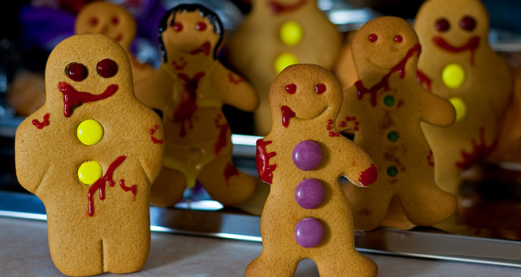
Can you resist zombification?
Read now to access more details of Can you resist zombification?From The Walking Dead to Call Of Duty WWII, zombies are everywhere. Join us on an exploration of the undead amongst us...
-
The real reason clowns scare us
Read now to access more details of The real reason clowns scare usWith the release of Stephen King's 'It' and the terrifying character Pennywise we look back on this article, published last year, questioning why we are scared by the faces clowns pull.
-
What are your chances during a zombie apocalypse?
Read now to access more details of What are your chances during a zombie apocalypse?According to mathematics we'd all die in a zombie apocalypse but nature and computer science offer us more optimistic outcomes.
-
Mary Shelley: the expert view
Read now to access more details of Mary Shelley: the expert viewStephanie Forward outlines the life and legacy of the author of 'Frankenstein', Mary Shelley.
Rate and Review
Rate this article
Review this article
Log into OpenLearn to leave reviews and join in the conversation.
Article reviews