- Current section: Introduction
- Learning outcomes
- 1 Hibernation and torpor: An introduction
- 2 The nature and extent of hibernation and torpor in endotherms
- 3 Characteristics of hibernation behaviour
- 4 Physiological adaptations – molecules and cells
- 5 Physiological adaptations – respiration and energy provision
- 6 Control systems
- 6.1 Introduction
- 6.2 The hypothalamus as central regulator
- 6.3 Metabolic regulation and the midbrain
- 6.4 Rapid-response genes and rhythmic neuronal activity
- 6.5 The neurotransmitters histamine and serotonin: a role for chemical signalling between neurons of the hypothalamus
- 6.6 Hormones and hibernation
- 6.7 Sleep, the brain and hibernation
- 6.8 Summary
- Unit Questions
- References
- Acknowledgements
from The Open University
Alternatively you can skip the navigation by pressing 'Enter'.
Animals at the extremes: Hibernation and torpor
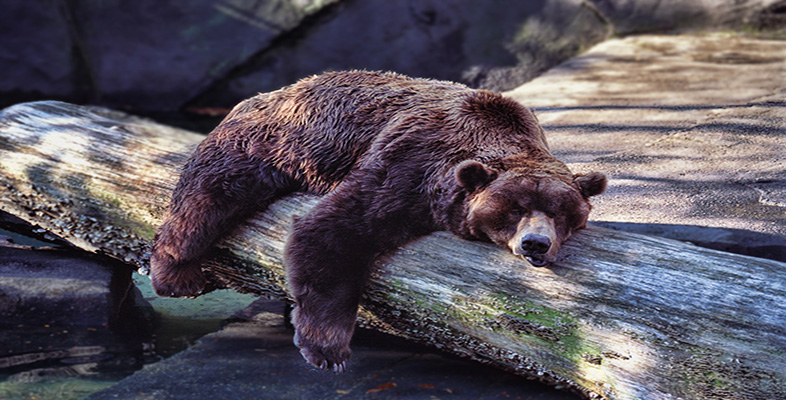
Hibernation is an ingenious adaptation that some animals employ to survive difficult...
Hibernation is an ingenious adaptation that some animals employ to survive difficult conditions in winter. This unit examines the differences between hibernation and torpor, and discusses the characteristic signs of hibernation behaviour. It explores the triggers that bring on hibernation, and whether internal signals or external season cues are predominant. It also examines the physiological adaptations that occur in hibernating animals. This unit builds on and develops ideas introduced in the OpenLearn unit Animals at the extremes: The desert environment (S324_1).
By the end of this unit you should be able to:
- define and use, or recognize definitions and applications of, each of the bold terms;
- give definitions of the terms ‘hibernation’, ‘torpor’ and ‘adaptive hypothermia’, and the three physiological processes that underlie them;
- give examples of the diversity of the major groups of mammals and birds that contain hibernating species;
- describe the physiological changes occurring during entry to hibernation and at least three of the cues that may trigger entry;
- present evidence to show that hibernating mammals and birds retain physiological control of their T b;
- explain the role of brown adipose tissue and mitochondrial uncoupling of respiration from metabolic energy release in heat generation in mammals;
- describe the analytical and targeted experimental approaches to the identification of genes and proteins implicated in hibernation and arousal, and give examples of them;
- explain the importance of the selection of appropriate metabolic fuel sources in hibernators;
- describe the changes needed to maintain hibernation and survival at cellular level;
- critically describe experiments designed to evaluate the energy cost of hibernation as compared with euthermia, and discuss the importance of three factors that influence whether animals use hibernation as an energy-conserving strategy;
- suggest why periodic arousals occur and offer a mechanism for them;
- present experimental evidence for the view that control of T b depends upon temperature-sensitive neurons and suggest where they may be located;
- give examples of systems of chemical control for the onset and maintenance of hibernation that operate in the brain and blood circulation;
- describe the relationship between circadian controls of sleep–waking cycles and the maintenance of torpor;
- use diagrams and flow-charts to illustrate physiological and biochemical principles.
- Duration: 14 hours
- Published on: Wednesday 1st June 2011
- Level: Intermediate
- Posted under: Natural History
Contents
Animals at the extremes: Hibernation and torpor
Introduction

This is the second in a series of three units on Animals at the extremes. In order to get the most from it, you should have previously studied Animals at the extremes: The desert environment (S324_1) [Tip: hold Ctrl and click a link to open it in a new tab. (Hide tip)] . After completing this unit you might like to complete the series by studying Animals at the extremes: Polar biology (S324_3).
This unit is from our archive and it is an adapted extract from Animal physiology (S324), which is no longer in presentation. If you wish to study formally at The Open University, you may wish to explore the courses we offer in this curriculum area.
Archive content
This is an extract from an Open University course which is no longer available to new students. If you found this interesting you could explore more free Natural History course units or view the range of currently available OU Natural History courses.
Other pages You might like

Try: Studying mammals: A winning design
The term mammal encompasses a huge variety of animals, including humans. But what makes a...

Try: Animals at the extremes: The desert...
Animal life has adapted to survive in the most unlikely and inhospitable habitats. This...

Try: The science of evolution
This unit debates the issues surrounding the science of evolution and religion.

Try: Studying mammals: The social climbers
Monkeys have long fascinated us because of their similarities to the human race. In this...

Try: Studying mammals: Chisellers
Ever wondered why rats, mice and squirrels seem to reproduce at such an alarming rate?...

Try: Studying mammals: Plant predators
From the mouse-deer to the elephant, plant eaters come in all shapes and sizes. But how...

Try: Studying Darwin
This unit brings together a collection of units from the OpenLearn site that would be of...

Try: School activities: Evolutionary tree of...
This introduction to the evolution of mammals considers Darwin’s observations on...

Try: Studying mammals: The opportunists
Many mammals are food specialists, with complex adaptations that gear them toward a...

Try: Microbes – friend or foe?
Microbes often get a bad name. Whilst some of them do cause disease, others play vital...

Try: Life in the Palaeozoic
Fossils are a glimpse into the distant past and fascinate young and old alike. This unit...

Try: An introduction to biological...
This unit is concerned with macroevolution – the patterns and processes of evolution...
Comments
Be the first to post a comment
Copyright & revisions
Copyright information
- Creative-Commons: The Open University is proud to release this free course under a Creative Commons licence. However, any third-party materials featured within it are used with permission and are not ours to give away. These materials are not subject to the Creative Commons licence. See terms and conditions. Full details can be found in the Acknowledgements section.
Feeds
If you enjoyed this, why not follow a feed to find out when we have new things like it? Choose an RSS feed from the list below. (Don't know what to do with RSS feeds?)
Remember, you can also make your own, personal feed by combining tags from around OpenLearn.
Alternative Formats
Tags, Ratings and Social Bookmarking
Page Tags
Sign in or create a free account to add tags to your personal tag cloud using:
Have you tried our free courses?
Back on the streets
More Or Less returns
OU TV & Radio
-
Keeping Britain Alive - Ep 8BBC Two (Northern Ireland only)
Saturday 0:10 -
Life In The UndergrowthEden
Saturday 9:00 -
History Of ScotlandBBC Two
Saturday 10:00 -
More Or LessBBC Radio 4
Sunday 20:00 -
Thinking Allowed: Plenty & stammeringBBC Radio 4
Monday 0:15
Views
Votes
Comments
Tags
- climate change (373)
- business (277)
- diaries (194)
- bottom line (169)
- food (168)
- Rough Science (162)
- internet (147)
- BBC Two (145)
- BBC Radio 4 (140)
- BBC (133)
- Scotland (121)
- points for debate (120)
- listings (120)
- Creative Climate (116)
- Bang goes the Theory (116)
- children (116)
- English Civil War (115)
- astronomy (108)
- Thinking Allowed (104)
- religion (98)
- marketing (94)
- 20th century (94)
- Charles I (93)
- communication (92)
- evolution (92)
- sustainability (89)
- research (89)
- architecture (86)
- energy (83)
- nutrition (78)
OpenLearn Links
Copyrighted imageCredit: Background image Lucian Milasan | Dreamstime.com