
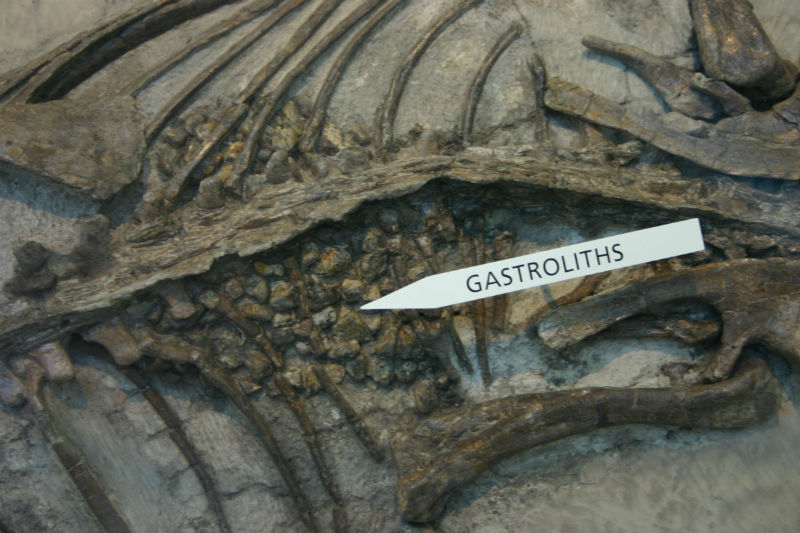
Many extinct marine reptiles, especially the plesiosaurs and marine crocodiles found in British rocks, are often found as fossil skeletons with smooth rounded stones in the belly region. What do you think these stomach stones, or gastroliths, were used for? After looking at the evidence you can decide for yourself, then compare your conclusions with the conclusions of the experts!
Hypothesis 1 - gastroliths for feeding
These reptiles do not have teeth suitable for chewing and they must bolt down their prey whole or in large chunks. Therefore, the gastroliths were ingested to act like ‘teeth’ inside the stomach, helping grind and mix up the meal to aid digestion.
Hypothesis 2 - gastroliths for buoyancy and swimming
These reptiles contain a lot of air in their bodies because they breath air with lungs. Heavy stones in the stomach would counteract the light air and act as ballast, stopping the animal floating to the surface.
Hypothesis 3 - accidental ingestion
Reptiles that feed on animals living on the sea floor (benthic animals) will accidentally swallow stones, gravel and sand as a consequence. In this case, gastroliths really have no function.
Next: Find out what the evidence says... and reach your conclusion
Rate and Review
Rate this article
Review this article
Log into OpenLearn to leave reviews and join in the conversation.
Article reviews