
The values of these particular six numbers are crucial. Gravity is a weak force, if it wasn't we wouldn't have large, long-lived stars like we do.
Even more important is the nuclear force which is crucial for the sun to be carefully tuned. Not only does nuclear energy from the sun keep the Earth warm, but throughout the history of our galaxy, all the atoms from which we are made have originated from the pristine hydrogen in stars, so we're quite literally the ashes of long dead stars, or, to put it another way less romantically, the nuclear waste of the fuel that made those stars shine.
Martin says that when we look around at our terrestrial environment and at the cosmos we realize that this could not exist were it not for the rather special requisite tuning in the fundamental numbers that govern it. Some people, of course, would say it's just co-incidence, and some people would think it was the work of some sort of benign creator. Martin interprets this evidence differently.
If we imagine that our Big Bang wasn't the only one, then naturally there would be some which have the requisite tuning for life to emerge, and we find ourselves in just that Universe. If there were many Big Bangs it shouldn't come as any surprise that in some of them the tuning is fulfilled, just as in a clothes shop you'll find one suit that fits you out of many in stock.
Martin tells Final Frontier that in principle, if we had a powerful enough computer we could calculate how the Universe evolved from simple beginnings, and to do that sort of calculation we'd have to put in as a starting point the recipe for our Universe, which are basically the 6 numbers which determine the expansion of the Universe, its content and the forces governing it.
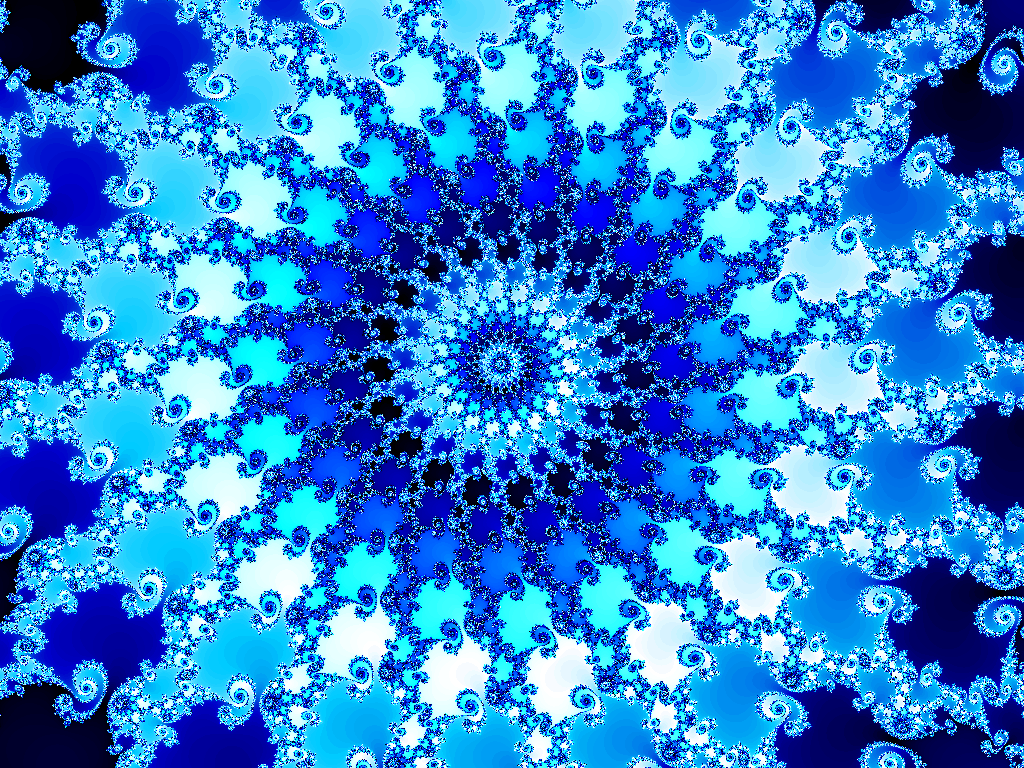
In mathematics there's a marvellous pattern called the Mandelbrot set, which you describe by a very simple formula. That simple formula encodes something which displays layer upon layer of structure however much you magnify it. The mystery is why our Universe is encoded by a set of numbers and formulae which are like the Mandelbrot set.
We are in a Universe where the laws and the numbers governing it have tremendous ramifications from which our Big Bang has evolved into the complex cosmos we inhabit, where on at least one planet creatures have evolved which are complicated enough to worry about it all.
Martin Rees was explaining his theory to the Open University programme Final Frontier.
To find out more about Martin Rees' six key numbers, take a look at Martin's book, which is called Just Six Numbers.
More on the magic of numbers
-
Queen (and Slave) Of The Sciences
Read now to access more details of Queen (and Slave) Of The SciencesKatie Chicot explains why numbers make the world go round.

Level: 1 Introductory
Rate and Review
Rate this article
Review this article
Log into OpenLearn to leave reviews and join in the conversation.
Article reviews