Teaching secondary music
Use 'Print preview' to check the number of pages and printer settings.
Print functionality varies between browsers.
Printable page generated Saturday, 4 April 2026, 1:51 PM
Teaching secondary music
Introduction
This free course, Teaching secondary music, explores some of the key ideas and concepts that beginner teachers in secondary schools need to understand so they can plan their teaching to support the musical development, understanding and skills of all the young people they teach. These include:
- what it means to teach and learn musically
- the musical knowledge(s) teachers teach
- where and how young people are taught and learn music
- the pedagogies that underpin different forms of and approaches to music education.
Through coming to a greater understanding of these concepts and the issues they raise, and reflecting on the implications of them for your own teaching, you will develop your practice as a music teacher. You will be supported in coming to this greater understanding through being introduced to the work and ideas of some significant contemporary music educators.
Now listen to an introduction to this course by its author, Gary Spruce:
Transcript
Welcome to the Open Educational Resource Course: Teaching Secondary Music – Issues in Practice.
Hello, I’m Gary Spruce. I’ve worked for many years in music education as a secondary school teacher and in initial teacher education.
I learned that music is one of the most rewarding subjects to teach in secondary schools but also that it is one of the most challenging.
For many young people music is a very important part of their lives and something about which they feel strongly, so we music teachers have a foundation of enthusiasm to build on.
But music teaching is more than just about reinforcing these enthusiasms. It is also about enabling children to develop musically, to help them become aware of the rich variety of music in society and the many ways in which it is practiced, and then to help them become fluent and knowledgeable in some of these practices themselves. This means challenging young people’s conceptions of what music is and what it means to be musical but also challenging our own conceptions as music teachers.
When writing this course I looked at key ideas and concepts that secondary music teachers at the beginning of their careers should know about.
These include what is meant by musical knowledge, what there is to teach and learn in music and the different ways in which young people are taught and learn musically. It concludes by proposing key principles to underpin a musical approach to music teaching, principles, which enable young people to develop musically.
I am sure you will find it interesting and useful.
As you work through the activities you will be encouraged to record your thoughts on an idea, an issue or a reading, and how it relates to your practice. Hopefully you will have the opportunity to discuss your ideas with colleagues. We therefore suggest that you use a notebook – either physical or electronic – to record your thoughts in a way in which they can easily be retrieved and re-visited. If you prefer, however, you can record your ideas in response boxes within the course – in order to do this, and to retrieve your responses, you will need to enrol on the course.
This OpenLearn course is part of a collection of Open University short courses for teachers and student teachers.
Learning outcomes
After studying this course, you should be able to:
understand what is meant by musical learning
understand how and where young people are taught and learn music
recognise what there is to teach and learn in music
identify the key principles that underpin musical teaching and learning in the secondary classroom.
1 What is musical learning?
It might seem strange to begin a course on ‘teaching’ with a section on learning. However, as the eminent music educationalist Keith Swanwick (2008) says, teaching cannot be said to have taken place unless learning has occurred. Teaching therefore should not, and cannot, be conceived of as separate from learning. As Jo Glover puts it, ‘The connection between teaching and learning is not hard wired – we cannot say that “I teach, therefore you will learn”’ (2008, p. 1).
1.1 What is learning?
One commonly cited definition of learning is that it has taken place when a young person is changed or altered in some way. Swanwick suggests that this definition brings to mind the fate of August Gloop from Roald Dahl’s Charlie and the Chocolate Factory, ‘when he is shot up a pipe into the mincing, mixing, slicing machine’ (Swanwick, 2008, p. 10).
But don’t, dear children, be alarmed;
August Gloop will not be harmed,
Although, of course, we must admit
He will be altered quite a bit.
Philpott writes of such changes as being when young people’s ‘behaviour, attitudes or values’ are altered ‘through the development of knowledge and understanding and their consequent understanding of the world enriched’ (Philpott, 2008).
This suggests a conception of learning and hence an aim of teaching as being about more than the mere transmission and acquiring of factual musical knowledge or even instrumental or vocal skills.
Reflection point
Think back to your own experiences as a young learner. Identify one example of teaching (from any subject), which you think resulted in you being ‘altered’ as a person.
- What did the teacher do in terms of presentation (e.g. explanations, resources, questioning) that resulted in this learning?
- Why did this teaching have such an impact and remain in your memory?
1.2 What is musical teaching and learning?
A basic tenet for all music teachers is that everyone has the capacity to think and act musically and therefore everyone has the capacity to learn and be taught music. No one therefore should be labelled as ‘unmusical’. Indeed, in many cultures the idea that one can be ‘unmusical’ would be seen as absurd.
Young people demonstrate the capacity to be musical from a very young age. They experiment with their voices and take delight in exploring sound-making sources of all kinds. Young children also naturally ‘integrate’ music into their lives rather than seeing it as a separated activity, as described here by Shehan Campbell:
Children … demonstrated the natural connection between eating and socializing, making music, and moving. A glance down one table of first graders showed a wide array of polyrhythmic movement. One little girl was rotating her sandwich in a pulsing motion … in half circles in front of her. The next girl was tapping the bases of two carrots at top speed. On the other side of her, a boy was bouncing his milk carton in a syncopated beat. A girl was sucking a lollipop in a loud rhythm.
Activity 1
Watch this video clip in which the children demonstrate a similar relationship with music, integrating it into their play. Identify the different ways in which the children act musically and the kind of musical understandings they are demonstrating.
Transcript
Being outside means opportunities to climb, balance, be adventurous, be vigorous in an allowing space, coordinate movements with teammates and express joy noisily.
Being outside is about skipping and marching as you play the pipe. Exploring the dynamics of instruments without worrying about the noise, it's about sharing things.
Being outside is about experimenting novel ways of making sound, novel ways to be off the ground, and a novel place to have a chat.
Being outside is about swinging and twisting and weaving. Being outside is about concentrating in your own space; and a sense of balance, with a spring in your knees, until you can jump on to something fresh.
Both Shehan Campbell’s description and the video clip alert us to how musical behaviour and understanding is embodied – i.e. is demonstrated through the doing of music; through ‘acting musically’. What the children are doing in these examples is really no different from a concert violinist playing Beethoven’s violin concerto: both are demonstrating their musical knowledge and understanding through physically making and doing music. Musical understanding is embodied understanding. As Elliott writes, ‘The proof of my musicianship lies in the quality of my music making, in what I get done as a performer (improviser, composer, arranger, or conductor)’ (1995, p. 57).
There are, of course, many ways in which one might act musically. Daniel Levitin (2012) points out how within the areas of composing and performing there are many ways in which musical understanding might be demonstrated, often related to the musical tradition or style within which the performing and composing takes place. For example, whereas the classical music tradition sets much store by the capacity to use notation, in the majority of the world’s music the overarching skills are those of improvising and ‘playing by ear’.
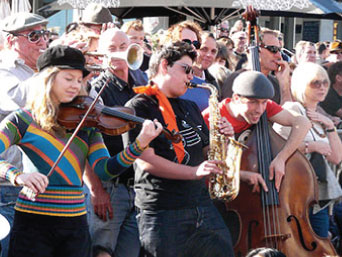
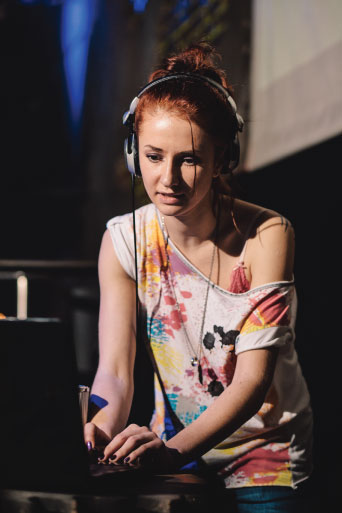
Levitin also describes ways in which people are musical other than through playing an instrument and composing. He cites as examples people who demonstrate an ‘intense receptive sensitivity to music’ (2012, p. 634) by remaining deeply affected by music and the emotion it has engendered in them long after they have finished listening to it. He also notes how record producers and sound engineers often possess very highly developed receptive musical skills, yet many do not play an instrument or compose.
Then there are also those who have the auditory equivalent of a photographic memory – what Levitin calls a phonographic memory:
Some DJs can listen to the briefest excerpt of a musical piece, often 1 s or less, and identify the title, composer, and performers and distinguish several different performances of the same piece by the same group.
So, lots of ways in which ‘music teachers’ can support ‘musical learning’!
Activity 2
Part 1
Think about your own behaviours as a musician and note down the different ways in which you ‘act musically’. Which of these ways of acting musically have their roots in occasions where you were directly ‘taught music’ by a teacher in a classroom or music studio, and which did you acquire outside of these formal structures?
Part 2
Take one of these ways in which you act musically and plan a teaching activity for a key stage 3 class (ages 11–14) that would support them in acting in this way. Respond in detail, thinking about the resources you might use, how you might sequence the activity and the different musical experiences that the young people will engage in.
2 What is there to learn in music?
Music teachers are constantly involved in making decisions about what should be taught in music lessons and how it should be taught. Such decision making needs to be underpinned by an understanding of what there is to learn in music, and how different kinds of musical knowledge promote different kinds of music teaching and engender different kinds of musical learning. In this section you are going to look at one particular conception of musical knowledge developed by Reid and adapted by Philpott. We will ask you to consider the implications of this model in the work of a secondary music teacher.
2.1 Philpott/Reid’s typologies of musical knowledge
Philpott (2007), drawing on Arnaud Reid, posits a framework that identifies three inter-related types of musical knowledge:
- knowledge about music (the facts of or information about music)
- knowledge of how in music (the practical skills of music)
- knowledge of music (a relationship with particular music).
The characteristics of these different kinds of knowledge are outlined in Table 1 below.
| Knowledge type | Features |
|---|---|
Knowledge about music | Information about music, e.g.
|
Knowledge of how in music | The ‘practical’ skills of music, e.g. how to:
|
Knowledge of music | Knowledge that comes from deep acquaintance with music as a performer, listener or composer/improviser (or all three). |
Activity 3
Identify three examples of knowledge about music and three examples of knowledge of how in music.
For knowledge of music, write a short definition of what you think this might mean, including some examples. Return to and amend your response once you have read the following subsection, which explores in detail the concept of knowledge of music.
Knowledge about music
Knowledge of how in music
Knowledge of music
Although conceptually the most difficult to pin down, the most important of these knowledge types is knowledge of music as it is this knowledge that makes music meaningful for us as human beings. It is the reason why we and young people engage with music. It’s what makes us pick up and play ‘our’ instrument, download a track by our favourite artist or compose a song to perform at, say, an open-mike session.
Reflection point
Reflect on what it is about music that makes it meaningful for you. What first attracted you to music and what keeps you ‘coming back’ to it?
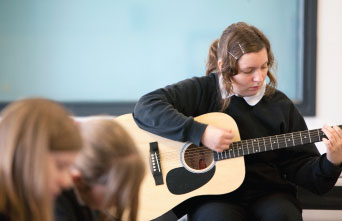
Philpott suggests that knowledge of music has been developed when one has an:
understanding relationship with the music, in the same way that we get to know a person or a face. We might not be able to say what we know or even demonstrate it yet the relationship with ‘this’ piece of music cannot be denied. Indeed, this is the only way that we can account for pupils developing musically without any formal music education.
Spruce (2007) describes it as like coming to ‘know’ a particular wine. One’s knowledge ‘about’ a particular wine might be that it comes from the Bordeaux region of France, that it results from the blending of particular types of grape and comes from a vineyard that has a reputation for producing ‘Premier Cru’. One might also know ‘how’ to lay it down; to decant it; to pour it and to cork it.
However, few would argue that this knowledge ‘about’ and ‘how’ is any substitute for actually drinking the wine. It is only through drinking wine – regularly and thoughtfully – that one comes to really have knowledge of it and its many types and varieties. The Guardian’s one-time wine correspondent, Victoria Moore, describes this kind of knowledge of wine thus:
the only way to acquire it is by tasting until you know a wine’s signature as instinctively as you might recognise a footballer – not by matching in your brain the words you would use to describe him to someone else (for example, ‘heavily built but fast, with black hair’), but because his gait across the pitch, that very particular way he leaps to head the ball, is a pattern you just know.
This understanding of music might be demonstrated in the way in which we perform something: how we out its subtleties and nuances in our own personal way. It might be manifest in compositions or improvisations – how we make these uniquely our own or do something unexpected and engaging with a common musical device. Or, it might simply be how we talk about music in a way that makes others think differently about it or that represents a creative and original viewpoint.
2.2 Applying the knowledge types
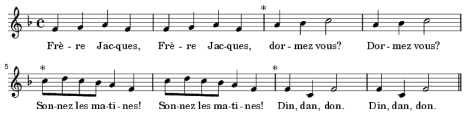
Figure 4 is the staff notated version of the French tune Frère Jacques. In Table 2 Philpott shows how this tune could be used to develop the three kinds of musical knowledge.
| Knowledge ‘about’ | Knowledge ‘of’ | Knowledge ‘how’ |
|---|---|---|
What a round is… What 4 time is… Knowing the history and meaning of the words… Knowing what note it starts on… | The expressive character of the piece (in the same way a place or person has a character)… The shape or journey of the music as it reaches out and then comes home… The expressive potential of the music (what would happen if we sang it ‘spiky’ or ‘like a lament’)… | How to sing and recognise a ‘round’… How to breathe in the right places… How to sing in an ensemble… How to conduct in 4 time |
Activity 4
Choose a piece of music that you know well and feel that you have a particular affinity with and think about how you came to ‘know’ this music.
Then analyse this music in terms of the three different knowledge types, keeping at the forefront of your mind what you might teach to a key stage 3 class.
Knowledge about
Activity 5
Building on your response to Activity 4, develop an activity that you might use with a key stage 3 class that integrates these three forms of knowledge but foregrounds knowledge of music. Your response should include:
- a brief description of the class and why what you plan to teach them is appropriate for this group
- the planned musical learning outcomes for this activity
- the resources that you will draw on
- the opportunities that the activity will present for the young people to ‘act musically’.
Now that you have worked through this section, we’d like you to reflect on what you have learned.
Activity 6
Make notes on the following questions:
- How convinced are you about the categorisations of musical knowledge presented here? What do you consider to be the strengths and weaknesses of each model?
- How relevant do you feel each of these models is to the work of a music teacher in a secondary school?
- What do you think are the implications of each of these models for what is taught in music and how it is taught?
3 Where do music teaching and learning take place?
Musical learning can be said to take place in three different contexts, all of which have to be taken into account by music teachers in secondary schools. In this section you will consider each of these contexts and their implications for musical knowledge and pedagogy. You will focus particularly on informal settings and their pedagogies, as these have gained particular importance in many secondary school music departments as a result of the influence of Musical Futures and the research of Professor Lucy Green (2002) into how popular musicians learn.
3.1 Formal learning and pedagogies
Formal learning is typically thought of as being provided by schools, colleges or music service instrumental lessons. Here, knowledge typically lies with the teacher. It is they who define the learning objectives, and structure the teaching and learning (the pedagogy) in order to try to ensure that the objectives are achieved. Learning will tend towards the regulated and systemised.
The success of the teacher is likely to be evaluated in terms of the extent to which the learning objectives are achieved. In formal learning and pedagogy the learning that is to be achieved is often predetermined and often set down in official documents (music national curricular or music exam specifications) or quasi-official documents such as music schemes of work.
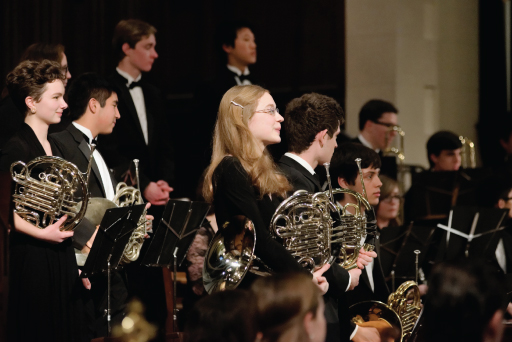
3.2 Non-formal settings and pedagogies
Non-formal settings are where musical activities led by adults (often professional musicians and musicians working in the community) take place in venues such as youth clubs. It is important to note that these are not unstructured or unplanned sessions – the difference lies in the way the music educators who lead them tend to come to the session not with fixed ideas about what is to be learned and how learning will be sequenced, but with what Smith describes as ‘a proposal for action which sets out the essential principles and features of the educational encounter’ (Smith, 2000, p. 15).
3.3 Informal settings and pedagogies
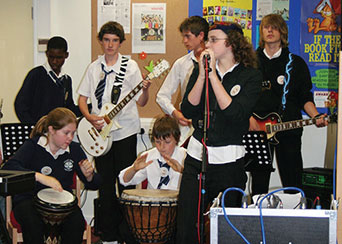
Informal learning pedagogies are characterised by the learner having greater ownership over what is to be learned (deciding what is important knowledge) and how that knowledge is to be learned (pedagogy). Within music education, informal learning is most explicit through the pedagogies propounded by Musical Futures, which is underpinned by the pioneering work of Lucy Green into how popular musicians learn (Green, 2002).
Activity 7
Watch this video in which Professor Lucy Green outlines the characteristics and dispositions of young popular musicians. Note particularly what she has to say about:
- motivation
- musical autonomy
- aural learning
- learning from a recording
- learning from friends rather than learning from teacher-expert
- musical challenge.
Transcript
Reflection point
What might be the implications for your teaching if you were to adopt some of these approaches to teaching? Particularly, how might it change your role as a teacher and your relationship with the young people in the classroom?
As Green notes, teaching pedagogies underpinned by principles of informal learning are characterised by:
- allowing learners to choose the music themselves
- learning by listening and copying recordings
- learning alone and in friendship groups with minimum adult guidance
- learning in personal, often haphazard ways
- ‘a deep integration of listening, performing, improvising and composing throughout the learning process with an emphasis on personal creativity’.
Activity 8
Explore the Musical Futures website. Note the key characteristics of a ‘Musical Futures Approach’ and the resources that they offer. Think about how you might use some of these in your teaching.
Cain (2013) quotes Jenkins (2011) who argues that:
informal learning is not only a good way to learn, it is the ideal way to learn … While formal learning strategies supply much needed information and guidance, it is informal techniques that tend to compel students to make ongoing decisions in constructing simulations of real-life contexts.
3.4 Informal learning in the classroom
In the video that forms the core of the next activity, Professor Lucy Green of the Institute of Education in London talks about how her interest in informal learning in music developed from an investigation she did into how popular musicians learn.
Early on in the video, Green identifies five practices of informal learning. She then goes on to describe examples of how informal learning practices have been implemented into classroom music.
Activity 9
Transcript
Watch the video and note down in what ways Green suggests that being involved in informal learning changes the way in which children listen to music at home in a very significant way.
- What do you think are the implications of this for the way in which you might teach popular music?
- What assumptions about the way in which children listen to music might you have to rethink?
- At approximately 4’40” on the video, Green talks about Musical Futures being pedagogy, not a method. What, for you, is the distinction between these two terms?
- What changes to the role and responsibility of the teachers does Green suggest are implicit in the informal learning approaches? What are the implications of this for how music is taught in the secondary classroom?
Activity 10
Speak with one of your pupils and try to identify examples of their learning from all three of these contexts: formal, non-formal and informal. Ask them which they find most valuable and enjoyable.
What influence of the other two areas can you see on their musical learning within the area in which you work?
4 What is a musical music lesson?
Reflection point
Reflect on how you would define a ‘musical’ music lesson and the reasons why.
A common criticism of music teaching in schools is that it is insufficiently ‘musical’. For example, in its triennial report into music education in English schools, Ofsted (the body responsible for the inspection of schools in England) reports that:
in too many instances there was insufficient emphasis on active music-making or on the use of musical sound as the dominant language of learning … Put simply … there was not enough music in music lessons.
In this final section, and drawing on the learning in the previous sections, we want you to begin to explore and identify some characteristics of a musical music in the context of planning a lesson.
Characteristic 1: Musical music lessons adopt an integrated and holistic approach
Integrated and holistic are understood in two ways here. Firstly, that music lessons in schools need to have cognisance of young people’s musical experiences and activities outside of school, or in a previous school, such as their primary school. These experiences should be integrated into what is planned in the music classroom, using them to develop young people’s musical understanding in ways that build on and extend these experiences.
Secondly, integrated and holistic refer to how the most musical lessons tend to be those that integrate the three main aspects of musical experience – listening to music; creating music; performing music – into common learning outcomes. This leads more readily to young people being immersed in music and, as Matthews says, reflects the way in which music is typically experienced outside of school:
even a cursory examination of the musical practices of most musical traditions and cultures reveals that there is often much blurring of lines between the activities of composing, listening and performing.
Matthews goes on to cite examples from jazz, African township music and hip hop to reinforce this point. Similarly, if you take part in a karaoke session you will naturally integrate these activities: you will listen to the backing track and compose/improvise the ‘on the hoof’ cover version of whatever it is that you ‘perform’.
Activity 11
Part 1
Watch the video clip Bugs, which is taken from a key stage 2 whole class instrument lesson and note how composing, listening and improvisation are integrated into this lesson.
Transcript
Bugs
[PIANO PLAYING]
[VIOLIN PLAYING]
Part 2
Imagine that you are teaching this class at the start of their first year at secondary school and you want to build on their experiences of this holistic and integrated approach to composing at primary school.
Think of a topic that you feel would build on the pupils’ experiences and provide opportunities for continuity and progression. Then, using either this lesson plan or one of your own choosing, note down some broad headings for the lesson, including:
- the aims for the lesson
- the activities that will support these aims and which:
- integrate performing, listening and composing/improvising
- provide a suitable level of challenge and opportunities for progression for the class, knowing their experiences at primary level.
Return to this lesson plan and amend it after each of the subsequent ‘characteristics’ have been examined and the activity completed.
Characteristic 2: Learning objectives/outcomes must be musical
As we have noted, formal learning contexts tend to be driven by predetermined objectives or outcomes. It is important then that these objectives are musical ones. So, for example, to gain an understanding of Gamelan through using its techniques and protocols to perform Gamelan music, and then to use these techniques to compose and improvise one’s own music is to gain knowledge of music from the inside. To know the names of the Gamelan is not a musical learning outcome. It is here that Philpott’s analysis of different knowledge types, and the work that you have done previously in this course, can help you to ensure that you focus on knowledge of and knowledge that is rooted in the practice of music.
Activity 12
Note here the learning objectives and learning outcomes of the lesson plan you started in Activity 11. Include a brief explanation as to why you consider these to be ‘musical’.
Return to the lesson plan you created in Activity 11 and amend it accordingly.
Characteristic 3: The lesson is a musical experience
The third characteristic of a musical music lesson is that it is full of musical experience: the entire lesson, from the opening seconds (where music might be being played as the young people enter the classroom) to the moment they leave should be a musical experience. Musical experiences will, of course, include opportunities to perform, compose and listen, but also to discuss music and to express informed views about it. A good test is to ask oneself whether the activities that are planned for a lesson would be recognised as musical outside the school. If the answer is no, then there are probably better ways.
Activity 13
Transcript
Watch the video from a whole class instrumental lesson with a key stage 2 class. Note how the lesson begins with music that continues into the first activity with the children. Very little is said.
Return to your lesson plan and think how you can begin the lesson with music and musical experience. Have at the forefront of your mind how this music will motivate and enthuse the young people and link to the main focus of the lesson.
Return to your lesson plan and amend it accordingly.
Characteristic 4: Opportunities for young people to be and to act creatively
Professor Pam Burnard writes that:
At the core of music-making is a deep sense of curiosity and wonder, a desire to question and ponder; … At its richest, learning music is an energising, purposeful and imaginatively vital experience, … At its poorest, music teaching and learning can be a dry, disconnected experience, focused on the instruction of assessable skills, and one that pays little attention to children’s affective or creative development as musical learners and music users.
She suggests that creative teaching and learning in music can be developed through teaching approaches that promote:
- collaboration
- risk-taking
and the activities of:
- improvising
- composing
- performing
- listening.
Activity 14
Part 1
Complete Table 3. For each ‘context’ give an example from your own practice, from teaching that you have observed or from a speculative example.
| Examples from practice | Further ideas | |
|---|---|---|
| Collaboration – activities that engage both teachers and children in music-making. | ||
| Risk-taking – activities that allow learners to experiment musically without always being assessed or judged. For example, setting an unsupported task involving a problem or teachers modelling ‘risky learning’ by attempting to compose a song with their class. | ||
| Improvising – activities that encourage exploration of sounds, both acoustically and using technology, developing non-verbal communication during improvisations and a sense of play and experimentation. | ||
| Composing – activities that focus children on thinking about structures, purpose and intentions, following improvisation activities. For example, learners quickly relate to modern technology. | ||
| Performing – activities that engage learners in developing their confidence, self-esteem and analytical thinking, helping them to feel the excitement of preparing to perform and the joy of doing so. | ||
| Listening – activities that engage learners in listening to a wide variety of music played and made by other artists. |
Part 2
Now watch the video clip Scales Doh.
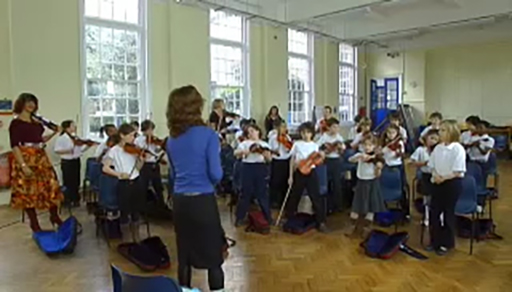
Transcript
What kinds of creative teaching and creative learning can you identify here? Note these down.
Can you think of other ways in which the teacher might have promoted further any creative aspect of this lesson? Explain how you think this might have been done.
Part 3
Finally, return to your lesson plan and amend it, ensuring there are opportunities for children to engage creatively with music as decision makers and problem solvers.
Characteristic 5: Experience different musical practices
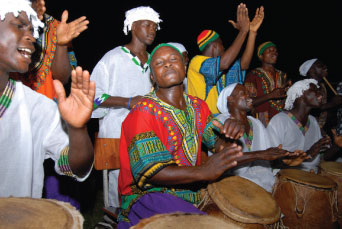
This characteristic is most often realised through engaging with music from a range of traditions and cultures. The danger though is that it can become what Fautley (in Fautley and Savage, 2008) refers to as a Cook’s tour of musical traditions resulting in superficial engagement with these musics – simply brushing against the musical artefacts of a culture.
What different musical traditions and cultures do offer to music teachers and young people is an understanding of music as a social phenomenon whose meaning is rooted in the purposes to which it is put and its value evaluated in terms of the extent to which it meets these purposes. Music from different traditions and cultures also offers alternative pedagogies for musical learning that can be drawn on in the classroom.
Activity 15
Part 1
Choose music from two traditions or cultures and for each identify:
- their musical characteristics
- the role that music plays in that society/social group
- the pedagogies (ways of learning and teaching) that each exemplifies.
Return to your lesson plan and identify opportunities for young people to explore different musical practices and to use them in their music-making. Amend your lesson plan accordingly.
Complete your lesson plan in full.
Part 2
Find an opportunity to teach this lesson and then evaluate it. Ask yourself some of the following questions as part of your evaluation:
- What musical understanding did the young people develop during the course of the lesson that they did not have at the beginning?
- Did the young people learn all that you planned that they should? If not, what were the reasons for this?
- Did your students learn things that you did not plan that they should learn? If so, how did this come about?
- How musical do you feel the experience was for your students?
- What changes might you make if you were to teach this lesson again?
Conclusion
In this free course, Teaching secondary music, you have looked at some key concepts and theories that underpin music teaching in the secondary classroom. You began by thinking about what is meant by learning and noting that teaching cannot be said to have happened unless there has been learning. You then went on to consider the many different ways in which musical understanding might be demonstrated.
In the second section you considered what there is to learn in music and particularly different kinds of musical knowledge. We argued here for the centrality of knowledge of music in music education.
Section 3 looked at how and where musical teaching and learning takes place. You noted how important it is that secondary music teachers recognise how much musical learning takes place beyond the school gates and take this into account in their own teaching. Finally, drawing on the previous three sections, Section 4 identified some key principles underpinning musical music teaching.
References
Acknowledgements
This free course was written by Gary Spruce.
Grateful thanks to Milton Keynes Music Service for kind permission to draw on and amend materials from the Certificate of Music Educators’ module materials written by the author of this course, http://www.milton-keynes.gov.uk/ schools-and-lifelong-learning/ music-faculty-community-learning-mk/ certificate-for-music-educators.
Grateful thanks to the Times Educational Supplement for kind permission to draw on the materials written by the author for the ‘Enriching the primary curriculum: music’ course, https://www.tes.com/ institute/ music-cpd-primary-schools.
Except for third party materials and otherwise stated (see terms and conditions), this content is made available under a Creative Commons Attribution-NonCommercial-ShareAlike 4.0 Licence.
The material acknowledged below is Proprietary and used under licence (not subject to Creative Commons Licence). Grateful acknowledgement is made to the following sources for permission to reproduce material in this free course:
Every effort has been made to contact copyright owners. If any have been inadvertently overlooked, the publishers will be pleased to make the necessary arrangements at the first opportunity.
Course image
© courtesy Jason Kubilius
Figures
Figure 1: Image courtesy of Gillian Howell, Australia. Crowd participation at the Big Jam, Melbourne International Jazz Festival 2010
Figure 2: Honored/dreamstime.com
Figure 3: Echo/Getty Images
Figure 5: © BASTIAAN STABBERS/iStockphoto.com
Figure 6: With kind permission from Yorkshire Youth and Music.
Figure 7: Emilio Labrador. This file is licensed under the Creative Commons Attribution Licence http://creativecommons.org/licenses/by/3.0/
Videos
Bugs video clip: courtesy of Trinity College London, www.trinitycollege.com
Class Instrumental video clip: courtesy of Trinity College London, www.trinitycollege.com
Scales Doh video clip: courtesy of Trinity College London, www.trinitycollege.com
Don't miss out
If reading this text has inspired you to learn more, you may be interested in joining the millions of people who discover our free learning resources and qualifications by visiting The Open University – www.open.edu/ openlearn/ free-courses.