Week 2: Understanding ecosystems
Use 'Print preview' to check the number of pages and printer settings.
Print functionality varies between browsers.
Printable page generated Sunday, 5 April 2026, 9:22 AM
Week 2: Understanding ecosystems
Introduction
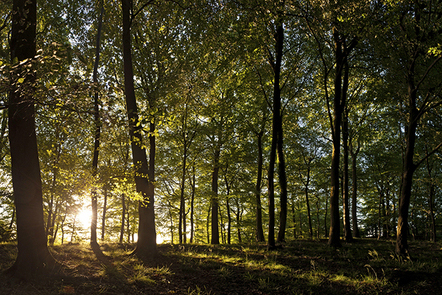
Ecosystems comprise more than relationships between organisms in the habitat. They are affected by factors such as light, water, carbon dioxide and nutrients and, of course, human activity.
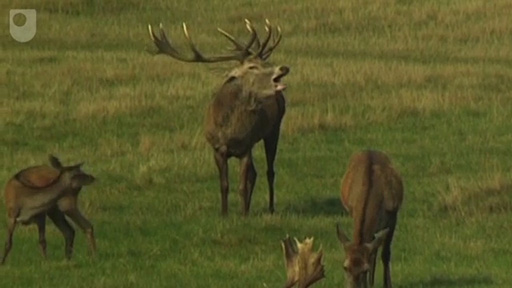
It is nearly impossible to understand all the interactions occurring in a given ecosystem at any one time, but it is possible to observe the types of interactions that are present – and there are six, described by Dr Mike Gillman in the following video. Analysing interactions in terms of these types can help to define the boundaries of a system, though this is not an easy task. Dr Vincent Gauci considers the routes of energy loss in ecosystems.
Transcript
Interactions
1 The carbon cycle
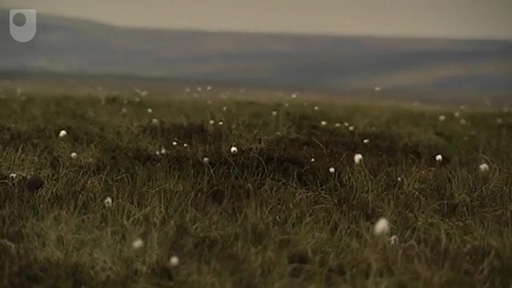
Dr Vince Gauci describes how carbon that plants have fixed from the atmosphere moves through an ecosystem and eventually is returned to the atmosphere. Carbon can be stored for long periods in the natural environment.
When you've watched the video think of some examples of places where carbon is stored.
Transcript
The peatbog problem
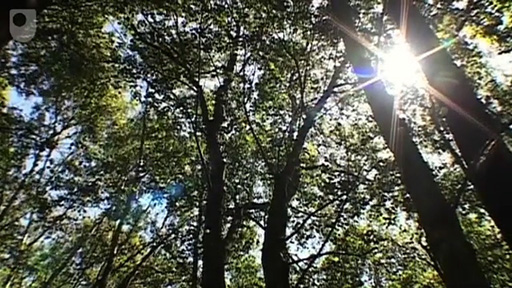
Life on earth is carbon based. A key feature of ecosystems is the passage of carbon through the system as part of the carbon cycle. Solar energy is captured in the leaves of plants and drives the incorporation of carbon into organic molecules. Carbon dioxide, in effect, combines with water to produce simple molecules. The process is called photosynthesis and in this video Sir David Attenborough describes it as the very basis of life.
How does the availability of light, water, carbon dioxide and nutrients affect the productivity of an ecosystem?
Transcript
How plants make food
2 Exploring oak woodland
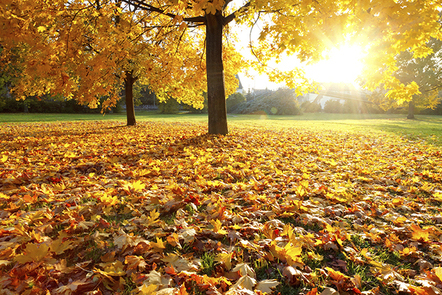
Woodlands provide a large variety of habitats, which are occupied by a huge variety of organisms. As an example, consider an oak wood, and the food chains and webs that exist in it.
In ‘Touring an oak woodland’, Professor David Streeter introduces you to a complex ecosystem. As you watch the video, recall the concept of indicator species, which you saw in the first week and consider the following questions.
- Why are the inter-relationships in ecosystems like woodlands so complex?
- What can food chains tell us about the ecosystems that exist in a particular woodland area?
- How have woodlands been managed?
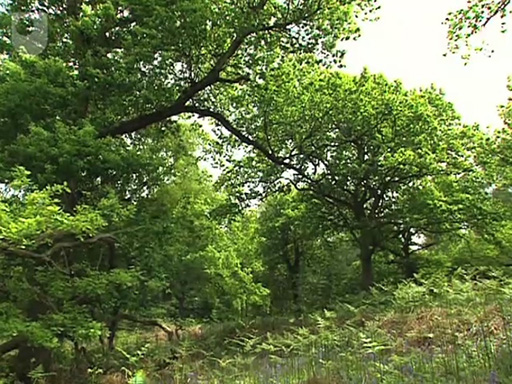
Transcript
Touring an oak woodland
2.1 Following a food chain
In ‘Following a food chain’, Professor David Streeter and Professor Chris Perrins show how you can study one particular food chain in a complex ecosystem.
Each individual food chain tells only part of the story of the oak woodland. What would a diagram of the food chain in the oak wood featuring the winter moth look like?
Transcript
Following a food chain
PROFESSOR DAVID STREETER: Woods are typical ecosystems, a combination of biological communities occupying a physical environment. However, in many ways, woods are difficult ecosystems to study, because they are more complex than most. The size that they occupy is large, from the soil surface to the top of the tree canopy. And this space is occupied by trees, shrubs, herbaceous vegetation, and the ground layer, producing a huge variety of habitats, generating an enormous diversity of organisms. When trying to understand something as complex as the interrelationships between the different species in an ecosystem like a wood, it's helpful to focus on a single species in order to find out how it manages to maintain itself and survive as part of the community.
NARRATOR: Many oak woods contain breeding pairs of sparrowhawks. They are the commonest woodland birds of prey.
[BIRDS CHIRPING]
NARRATOR: Providing food for a nest full of sparrowhawk chicks is a full-time job.
PROFESSOR DAVID STREETER: Many woodland species breed in the spring, and food supplies are crucial throughout the breeding period. And they determine the success or failure of the next generation.
[BIRDS CHIRPING]
PROFESSOR CHRIS PERRINS: When the male is feeding the brood, it's quite noticeable. If they've got their timing right, they pretty well seem to specialise on tits. The trouble is the male tends to pluck them and pull their head off before they're brought in, so we don't have a good field guide for plucked and headless birds. And you're dependent, really, on identifying them from the legs.
[BIRDS CHIRPING]
NARRATOR: The tits must find enough food to raise their young.
[BIRDS CHIRPING]
PROFESSOR CHRIS PERRINS: We can easily fit up a camera behind the nest that's designed to take a shot each time the tit comes in with a caterpillar in its beak. You have to realise that the tits have these very large broods, and if they're to raise 10 or so young, they've got to be able to find food very easily. And the parents, actually, bring in 700 or 800 meals a day - 700 or 800 caterpillars during a day - and they can't waste time if they're to do that.
[BIRDS CHIRPING]
NARRATOR: Winter moth caterpillars have to find their own supply of food. Oak leaves form the final link in our food chain. How do oak trees obtain the energy and nutrients they need for growth and for making leaves? Like all green plants, oak trees use carbon dioxide and water to make vital organic compounds. This process is called photosynthesis. Photosynthesis takes place inside the oak leaves in tiny green structures called chloroplasts, which capture light energy from the sun. What happens next is a complex chain of reactions that can be summarised fairly simply. Water and carbon dioxide are converted using the sun's energy into simple sugars called carbohydrates. The oxygen released in the reaction diffuses from the leaves into the surrounding air for use by other organisms.
PROFESSOR DAVID STREETER: Individual food chains tell only part of the story. Woods contain many species of animals and plants, each with their own particular food chains. And considering the wood as a whole reveals many important ecological patterns and ideas.
3 Fungi and the woodwide web
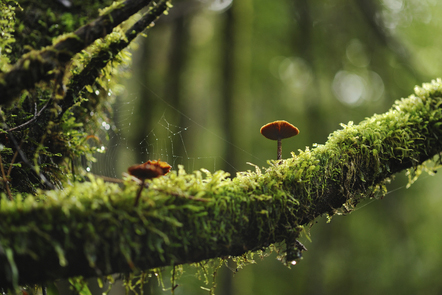
Fungi are an important component of ecosystems, especially in forests or woodlands, as they are valuable for decomposition. Decomposition breaks down dead organic matter, releasing nutrients, which can then be reabsorbed.
In this audio, Dr David Robinson talks about how fungi also have an intimate relationship with trees, which extends the woodland ecosystem underground.
Reflect on the chain of interactions occurring between trees and fungi, starting with the photosynthesis in the tree canopy and ending with fungus in the tree’s roots absorbing nutrients.
Transcript: Investigating symbiotic relationships
Investigating symbiotic relationships
3.1 Unearthing the woodwide web
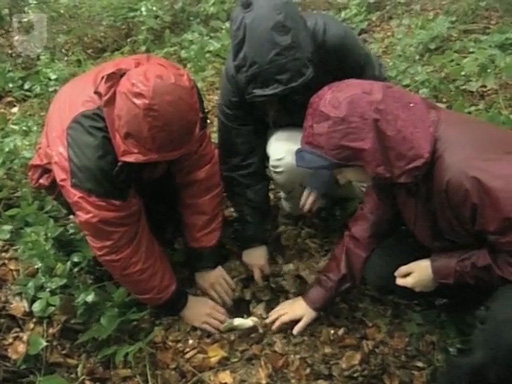
In nature, most trees form fungal connections. The health of the forest depends on fungus – decaying branches and leaf litter are rich with nutrients, and fungi can ferry these back to living plants.
Transcript
Unearthing the woodwide web
Activity 1
Having watched the video note some answers to the following questions.
- What is the significance of the long strands formed underground by fungi?
- How do they form partnerships with trees?
- What do these partnerships look like?
Answer
Many fungi form long fungal strands. The individual fungus can colonise quite a large area of the forest floor and this serves as a sort of plumbing system allowing it to conduct carbohydrates, nutrients and water.
They form partnerships with trees through mycorrhizae which infect the tips of the tree roots. The trees are then linked into the fungal underground web.
The tree roots 'team up' with the fungus.
3.2 Mutual benefits and competition
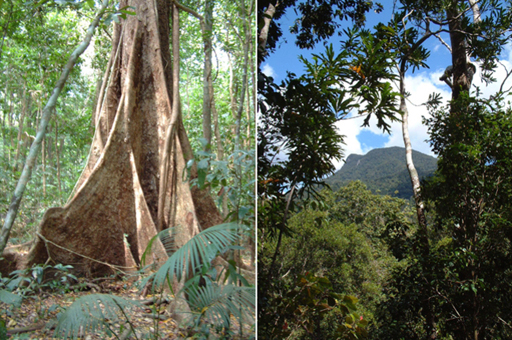
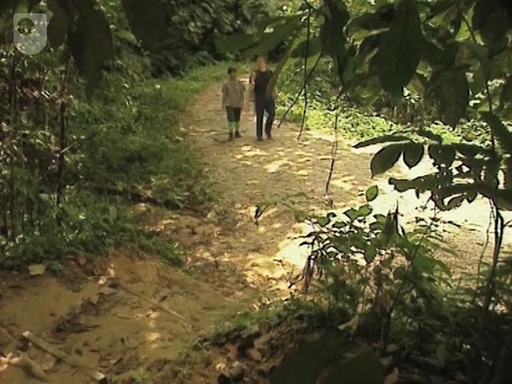
There is a close relationship between fungi and trees. As you watch the video note how this close relationship is being used to artificially reinvigorate ecosystems.
Transcript
Mutual benefits
Now that you have viewed the video
- Think about the implications of the fungal web for competition.
- How does the shading effect of the canopy influence seedling development?
4 Life in trees
The previous section highlighted the complex links between trees and fungi. In this section you will turn your attention to animals that live in trees and the adaptations to an arboreal life that they exhibit. When you were exploring food chains in an oak wood you encountered animals adapted to a life in trees. Now you will look specifically at mammals.
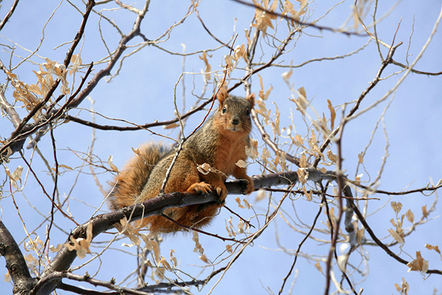
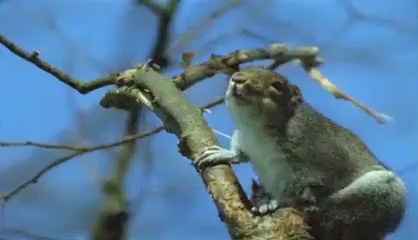
Woods and forests present a number of problems for mammals that inhabit them. The habitat stretches vertically for a substantial distance yet for tree-dwellers to travel any horizontal distance they must either go down to the ground each time or jump from sometimes flimsy branches over large gaps. Sir David Attenborough describes how squirrels have overcome the problem.
Transcript
Life in Trees: squirrels
4.1 The colugo
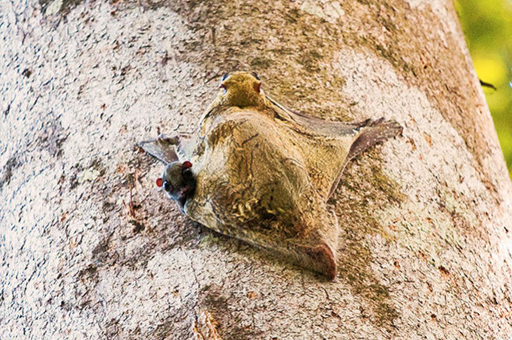
An animal that is not closely related to the flying squirrel but shares common features is the colugo. The colugo is a bit of a mystery and the historical confusion is evident from its common name – the flying lemur. It neither flies (in that it doesn’t flap its limbs) nor is it a lemur.
The colugo is not a monkey either, despite the fact that its main predator is the monkey-eating eagle. Having once been placed with insectivores and then with bats, it’s now in a mammalian order of its own (the Dermoptera, i.e. ‘skinwings’), recognising its ancient and distinct evolutionary beginnings. This ancient origin is why it is such an interesting animal as it early on became adapted to a tree-dwelling life. As you read about the colugo, think about adaptations that have hidden ‘costs’ to the animal.
One particular evolutionary development associated with tree dwelling is taking to the air. The gliding habit evolved independently in different mammalian and reptilian lineages and yet the anatomical modifications that allow it are similar in, for example, flying squirrels and the colugo. In particular, the ‘sail of skin’, technically termed a patagium, stretches between the limbs – and a good deal further in the colugo, acting as an effective (and to some degree manoeuvrable) gliding membrane.
Colugos are sizeable mammals (about the size of a domestic cat) and entirely arboreal. Their record-breaking glides (in excess of 70 m) are achieved without great loss of height. But in trees, they move about rather awkwardly. The patagium is then an encumbrance and there’s a limited ability to grasp effectively – the colugo lacks the opposable thumb of primates. So the benefits of a gliding lifestyle are achieved at a ‘cost’. The resulting vulnerability – especially to the Philippine monkey-eating eagle (a species under threat, as are colugos) – may help explain why the colugo is nocturnal.
4.2 Flying squirrels
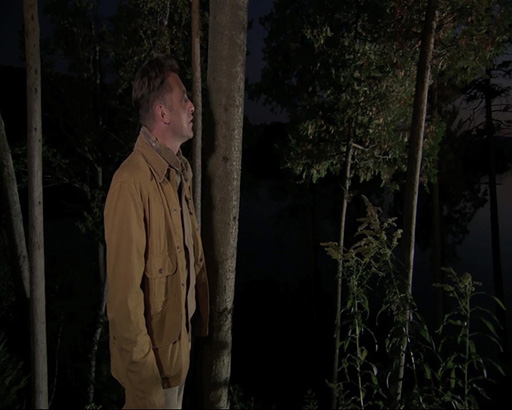
Flying squirrels are not closely related to the colugos but they have features in common. You have seen squirrels and read about the colugo. As you watch the video, think about how flying squirrels steer during their glides. Note the advantages of the gliding habit.
Transcript
The similarities between colugos and flying squirrels
CHRIS PACKHAM: The best time to see them is in the first couple of hours after dark. What I'm hoping is that if I stand here and stay really quiet, I'll be in for a real treat. It's a creature I've waited all my life to see, but they move so fast.
[MUSIC PLAYING]
Oh, did you see that? That was amazing. Went right past my face. Flying squirrel.
[MUSIC PLAYING]
They really are expert gliders - they can glide for up to 200 metres.
[MUSIC PLAYING]
When I was a kid, I was obsessed with things that were not meant to fly - flying fish, flying frogs, flying lizards, flying squirrels - and this is the first time I've ever seen them. It was worth a 45-year wait, honestly.
[MUSIC PLAYING]
Ah, did you? Ah, did you see that? I felt it, it went right through my hair, seriously, centre parting. It was like having a sheet of A4 coming right at my face. And as soon as they hit the tree, they are running - and up they go.
[MUSIC PLAYING]
They're just crisscrossing all the trees. And they immediately scamper up to the top and then take off and glide again. And sometimes, I've noticed, they can even change direction during flight.
[MUSIC PLAYING] Ah, hit me in the chest. It doesn't come better than that, does it?
Activity 2
Consider these questions and note your answers in the box below.
- Identify one similarity and one difference between flying squirrels and colugos.
- On the evidence of the video sequence, comment on how flying squirrels steer during gliding.
- What are the disadvantages and consequences of the gliding habit in flying squirrels?
Answer
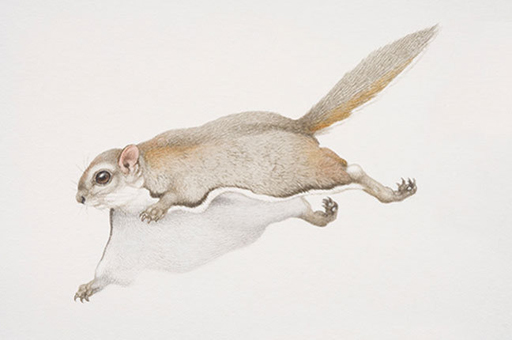
Both colugos and flying squirrels have a flap of skin stretched between their limbs on each side of the body – the patagium. However, in contrast to the squirrels, colugos are not as adept at moving through the trees as the patagium is much larger and an encumbrance except in flight.
During gliding squirrels steer partly with their tail and partly be altering the tension of the patagium, which alters its aerodynamic properties.
The ability to glide enables colugos and squirrels to travel long distances between trees at a low energetic cost. However, they are very vulnerable to predators and so generally only come out at night.
4.3 Flying foxes
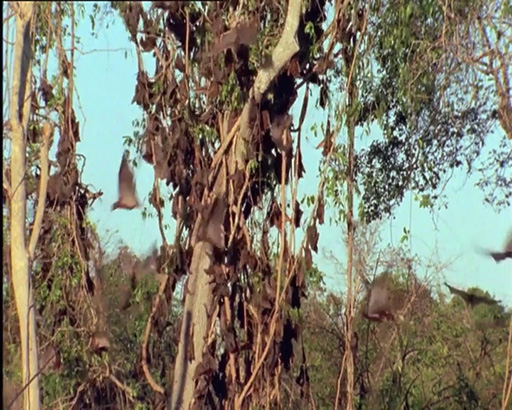
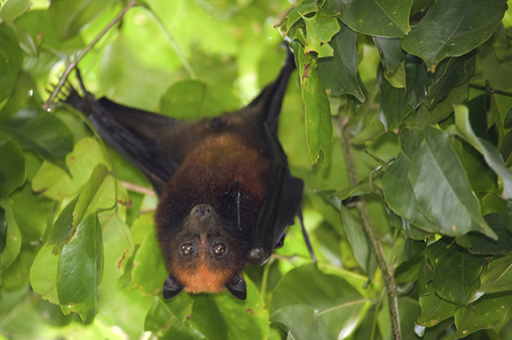
Many species of flying fox (fruit bat) have important roles in ecosystems, dispersing seeds, pollinating flowers or providing food for predators. As they have evolved not only have they acquired adaptations that enable them to exploit aerial and forest habitats, but they have also evolved alongside plants in a process called co-evolution.
What are the likely advantages to flying foxes of their particular form of roosting, taking into account vulnerability to predators, the location of food and temperature regulation?
Transcript
Watching flying foxes
Colonies of flying foxes may comprise as many as a few million individuals (five million is David Attenborough’s estimate), each with a wingspan of about 1.4 m, with the entire ‘camp’ perched on often denuded trees and engaged in intense social activity.
It’s little wonder that witnessing such a site has been described as a ‘memorable auditory and olfactory experience’. Such concentrations of flying foxes are ‘visible, audible and smellable for miles’ and therefore inevitably attract predators. But congregations of this type may decrease the likelihood of any one individual falling prey to predators, such as eagles. Communication between members of the camp may also increase the efficiency of locating suitable food. But the fact that food sources are depleted so comprehensively when visited en masse raises questions as to the degree of benefit of group living.
Another possible benefit of roosting is that foliage might be protective, shading these mammals from wind, rain and sun, though trees that become camps lose many of their leaves. Fruit bats, for instance, regulate their body temperature, partly by behavioural means. Huddling together in groups should in theory reduce the rate of heat loss in cooler conditions, and decrease the rate of warming when it’s very hot. In both circumstances, the surface area that each individual exposes is lessened by contact.
As you saw in the video, eagles (and owls) take a toll of flying foxes in transit, and the largely nocturnal habit of these species once again probably reflects selection pressure of this type. Flying foxes living on islands (more than 60 per cent of species do so) tend to venture forth in the daylight and in such environments predators are often less evident. Flying foxes can devastate crops, but they can also maintain ‘the fertility of the rain forest’. Flying foxes can certainly help disperse trees by transporting their seeds to new locations, either through their messy eating of fruits or by seeds passing intact through the gut. The seeds of the commercially important West African iroko tree depend on the straw-coloured flying fox for their dispersal. Flying foxes also help in the recolonization of deforested areas and in the establishment of plants on land newly formed or recently devastated by volcanic eruption.
Flying foxes are also important pollinators; many island species occupy the ecological niches taken over elsewhere by insects or hummingbirds, for example. The transfer of pollen from one flower to another on a different tree (i.e. cross-pollination) can confer a significant advantage to the species because it promotes genetic diversity of the next generation. So, the development of mechanisms that promote cross-pollination are very advantageous to trees. In Australia, pollination of some eucalyptus species depends almost entirely on visits from flying foxes. The flowering process of the kampong tree from Malaysia is intimately geared to the feeding habits of the dawn bat. Its flowers open just two hours or so after dusk and drop before dawn, coincident with the bat’s feeding time. The size and shape of the flower opening ensure that only the dawn bat can enter; as its long tongue reaches down to access the nectar, the position of the pollen-producing parts of the flower (the stamens) is such that pollen is deposited on the animal’s fur.
This is a further demonstration of the way in which the evolution of one species can increase its dependence on another, often reflecting some form of mutual advantage. This phenomenon is known as coevolution.
5 Week 2 quiz
This test is about energy sources, the flow of energy through a terrestrial ecosystem and the relationships between organisms within that ecosystem.
Complete the Week 2 quiz now.
6 Summary of Week 2
In this look back at the week, Dr David Robinson from The Open University discusses what you have learned so far in this course. The next week focuses on the adaptations of animals to the challenges posed by different types of ecosystems.
Transcript
Summary of week 2
Woodlands are a good example of an intricate and complex ecosystem and you have now seen that there is a fascinating web of relationships beneath the ground that forms the wood-wide web. Above the ground there are animals that are well adapted to glide through the trees and you explored the comparisons between the adaptations of squirrels, colugos and bats.
Next week we’ll be looking at ecosystems in different parts of the world, and in particular, how some organisms survive in extreme conditions through physiological adaptations. Understanding physiological adaptations is part of the process of making sense of ecosystems. Examples will be taken from extreme habitats – deserts and the polar regions.
If you would like a short break, or to find out more about studying with The Open University, take alook at our online prospectus.
You can now go to Week 3.
Acknowledgements
Except for third party materials and otherwise stated in the acknowledgements section, this content is made available under a Creative Commons Attribution-NonCommercial-ShareAlike 4.0 Licence.
The material acknowledged below is Proprietary and used under licence (not subject to Creative Commons Licence). Grateful acknowledgement is made to the following sources for permission to reproduce material in this course:
Course image: courtesy of Dr. David J. Robinson, The Open University
Figure 1: fotoVoyager; iStockphoto.com
Figure 2: sborisov/iStockphoto.com
Figure 3: keiichihiki; iStockphoto.com
Figure 4: courtesy of Dr. David J. Robinson, The Open University
Figure 5: sakakawea7/iStockphoto.com
Figure 6: Valmol48; iStockphoto.com
Figure 7: Dorling Kindersley; iStockphoto.com
Figure 8: Smithore/iStockphoto.com
Audio/Video
Photosynthesis © The Open University, contains BBC clips © BBC
Following a food chain: © The Open University, contains BBC clips © BBC
How plants make food © The Open University, contains BBC clips © BBC
Life in trees: Squirrels © BBC
Watching Flying Foxes: © BBC
Summary video: © The Open University, contains BBC clips © BBC
Every effort has been made to contact copyright owners. If any have been inadvertently overlooked, the publishers will be pleased to make the necessary arrangements at the first opportunity.
Don't miss out:
1. Join over 200,000 students, currently studying with The Open University – http://www.open.ac.uk/ choose/ ou/ open-content
2. Enjoyed this? Find out more about this topic or browse all our free course materials on OpenLearn – http://www.open.edu/ openlearn/
3. Outside the UK? We have students in over a hundred countries studying online qualifications – http://www.openuniversity.edu/ – including an MBA at our triple accredited Business School.