Week 1: Start planning your career
Use 'Print preview' to check the number of pages and printer settings.
Print functionality varies between browsers.
Printable page generated Wednesday, 15 April 2026, 12:03 AM
Week 1: Start planning your career
Introduction
Welcome to Week 1 of the free badged course Succeed in the workplace – and congratulations. You have taken the first important step in deciding what you want from your working life and how to achieve it.
You’ll make a start on career planning this week by getting to know yourself. You may well feel that you already know yourself pretty well, which is great. Hopefully, the activities will give you the chance to sit and think about what is important to you, both in your day-to-day and your working life, as well as help you to unpick how you got to where you are at the moment. This is something that not many of us consciously do and it can make a very valuable contribution to planning.
All you’ll need is a notebook to write down your thoughts.
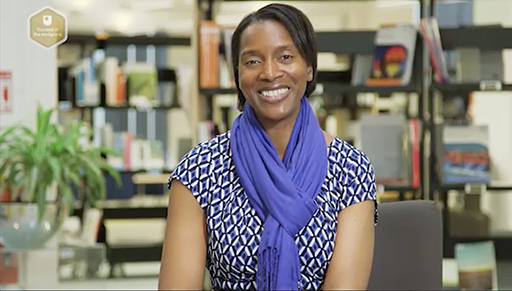
Watch the introductory video from Careers Adviser, Wendy Woolery, as she introduces the course and this week.
Transcript
As suggested in the Introduction and guidance, we recommend that you keep a notebook to record your responses to the activities throughout the course. There are also several tables and documents which are useful to work on directly and keep. We’ve collected these together in the Resource pack, which you can download. You can either work on this directly and store it on your computer or print it out and fill it in by hand.
By the end of this week, you will be able to:
- start to understand the careers planning process
- know what you value about work
- understand the route you have taken in your work-life so far
- recognise what interests and passions you have
- start to identify possible career options open to you.
The Open University would really appreciate a few minutes of your time to tell us about yourself and your expectations for the course before you begin, in our optional start-of-course survey. Participation will be completely confidential and we will not pass on your details to others.
1 What is a career?
Before looking at the career planning process, it is good to stop and think about what is meant by a career. This can mean different things to different people and a good place to start is to ask yourself: what do I think a career is? Have a go at this quick introductory activity.
Activity 1 What does having a career mean?
Spend a few minutes jotting down in your notebook what you think having a career means. There are no right or wrong answers to this, so write down whatever comes to mind.
Top tip: always write down your answers to activities, so that you have a personal record which you can refer to as the course progresses.
Now click on reveal comment to see some ideas.
Comment
This list is not comprehensive and you may have come up with different ideas but it should give you a flavour of what having a career means for different people:
- Paid work
- Unpaid voluntary work
- Working in an office
- Being self employed
- Running a small business from home
- Having caring responsibilities
- Working at the same kind of job throughout life
- Needs specific training and qualifications
- Always working in the same industry or sector.
You may have been surprised by some of the ideas that having a career can mean to different people.
To many, a career meant and still means, working in the same industry or sector in a similar capacity throughout their working life. It was also associated with needing specialist training and was something only a highly qualified person could have. It has always meant being paid and having to leave the house every day to go somewhere to carry out the job. However, this restricts the idea of a career to a relatively small section of society in the present day and does not reflect the different experiences that people have and their value.
So, when this course talks about a career, it has a much broader meaning. It encompasses anything you do that involves some kind of work, be that outside the home or in the home, paid or unpaid.
The next section will introduce the idea of a career planning process.
1.1 Careers: then and now
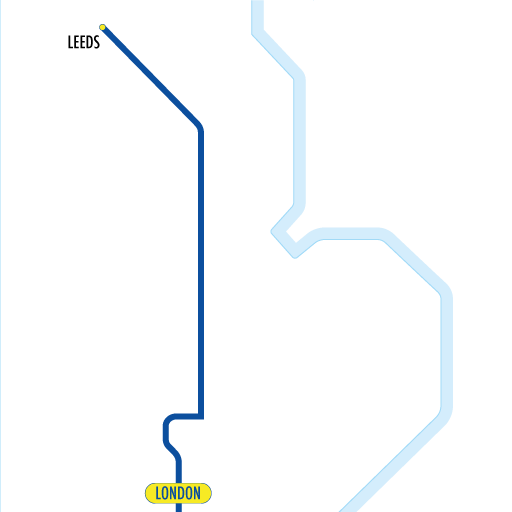
It used to be the case, that once you had entered the workforce you could expect to stay, either doing the same type of job or with the same company, until you retired. This gave a straight line direction from joining the workforce to retiring. This is much like this direct train journey shown in Figure 1, from London to Leeds, with London being the start of your working life and Leeds, retirement.
However, now work tends to be much more fluid and in some ways uncertain, which can open up unexpected opportunities. This means instead of taking a direct route from the start of your working life (London) to retirement (Leeds), you may stop at a station on the way and change the route to retirement. Many people may spend some time at a station on the way to retirement to take on caring responsibilities as well, and then continue on their way. So, a typical career now may look much like that shown in Figure 2 and not be restricted to one industry or sector.
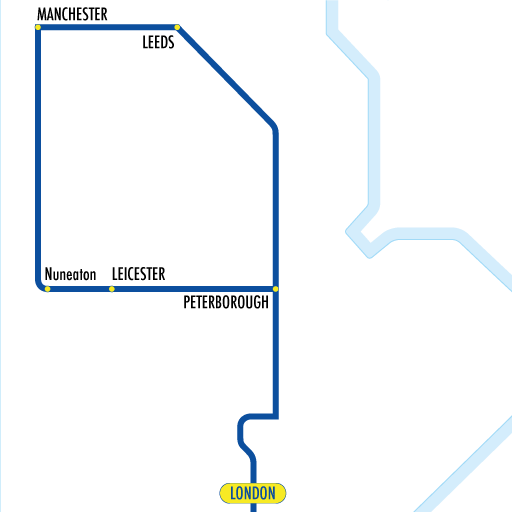
This means your career can be very different from the one you may have anticipated at the start of your working life. Different events along the way will probably mean that you change direction, and get new opportunities. It is difficult to plan for unexpected events. However, if you are at an unexpected station on your journey, having some idea of how to plan the next step will help you take charge.
Fortunately, there is a clear process that can help with this, as you’ll see in the next section.
2 The career planning process: knowing yourself
The career planning process is shown in Figure 3.
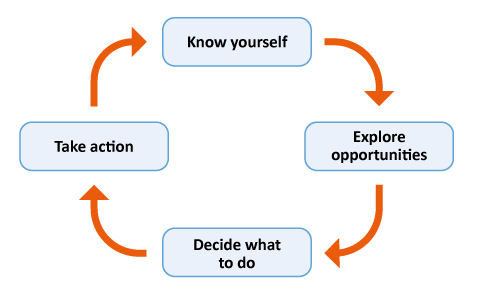
Although this is a simple diagram it can have a major impact on the way you see your career and on how you decide to develop it.
The diagram shows a continuous process but this doesn’t mean just jumping into the cycle at any of the points. The starting point is always ‘know yourself’. Doing this is an important first step as it makes you the centre of the decisions and the career choices you make. If you were to start from ‘explore opportunities’, it might be likely that you would start by thinking that you must fit in with, or that you are defined by, what is already available. You will see in Activity 2 in the next section that there are advantages to creating your own route.
2.1 What’s to love about work?
For this week and the next, the focus is on the first step of knowing yourself. This is the foundation for finding and thinking about opportunities that work for you.
In this next activity you’re going to think about the aspects of work that are the most appealing to you. Remember to jot your thoughts down in your notebook, so that you can look back at them later.
Activity 2 Your work – what do you enjoy about it?
If you decide to commit to a specific type of work, then you need to know that it suits you, personally and practically, and that you can secure opportunities to do it. How do you know what work is going to suit you, though? One place to start is by considering what you like about the work you are doing or have done, be it paid or unpaid.
To get an idea about what to consider, in the following video you will hear a skydiving photographer tell you what he loves about his job.
First watch the video and then jot down your thoughts about why he loves his job.
Now answer the following questions about your work. Some people may need to think more broadly than the usual idea of what work is. You may be a volunteer, a student, or have a role as a parent or carer.
- What do I love about work?
- What do I like least about work?
- Am I clear about what I think?
Comment
Whatever you have noted down, it will be very personal to you and could well be very different from somebody else. That is just fine – your answer is the right answer for you.
This may be the first time that you have sat and thought about work in this way and you could be wondering, ‘why bother?’ Well, taking the time to sit and reflect on something can help you develop new insights and more self-understanding. Or, simply just help you to order thoughts that you are already aware of. Developing this better understanding of yourself and your situation allows you to move on. That’s why it is important you write down your answers to the activities in your notebook. By the end of the eight weeks, you’ll have a very valuable personal record of where you started from this week, the journey you took to reach Week 8 and hopefully how you plan to continue from there.
Perhaps your answer to the last question posed in Activity 2 showed that you were fairly clear about some things but less sure about others. That is perfectly normal! Activity 3 in the next section is designed to help you to clarify your thoughts a bit further. You will think about how well your current or past work experience has satisfied you and draw some conclusions from this.
3 What do I really want from work?

As this course progresses you will be taking charge of your own career choices and decisions, rather than leaving them to chance, or to other people. This is important because although others might help you in your career, it is in your interests to take more control over it.
You made the first step towards this in Activity 2. Now, working from these initial thoughts, you’ll think about what it is that you really want from work.
Remember to keep a record of your thoughts in your own notebook, as before.
Activity 3 What do I value about work?
Listed here are a number of factors that will help you to recognise in more depth than in Activity 2, what you are satisfied with, and what you are dissatisfied with, about your work. Each of these implies something that you value. So, for instance, if ‘Making friendly contacts with others’ is important to you, it suggests that you value a SOCIAL element in your work.
You might be surprised by the range of possible factors of what could be important. This is one of the advantages of taking a course like this one. It opens up your thinking and suggests options and ideas you might not have considered alone.
Identify now how important each factor is to you by using the following scale:
- 4 = Very important
- 3 = Important
- 2 = Less important
- 1 = Not important
Base your ratings on the description of each factor in column 1 and try to use the full scale. Copy Table 1 into your notebook or you can download the Resource pack for the course and complete it there.
| Factors | Value | Rating (1–4) | |
|---|---|---|---|
| Making decisions, and working independently | Autonomy | ||
| Change or variety in tasks, people, places | Variety | ||
| Scope to learn, study, think, analyse | Intellectual | ||
| Making friendly contacts with others | Social | ||
| Large income, expensive possessions | Economic | ||
| Expressing ethical code or religious beliefs | Spiritual | ||
| Using talents, developing skills | Using abilities | ||
| Being part of an important organisation | Commitment | ||
| Having lots of stimulus, excitement, thrills | Excitement | ||
| Having influence or power over others | Authority | ||
| Enjoying or making beautiful designs or things | Aesthetic | ||
| Getting promotions, career progression | Advancement | ||
| Helping or caring for others | Altruism | ||
| Concern for surroundings or location | Comfort | ||
| Being original, developing new ideas | Creativity | ||
| Activity, keeping moving, handling things | Physical | ||
| Taking risks; business and trading | Commercial | ||
Next, write down the values that you scored as most important (those at 4) and those you scored as least important (at 1 or 2).
For example, if you scored ‘Having influence or power over others’ as 4, then write down 'Authority' under a heading called ‘Most important value’ in your notebook.
Comment
Clearly, different kinds of work will reflect different values, so it is helpful to know what matters to you. For instance, someone who places a lot of value on altruism might seek out work helping others, but be less comfortable with work where commercial value dominates. If you prize physical aspects, then work that involves being sedentary for long periods might be more of a challenge.
In the same way, how or where the work is done might satisfy some values over others. A manufacturing company, a charity, a newspaper office, a local authority or a financial institution will each have a different ‘feel’ as a place to work. Try to think through which would suit you best.
In the next section you’ll think about your answers to Activity 3.
3.1 Thinking about your answers
Your answers to Activity 3 act much like a mirror does when you look into it. They reflect back something about you to yourself. It is useful, therefore, to think about what they suggest to you in Activity 4.
Activity 4 Considering what you value about work
Use the following questions to prompt your thoughts and write down your ideas.
- Do any of your answers surprise you? If so, why?
- Do any of the things you find important seem to be in conflict?
- Do your answers suggest anything about the kind of work that is most likely to satisfy the things you find important?
- Do your answers suggest how or where you are likely to be most comfortable working?
- Do your answers suggest where or how you might feel least comfortable working?
Comment
Obviously your work experiences are a reflection of the opportunities you have had, and the choices you have made so far. If you are lucky enough to be fully satisfied by your current work, then your focus may be on how to progress within it. If you are not, then you might want to make changes. These activities are the start of seeing where you may want to go.
Of course, work is only one aspect of your life and to consider it in isolation to all the other things that matter to you would be a mistake. For that reason, in the next section you are encouraged to take a broader look at your life interests and aspirations.
4 What am I like?
You are bringing to this course a wealth of life experiences. These have shaped your interests and aspirations, and have coloured what you believe and care about. Often we take these aspects for granted or are unaware of how they affect the decisions we take. So, it is helpful to bring these to the surface or rediscover them, so that you can decide if they are still relevant for you.
One way of doing this is to create a ‘work line’, which helps you to think about the pattern of your work life. Producing a work line helps to give shape to the past rather than it feeling like a confusing jumble of events and experiences. This is the next step towards considering the future and moving forward.
Figure 5 is an example of what a work line might include and look like.
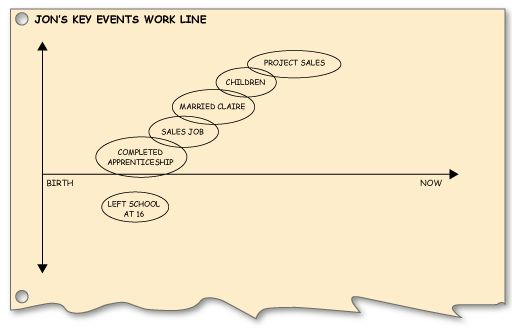
Depending on your age, you may have many or fewer life experiences to draw on. Focus on the ones that seem significant to you in relation to your work-life. For instance, if you are only just out of education, you might want to think about success in particular subjects, about teachers or tutors who were influential, or about friends who affected how you see yourself and your place in the world.
Activity 5 My work line
First note down key events in your work and study life, to show the high and low points at different times of your life. Only include events that you feel comfortable with.
For some people, the work line exercise can result in a lot of emotions coming to the surface as you review your experiences. You may find it useful to talk through any difficult emotions with someone you trust.
Create your own work line diagram, either by downloading and printing a copy of Figure 6 below from the Resource pack and completing it, or by drawing your own.
Now you’ve drawn your work line, consider it as a whole. Then use the following questions to help you to make sense of what your work-line is showing you. Note down your thoughts in your notebook.
- Does the work line say anything about you and how you have lived your life?
- Can you spot any themes that seem to repeat themselves? Or, if the themes are not clear yet, are there any major or significant turning points?
- What is the overall pattern like? Is it generally up or down, steady or changeable?
- Are there any lessons you can draw from your work line?
Comment
For most people this can be a tough activity, so well done for giving it a go. Again, the notes you have made will be very personal to you and different from other people. Here’s one example of what was noticed by someone who did this activity, which they hadn’t been aware of before:
One person found she had moved location a lot in her life, and that these events tended to be associated with high points. She realised that she loved travelling to new places, but soon got bored again and wanted to move on. A valuable insight, that would help her plan her future.
Did you notice anything similar in your work line? You might not have done and that’s perfectly ok. Something may occur to you when you least expect it, so you can always go back and add to your notebook.
How you feel about any particular work is bound up with the values that you identified as being important to you in Activity 3. The next section gives you the chance to think about these more broadly and may help you to make more sense of your work line.
5 What personal values do I hold?

You will now be developing a clearer picture of how you’ve got to where you are today and identified some of the things that are important to you. Often these are referred to as ‘personal values’. They influence what you see as priorities, how you decide what is right for you, and how you measure what you are doing with your life.
When the way you live your life reflects your values, it is easier to be contented and satisfied. When there is a mismatch between them, it can lead to unhappiness. This is why making an effort to know what your values are, is important when thinking about your career.
You may already be aware of how certain beliefs or values have influenced the kind of work you do, or would like to do. For instance, you may want work that benefits other people, or you may see work simply as a way of funding your preferred lifestyle and interests. It may also be that some things that were once important to you are less so now.
In the next section you are going to look at what is important to an example learner, Jon, before moving on to thinking about yourself again.
5.1 Jon’s values
In Table 2 Jon has listed what is important to him in the world, about his work, his relationships and himself.
| In the world | In my work (paid, unpaid or voluntary) | In my relationships | In myself | |
|---|---|---|---|---|
| What matters to me? | Am interested in environmental issues. Feel strongly about health and fitness and would like to see more people doing sport, especially young people. I think IT has enormous potential to enhance people’s lives. Don’t necessarily see that as a contradiction! | I’m ambitious but I’m also concerned about what colleagues think of me. | Claire and the children – taking equal responsibility for the children. Want to make sure that we have quality time together. | Keeping fit. Getting a good qualification. Winning – I know I’m competitive! I like to be good at everything I tackle. I want to make sure that my family is financially secure. |
| What is most important to me? | Concerns about the future in terms of the sort of society my children will live in. Would like to be more involved in promoting sport. | I want the respect of colleagues, I want to be seen as the best person for the job that I do. I want to have a position of responsibility. | Recognising that Claire will want to start a career when the boys are a bit older. To make sure that the children have a good education and the chance to go to university. Want them to have a better start than I did. |
Jon then went on to draw the contents of his table in a spray diagram, shown in Figure 8, which made it easier for him to see some of the connections between his ideas.
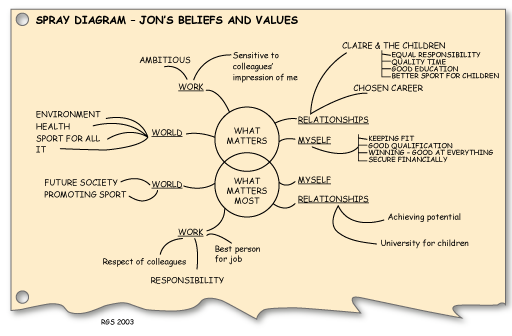
Notice how Jon’s values and beliefs cut across several aspects of his life. In the ‘what matters’ part of the spray diagram, his work is only one aspect of what is important to him. When he asks himself what is most important, however, the spray diagram illustrates how his work might fit with his other aspirations.
Now, it’s time for you to have a go at this yourself, in the next section.
5.2 Personal beliefs and values
The next activity is designed to help you to think carefully about what values and beliefs you hold and how these might impact on the work options you are drawn to. You might find it useful to look back to Activity 3 where you identified what you valued about work.
Activity 6 My beliefs and values
First, complete your own beliefs and values audit. Copy Table 3 into your notebook or you can complete this in your Resource pack.
| In the world | In my work (paid, unpaid or voluntary) | In my relationships | In myself | |
|---|---|---|---|---|
| What matters to me? | ||||
| What is most important to me? |
(The Open University, 2013)
Once you have done this, you might find it helpful to see your ideas visually. If so, you could produce a spray diagram, perhaps following Jon’s example, in your notebook. This kind of visualisation doesn’t work for everybody, though. So it is fine just to complete the table.
Whether or not you decide to convert your table to a spray diagram, take a little time to read back over what you have written and then ask yourself the following questions, writing down the answers to each in your notebook:
- Are there areas of overlap in what matters to me in different areas of my life?
- Are there any obvious tensions or conflicts?
- Have any of my beliefs or values become more or less important to me than they once were?
Comment
Things may not be entirely clear to you at this stage. Remember, there are no right or wrong answers and you can always return to the activities and update your thinking, as you progress through the course.
Most of us have to decide which values we are giving priority to at any given stage. The clearer we are on why we are doing things, the easier it is to live with the choices – and trade-offs – we are making.
What you value in life will clearly be connected strongly to what most interests you. This is what the next section helps you to consider.
6 What most interests me?

Of course, as well as believing in the value of what we do, our career choices work best if we find the work interesting in itself. Looking afresh at your interests and passions may lead you in new work directions, or may simply highlight ways of getting more out of a career path that already suits you.
Can you envisage yourself making a living from the things that you are most passionate about in life? Obviously, being able to earn an income from your passions is not the only reason to pursue them, but in the context of this course, where we are focusing on workplace success, it makes sense to consider this aspect. As a child, did you dream of being a professional athlete or an actor but ended up confining your dream to a weekend ‘hobby’? Now is a good opportunity to dust off some of those dreams and look at them again.
The next activity asks you to think more broadly about your real passions in life, and afterwards to consider how you can bring them together with work.
First, look at the example below, which shows Sarah’s list of passions.
My interests/passions
- Being outdoors – preferably in the sun
- Shopping
- Keeping fit
- Protecting the environment
- Helping or caring for other people
- Writing poetry
- Tap dancing – though I don’t do it anymore
- History – mostly of places
- Reading – about history mostly
- Hill walking
- Doing practical, hands-on things
Activity 7 My interests and passions
This activity will help you to remember the interests and passions that have meant or still mean the most to you, and to link them to types of work you might do.
First of all, in your notebook list the kinds of hobbies, interests, passions you have had – at any stage in your life. Note down your ideas however practical or achievable at this stage.
If you need to jog your memory you can use these questions or alternatively the A–Z list of potential passions.
- How do you like to spend your leisure time?
- If you were choosing a book or magazine to read, what subjects would interest you?
- When you were a child, what did you say you wanted to be when you grew up?
- What were the subjects you most enjoyed at school or college?
- If you were part of a quiz team, what subject would your team mates rely on you for?
- What did you do as a teenager for fun, which perhaps you no longer do?
- If you didn’t need to earn money at all, how would you spend your time?
- If you were given half an hour of TV time to give your views, what would you talk about?
It doesn’t matter how long your list is but if there are more than five, try to narrow them down to three or four key passions or interests, and highlight these in your notebook.
Use the following questions to help you think about which are most important to you:
- If you were guaranteed you would not fail, which one of these would you pick for a paid occupation?
- If you could introduce one of these into your life now, which one would make you the happiest?
- Which one would you most regret not doing if you were coming to the end of your life?
Now, think about the kind of work these might lead you to and jot your ideas down in your notebook.
Comment
Here are some ideas Sarah had about her own passions and interests.
| My key passions or interests | Work that could incorporate these |
|---|---|
| Being outdoors/protecting the environment | Gardening Looking after public footpaths |
| History | Volunteering/working for the National Trust or English Heritage – in the grounds or conserving buildings maybe |
| Shopping | Buying as a job – maybe at a garden centre? Offer to be responsible for buying the stationery supplies at work |
| Looking after other people | Working at a healing garden Lead ‘walks for health’ at the weekends |
You should feel excited – and perhaps a little daunted – by some of the opportunities you have identified. Some might feel out of your reach at the moment because you doubt you have the knowledge or skills. Others might appear to conflict with your lifestyle preferences, or commitments to other people. Try not to see these as negative thoughts as it really helps to be specific about potential conflicts and constraints, so that you are given the chance to find possible ways around them. This means that you can keep your options open.
You’ll get the chance in the next section to think about these potential conflicts and constraints.
7 Are there any limits?
For everyone, there is a range of personal factors that may affect career choice. These could include:
- needing to earn a certain amount of money
- your health
- your age
- being the main carer for other family members
- the need to live in a particular area
- wanting to gain a qualification quickly or needing to acquire a qualification that is professionally recognised in a field of work, e.g. nursing, plumbing or accountancy.
Take a few moments to look at Angela’s example below.
| What are my needs, responsibilities and constraints? | What are the implications and what can I do about them? | |
|---|---|---|
| What are my needs? | Financial independence Opportunities to be creative Working to live | Will be limited by what work is available locally that I have the skills for Could do extra training through work or adult education courses |
| What are my responsibilities? | Looking after parents Paying off mortgage | Want to find best way to manage my finances Speak to an independent financial adviser about my options |
| What constraints are there? | Want to remain in local area To earn enough to cover debts |
Angela has used the implications column to focus on actions she can take. This is important, otherwise it is easy to feel hemmed in and frustrated. Bear this in mind in the next activity as you write your own needs, responsibilities and constraints table.
Activity 8 My needs, responsibilities and constraints
This activity will help you to evaluate what you need, what you have to do and what you cannot easily do in your life at the moment. It will encourage you to think about the implications of this and to see ways forward.
Now complete your own table of needs, responsibilities and constraints. You can complete a blank copy of Table 5 in your Resource pack.
Comment
It may not feel as energising to consider potential obstacles as it did to get excited by your interests, but you need a balanced assessment of your situation. By focusing on the implications of your needs, responsibilities and constraints, and deciding what action you could take, you may have been able to spot opportunities that were less visible to you before.
8 Pulling it together
Before finishing for this week, and moving on to complete the end-of-week quiz, you’ve got one final activity to complete. This asks you to bring together your thoughts from Activities 7 and 8.
Activity 9 Moving forwards
Look back to what you discovered about your interests in Activity 7 and the options you generated there. Think about the constraints that you identified in Activity 8 and then consider the following questions and write down your answers.
- Are the barriers as big as you initially felt?
- Are some of the barriers moveable? What would you have to change for them to be removed?
- Do any of the constraints make some of your options impractical for you at this stage?
- Could you modify any of the options that excite you, to make them fit better within the constraints?
Well done, you’ve completed the last activity of the week, except for the weekly quiz. You have already created a picture of how your experiences, values and interests have shaped your work until now, and how they might continue to influence your choices going forward. These are very important first steps – so well done. You’ll be building on this next week.
9 This week’s quiz
Well done, you’ve just completed the last of the activities in this week’s study before the weekly quiz.
Go to:
Open the quiz in a new tab or window (by holding ctrl [or cmd on a Mac] when you click the link).
10 Summary
Hopefully this week has helped you to rekindle some excitement about the possibilities in your work life. You may be seeing ways to bring more of your interests to your existing work, or new opportunities you might like to consider further. You might also be feeling a little unsettled. This is natural whenever you begin to examine your past choices and consider ‘what next?’ For now, feel proud that you have taken the first steps towards creating a career path in which you can be successful and happy.
Next week you are going to consider the skills and knowledge that you already have, and how you can use these or build on them further, to help you achieve any aspirations you have identified this week.
You should now feel that you can:
- start to understand the careers planning process
- know what you value about work
- understand the route you have taken in your work-life so far
- recognise what interests and passions you have
- start to identify possible career options open to you.
You can now go to Week 2.
References
Acknowledgements
This course was written by Maria Townsend and Gill Gustar.
Some of the material in this course is based on material originally available on the Open University Careers Advisory Service website.
Except for third party materials and otherwise stated in the acknowledgements section, this content is made available under a Creative Commons Attribution-NonCommercial-ShareAlike 4.0 Licence.
The material acknowledged below is Proprietary and used under licence (not subject to Creative Commons Licence). Grateful acknowledgement is made to the following sources for permission to reproduce material in this unit:
Images
Figure 7: © unknown; Figure 9: Shutterstock © Majeczka; Figure 10: © unknown.
Every effort has been made to contact copyright owners. If any have been inadvertently overlooked, the publishers will be pleased to make the necessary arrangements at the first opportunity.
Don't miss out:
1. Join over 200,000 students, currently studying with The Open University – http://www.open.ac.uk/ choose/ ou/ open-content
2. Enjoyed this? Find out more about this topic or browse all our free course materials on OpenLearn – http://www.open.edu/ openlearn/
3. Outside the UK? We have students in over a hundred countries studying online qualifications – http://www.openuniversity.edu/ – including an MBA at our triple accredited Business School.