Week 4: Building your story
Use 'Print preview' to check the number of pages and printer settings.
Print functionality varies between browsers.
Printable page generated Monday, 19 October 2026, 1:22 PM
Week 4: Building your story
Introduction

Transcript
What have you written in your writer’s notebook so far? Find out how other writers use theirs and how you can develop a ‘notebook habit’.
Your writer’s notebook is a secret space where you can try out your ideas – map them, interrogate them, collect them. A journal can also form a kind of personal ‘running commentary’ to yourself, on your thoughts about your own work.
In the stories you’ve written so far, you’ll have seen how ideas can come from anywhere. We will now look further at where ideas for stories may come from, and how to make them matter personally to you.
4.1 Why take notes and what to note

By now you should have quite a few things in your writer’s notebook, besides the set writing tasks you have undertaken. Your notebook should be a repository for what you collect.
Alongside some of the activities included in this course, your journal might include:
- general notes and sensory observations of the world around you
- things you have seen or heard, felt or read – perhaps passages of other people’s writing, or turns of phrase that you admire
- words and word-derivations that are new or interesting to you
- facts that you want to remember
- lines or phrases that you might use in your work
- images: postcards, pictures, photographs that are in some way significant to you, perhaps because they conjure up a scene or story that you might write about
- descriptions or sketches of characters and places you might wish to write about
- notes about periods in recent or distant history that you are interested in
- ideas and plot lines that might be useful in future, or that you are gathering for particular pieces of work.
A single line noted down can prove to be the basis for an entire story or even a novel.
Describing her writer’s journal, the American writer Joyce Carol Oates says:
It resembles a sort of ongoing letter to myself, mainly about literary matters. What interests me in the process of my own experience is the wide range of my feeling. … after I finish a novel I tend to think of the experience of having written it as being largely pleasant and challenging. But … the experience is various: I do suffer temporary bouts of frustration and inertia and depression. There are pages in recent novels that I’ve rewritten as many as seventeen times.
Over time, a writer’s notebook can act as an anchor to remind you how certain ideas originated, and where you initially meant to take them. It will also form a rich source book for you to draw on, to help to guide you through your work.
Also, for ‘writer’s block’ and the nerves of facing a blank page or screen, a journal can be a great comfort – full of notes, reminders, jokes, special words or word-derivations, leads and prompts to get you started again.
Think of your notebook as being rather like an ongoing map of your writing’s progress. You add to it every day, so each day your map improves and becomes more useful to you.
Remember, whatever works for you, works.
4.1.1 Research
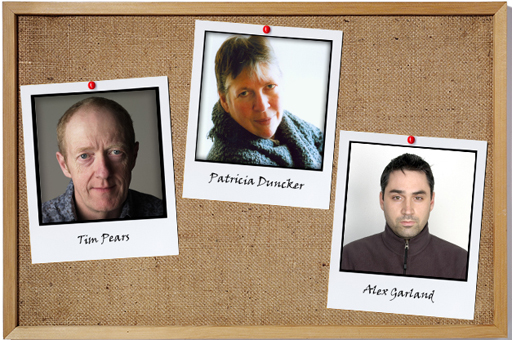
Writing fiction often involves finding out about things you don’t yet know enough about, or checking things you are not sure of. Sometimes you will use your notebook to detail your research. But what research do other writers undertake?
Here novelists Tim Pears, Patricia Duncker and Alex Garland talk about their approaches to research. Do their approaches have anything in common?
Transcript
4.1.2 Different approaches to research

As you can see, different writers have differing approaches to research – and you may find a similar variety among any fellow writers. But are there things you have to do?
Consider what the novelists that you’ve just heard – Tim Pears, Patricia Duncker and Alex Garland – say about research, and note down your thoughts. The relevant questions might start with:
- What are the key areas of research for writing a novel?
- Does life experience have anything to do with research?
- Do you have to undertake research for a novel or story that is set in the present day?
- Are there any dangers in researching for a story? If so, how do you counter these dangers?
- Can you rely on memory if writing about an era within your lifetime?
- What was the difference in attitudes towards research between the three writers?
4.1.3 The notebook habit

Research might well be one of the uses you have for your notebook. Whether it’s research, observations, ideas, your reading or something else, get into the habit of writing something, however short, in your notebook every day.
Activity 4.1 Researching ideas for stories
Looking back over your notes, either:
- Find three possible stories that you might be able to draw out of your notes (the ideas can be as sketchy as you like at this point) and research at least one element for each idea. Then develop your journal notes on these ideas, including this research and any relevant sensory details.
or:
- Find one possible story that you might be able to draw out of your notes (similarly, the idea can be as sketchy as you like at this point) and research at least three elements for this idea. Then develop your journal notes on this idea, including this research and any relevant sensory details.
If you don’t want to go with any of the ideas in your notebook, you can try using the Prompt Cloud PDF.
These ideas may be developed into stories, or they may not. You may not wish to follow them up now, but might suddenly be inspired by them in years to come, and use them as the basis for a story then. It doesn’t matter whether you ever use them. Keeping ideas ‘floating’ is what’s important.
4.2 What is plot?

How do you get from making notes for a story in your journal to thinking up a suitable plot line? The novelist E.M. Forster (1927) explains this very clearly.
He describes a story as ‘a narrative of events arranged in their time-sequence’ and a plot as ‘also a narrative of events, the emphasis falling on causality’ (Forster, 1927, p. 87).
For example, ‘The king died, and then the queen died’ is a story. ‘The king died and then the queen died of grief’ is a plot.
This is because there is a reason given for the queen dying. In a story, someone dying is not in itself interesting. It is the reason for the death that fascinates the reader, especially if the reason is connected with something that has happened to, or been done by, another character.
Readers are well tuned to guessing and imagining causes just from the details they perceive in the story. With this in mind, even the smallest recorded observations can be relevant.
For example: ‘A woman on a bus today carried her Pekinese dog inside her handbag. It had a red bow on its head that matched her sweater.’
This short description of a real person could be the starting point for a fictional character. Imagine:
- Who might she have been?
- Where was she going?
- What did her appearance suggest about her mood or state of mind?
- How old was she?
- How did she live?
In answering these questions you are starting to build a concrete sense of character. You are starting to get a story.
4.2.1 Developing your plot line

Developing the detail of your character will help you arrive at your story. And discovering causality – what causes your character to do things or to be the way they are – will give you plot. But how do you develop that plot?
Returning to the example:
‘A woman on the bus today carried her Pekinese dog inside her handbag. It had a red bow on its head that matched her sweater.’
Now consider:
- Why was she on the bus?
- Why did she have the dog and where was she taking it?
- Why did she look the way she did?
- Why did the dog have a red bow?
These are not scientific questions: if you wanted to know the correct answer to them, you would have asked her. They are matters for your imagination. Answering them will give you a plot.
For example:
- Perhaps she is taking the dog to be put down at the vet’s, and is so upset about having to do so that she decides not to drive, and is taking the bus for the first time in ten years.
- Perhaps she’s travelling through a dangerous neighbourhood and is now afraid to get off, so stays on the bus until it takes her back to where she lives, which also means that her beloved dog has a reprieve, and when she gets it home she feeds it the prime cut of rib-eye steak she’d intended for herself … and so on.
4.2.2 What if?

In the example possibilities of how and why the woman happened to be on the bus with her dog, we are asking a question which is essential for writing fiction. This question is – ‘What if?’
Asking ‘What if?’ can help you to get from having an idea about a character you want to write about to developing a plot. For example, you might ask:
- What if at one time the straight-laced schoolteacher worked in the circus?
- What if that charming woman in the sweetshop poisoned her neighbour’s cat?
- What if tomorrow I inherited a million pounds, and then what if the next day I lost it?
- What if the characters are not as they first seem?
This ability to ask ‘What if?’ is a habit that can easily be learned. It adds causality and richness to your characters as well as helping you to form a plot.
4.2.3 Writing character

Regularly reviewing past work and any ideas or observations listed in your notebook can help you generate new ideas.
Activity 4.2 Reviewing character ideas
Look back at the possible story idea or ideas that you arrived at in The notebook habit, and review all other story and character ideas you have noted or started so far.
You may or may not have got very far with these but consider whether asking the ‘What if?’ question might help you to further develop any of them.
Choose one character and develop it by:
- imagining more detail
- making sure you've done any necessary research
- asking some ‘What if?’ questions
- imagining some of the reasons surrounding the character’s dress, behaviour, speech or actions.
Write a paragraph or two about this character.
4.3 Hooked by lines and images

Transcript
‘One sentence inspires great novel’: it could be a headline. Often the motivating force behind the writing of a story can be an odd line or image that somehow sticks with the writer.
Have you ever found inspiration to write from a single sentence?
What about images? It could be an awe-inspiring sunset, a work of art or simply an imagined scene that just won’t leave you.
4.3.1 Hunches that matter

The starting points for stories can come from many different directions. As an ongoing exercise in your journal, keep a note of any lines or images that present themselves to you in this way.
Also, note down a ‘menu’ of what you consider to be your overall ‘concerns’. This exercise aims to help you build up a self-portrait of who you are as a writer, and to help you to become clearer about the kinds of things that matter to you, that are likely to be your overall subject matter or material when you write. Remember, your list will (and should) be highly personal.
For example, it might include:
- my children’s safety
- passion for travel
- hatred of liars
- fascination for the movies
- fear of ageing
- interest in local politics
- love of animals.
Over time, your list should extend to include much more detailed descriptions of your concerns.
4.3.2 Writing about personal concerns

Now read the extract from a novel by Fred D’Aguiar, considering what you learn about the characters, the story and what you speculate to be Fred D’Aguiar’s concerns. This extract is also available as a PDF for your convenience.
Fred D’Aguiar – The Longest Memory
… Again I stood riveted to the spot as the crowd around my son drifted to the center of the yard where punishments meant to dissuade onlookers from similar activities were staged. My son called his mother. I heard this above the clatter of 250 plantation slaves.
I grabbed the arm of the strongest kin to me, a man close to my son’s age, third grandchild of the tenth of my twelve daughters. I told him to run the five miles to the deputy’s house since only he could save my son from this public display of savagery. He looked alarmed. I’d forgotten. A slave discovered off the plantation at night was liable to be killed. I told him I would go myself to save my son. He touched my arm, nodded at me and darted into the shadows of the dusk skulking beneath the trees. I watched his back blend with the shadows then melt into them. My son shouted again for his mother. I parted the crowd to get to him.
‘She can’t come to you my son. I am here for you.’
He saw me and fell silent and dejected. I put myself before Mr Sanders who frowned. ‘My son is all I have, sir. Spare him. Let me take his place.’
Mr Sanders laughed aloud, brushed the air in front of his face as if to rid it of a pest and ordered that I be restrained for as long as it took to administer 200 lashes to my son.
When he said the number of lashes an astonished cry rose from the crowd and filled the early evening air. I began to struggle against the grip of two men who simply tightened their hold on me and forced me to my knees. Fires were lit. Each flame conspired with the remaining scraps of light to drive away the ensuing darkness but to no avail. The first lash ripped a hole in my head and I screamed for my son, who fell as silent as the grass and trees. My two remaining daughters cried with their children and grandchildren and begged Mr Sanders for leniency. They begged and cried. The night was torn to ribbons by their grief.
4.3.3 Week 4 quiz
The following quiz will encourage you to think further about dramatising concerns.
Complete the Week 4 quiz now.
Open the quiz in a new window or tab then come back here when you’ve finished.
4.3.4 Reflecting on concerns and ideas

Reflecting on who you are and what sort of material you want to write about is an important and ongoing part of the writing process, not least because you will be more motivated by characters and storylines which embody topics that are important to you.
Activity 4.3 Reviewing your menu of concerns
Review some of the ideas in your notebook and your menu of concerns. Are there any characters or story ideas that match up with any of the concerns listed on your menu? Discuss any of these ideas with your fellow writers.
Don’t worry if there seems to be an incongruity between your menu of concerns and the type of characters and story ideas that you are coming up with. In many ways, this can be very interesting.
In some cases, you may be the last to recognise that a story and characters you have created relates to a key personal concern.
4.3.5 Extraordinary versus ordinary
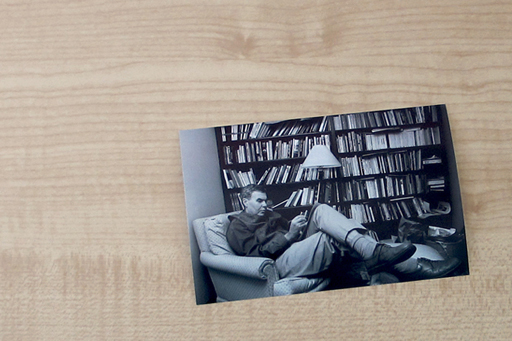
Fiction does not have to be about extraordinary circumstances. In fact, the best fiction is often the fiction that presents familiar concerns in a new and surprising way. Fiction will always be new and surprising if it is truthfully observed.
Raymond Carver writes:
It’s possible, in a poem or short story, to write about common-place things and objects using commonplace but precise language, and to endow those things – a chair, a window curtain, a fork, a stone, a woman’s earring – with immense, even startling power. It is possible to write a line of seemingly innocuous dialogue and have it send a chill along the reader’s spine – the source of artistic delight, as Nabokov would have it.
Sometimes stories are about extraordinary situations, of course. When tackling an extraordinary or huge theme, don’t try to say everything about everything. Sometimes a single focus on one or a few characters placed in extraordinary circumstances, will give a much larger sense of the whole. No matter how extraordinary the scenario, the reader’s primary interest will always be the characters. If you, the writer, don’t develop the characters well enough then the reader will lose interest.
4.4 Summary of Week 4

Have you developed a ‘notebook habit’ yet? What notes have you made that could become a story? A notebook is an important tool for a writer and should be a place you can record interesting uses of language or new ideas.
This week you’ve thought about where to find stories, and how you might consider using personal topics and thoughts in writing.
Next week you’ll discover how to make characters rounded and more interesting. You’ll also get the opportunity to test out these character skills by writing a character sketch. You can move on to Week 5 now.
If studying this week of Start writing fiction has inspired you, take a look at the area specifically created for you to explore more about writing fiction on OpenLearn.
References
Acknowledgements
This course was written by Derek Neale.
Except for third party materials and otherwise stated in the acknowledgements section, this content is made available under a Creative Commons Attribution-NonCommercial-ShareAlike 4.0 Licence.
The material acknowledged below is Proprietary and used under licence (not subject to Creative Commons Licence). Grateful acknowledgement is made to the following sources for permission to reproduce material in this unit:
Figures
Figure 2 © The Open University/Rory Carnegie (Pears)/Getty Images: Anita Schiffer-Fuchs (Duncker)/J Vespa (Garland)
Figure 5 © The Open University/Corbis Images/Hulton-Deutsch Collection
Figure 10 © Courtesy Professor Fred D’Aguiar
Figure 12 © The Open University/Corbis Images/Bob Adelman
AV
Research © The Open University/Alex Garland/Tim Pears/Patricia Duncker