Week 7: Presenting your ‘best’ self at interview
Use 'Print preview' to check the number of pages and printer settings.
Print functionality varies between browsers.
Printable page generated Sunday, 17 May 2026, 1:21 PM
Week 7: Presenting your ‘best’ self at interview
Introduction
This week focuses on the role of the interview and how to manage this well. Even if you are not seeking a specific job, much of the guidance offered stands you in good stead whenever you meet someone to talk about what you can offer.
If you are asking to be considered for work, you are interviewed to find out if you are suited to the work and to the organisation, and you should ask questions to help you to work out if you think you would fit in well, too. After all, even if you are offered the job, you might decide not to accept it. Whatever you decide, making interviews productive is vital if you are to achieve your career aims.
Watch Wendy introduce Week 7:
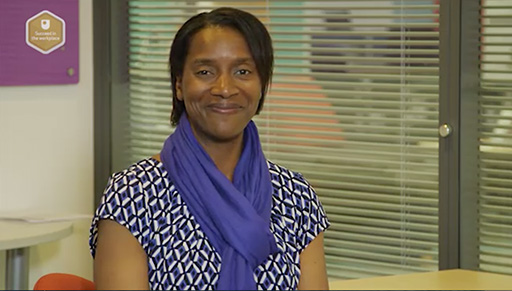
Transcript
By the end of this week, you will be able to:
- explore different types of interviews
- consider how to prepare for interviews
- explore question types and how to handle them
- practise answering interview questions
- enhance your confidence in performing well at an interview.
1 Your experience of interviews
It is useful to start this week by considering your own experience of interviews.
Activity 1 Reviewing past interviews
This activity is about what you already know and how confident you are about interviews.
Choose a specific past experience of an interview you have attended. If you have no job interview experience to draw on, think more widely. Have you ever been interviewed for a course you wanted to attend or by a health professional as part of a hospital appointment, or by a local journalist about a charity event or family celebration, for instance?
Use the following prompt questions to spark your thinking, but write down whatever you remember about it. Record your thoughts in your notebook.
The ‘facts’ of the interview …
What was the interview for?
Who led the interview?
How many people were involved?
How long was it?
What kind of place was it held in?
The ‘feel’ of the interview …
Was the interview a good experience for you or not? If so, why?
What, if anything, did you find difficult about it?
What do you remember most about it?
The interview in a nutshell …
If you were describing the interview to other people, what three words would you choose to sum it up?
Now take a couple of minutes to assess your current level of confidence in relation to job interviews. You can complete Table 1 in your Resource pack. Put ‘today’ against the description which is closest to where you think you are currently, and ‘future’ by where you would like to be by the end of this week.
| Scale Number | Descriptor |
|---|---|
| 1 | I am supremely confident – this is something I am really good at. I do not worry about it all. |
| 2 | I think I am pretty good at interviews once I get in the room, but I am usually a bit nervous before them. |
| 3 | It depends a bit on the interviewers. I am usually nervous when we start, but if they settle me in, I can give a good account of myself. |
| 4 | It’s a bit hit and miss. I have had some interviews where I think I have presented myself pretty well and others where I have barely strung a sensible sentence together. |
| 5 | Not great. I get very nervous before it and then when I get in the room, sometimes I let that get the better of me for the first half of the interview. |
| 6 | Pretty dire usually. I am fine at writing the application but I do not seem to be able to present my best self in the interview room and the more I think about it before, the more nervous I get. |
| 7 | This is the thing I fear most and I am really bad at it. It is a big source of frustration because I know it stops me from getting the jobs I want. |
| 0 | I do not know – I have not had enough job interviews to be sure. |
Comment
This brief exercise puts a ‘peg in the ground’ and at the end of the week you will have the opportunity to reassess and to decide what action, if any, to take.
Now you’ve had a chance to consider your past experiences, let’s consider why interviews are used in recruitment and what an interviewer wants to achieve.
2 Role of interviews and interviewers in the recruitment process

Last week you learned how to present yourself in an application form, and to match what the employer is looking for. The employer also has to do their own matching exercise and has to select the person, or people, who can best contribute to and fit into their enterprise. Bringing the wrong people into an organisation does not help either the organisation, or the person they have just recruited.
The most common method by which employers select people to join them is an interview. Most people do not perform perfectly in an interview but fortunately, there has been a lot of research into the kind of errors which tend to be made. This has resulted in some important insights for candidates:
- First impressions matter and the first answers you give are critical. This is because interviewers tend to form a view about candidates within the first four minutes, and might discount any other information that counters this.
- Negative information about a candidate, or negative behaviour by them, can affect an interviewers judgement more strongly than positive information.
- Body language can raise a similar problem in that it sometimes determines the outcome of an interview, rather than experience or qualifications. For example, not maintaining eye contact in an interview might not be seen positively.
Initially, this might not sound encouraging. You might wonder why employers use such an apparently flawed method. It is empowering to think of it from a different perspective. Notice that there are ways in which you can compensate for some of the problems by developing your own skills as an interviewee. For example, you know that first impressions count, so you can consciously think about how you present yourself for the interview. This will enable you to be in control of your first few actions and words.
Like any other skill, practice helps with interviews. For the rest of this week, therefore, you will be learning about effective interview strategies and practising the skills associated with them.
Before that, let’s first look at different types of interviews.
3 Types of interview you might encounter

It is helpful to know the different types of interviews you might be invited to attend, and the demands they make of you. Although the format might differ slightly, keep in mind that the aim is always to see how good a fit there is between you and the needs of the employer.
The main types of interview you might encounter are as follows:
Face-to-face
This is the most common form of interview. It can be in the form of a one-to-one meeting or there may be a sequence of such meetings, each with a different member of staff. Alternatively, some might be what is known as a ‘panel’ interview.
Panel
It is not unusual, especially in larger organisations and specifically in the public sector, for there to be several interviewers present. Specific skills are needed to handle this type of interview well. For instance, it is important to acknowledge each panel member and to maintain eye contact with the person speaking to you.
Telephone
It is becoming more common for employers to use the telephone for interviews, especially in the early stages. They might do this in one of several ways:
- Automated – you will be given a freephone telephone number to call. When you do, you hear a series of statements and you press a number on the telephone keypad to give your response. Here the system records your responses, and screens out candidates whose responses do not match what the employer needs.
- Structured – you will be offered a time in advance to have a telephone interview. You answer a series of questions which are recorded and then analysed by trained interviewers, to establish whether or not you have the skills needed.
- Screening – this would be more conversational and you would be questioned about aspects of your CV or application form, in order determine whether or not to offer you a face-to-face interview.
Competency-based
You came across the idea of demonstrating the skills and competencies for a job last week. Organisations using a competency-based approach will want you to demonstrate your abilities with examples, so it is important to be prepared for this. Use the STAR technique before the interview to help you. You looked at STAR in Week 6 and you’ll recap in Section 7 this week.
It is also important that you show the ability and the interest to learn new skills, so if you are asked about something that is outside your experience, you could use an example of a time when you learned something new to illustrate your willingness to do this.
Second interview
Some organisations have a series of steps in their interview process. They might ‘first interview’ a larger number of people who they think might fit their needs. From this, they select a smaller number of people, in a process known as ‘shortlisting’. If you are shortlisted, the interviewer will be looking for evidence of your skills, abilities and interests.
It is probably already evident that preparation for an interview is likely to lead to a better outcome. Being prepared gives you the best chance of coming across well. The next two sections focus on developing your interview strategy and practising how you will respond to questions you may be asked.
4 Preparation: before the interview

If you have attended job interviews before, you will, doubtlessly, have developed your own ways of preparing. In the next activity, you will compare your preparation tactics with those of other people.
Activity 2 Preparing for interviews
Watch the brief video of Open University students talking about how they tend to prepare for job interviews. Look out for points on why they prepare and how they went about it. Write these in the space provided below the video.
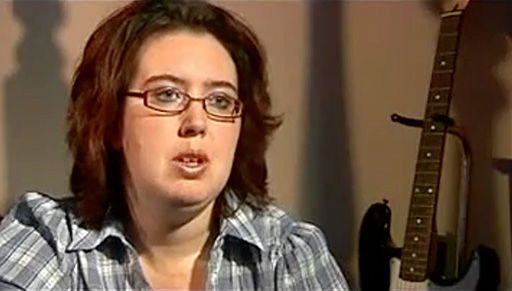
Transcript
Now compare the answers given in the video to your own preparation strategies, using the prompt questions provided. Add any other thoughts you have, as well and keep a record of it all in your notebook.
- For past interviews, what things have you tended to do to prepare for them?
- How long before the interview did you start your preparation?
- What did you spend most or least time on?
- Have you had any experiences which left you wishing you had prepared some aspect better than you did? If so, what?
- Did the comments of the video interviewees suggest any new ideas you might use in future?
Discussion
Your thoughts and experiences will be very personal to you but most people have been in interview situations that don’t quite go as well as they would have liked. Hopefully, you picked up a few new tips from the video to help you in the future.
Some people find the preparation for interviews difficult. Others find preparation easy but then struggle to use it in the interview. You will learn, in the next section, strategies for strengthening both aspects. The basics of preparing remain the same whatever the interview type but there are also some tips on specific types of interview which need to be considered.
4.1 Preparation basics
Whatever the interview type, some basic guidelines always apply:
- Find out beforehand what the format of the interview will be – it helps to minimise anxiety if you know what to expect.
- Check again how your skills and experience suit the job – by rereading the job information you have and what you wrote in your application form. It will build your confidence and help you to remember what points to make.
- Try to work out the questions you might be asked and rehearse your answers.
- Make sure that you have thought about examples from your study, work or personal life which demonstrate key skills – and memorise a few.
- Update your research on the employer, if it has been awhile since your application was made.
- Plan the questions you want to ask in the interview.
Once you’ve done this basic preparation put yourself in the position of the interviewer and review your application or CV. The following questions are useful ones to consider:
- What would have attracted them to invite you for interview?
- What are your main strengths in relation to the job?
- Is there anything which might differentiate you positively from other applicants? Anything particularly relevant to this job or this organisation?
- What are your main achievements?
- What has motivated you to apply?
- What is likely to be your strongest contribution?
- What are your weak spots and what do you feel uncomfortable talking about?
- Why would you not employ yourself? What convincing counter-arguments might you offer?
Then, make sure you get all the practical aspects sorted out in advance.
4.2 Practical planning

In preparing for your interview it’s important that you consider the following practical aspects.
Plan your journey
If it is to somewhere you don’t know well, try to do a dummy run. Check the times of public transport, if you need to and aim to arrive at least ten minutes early. Take spare money in case you need to take a taxi or bus unexpectedly. Carry a town map or note down the organisation’s postcode and address in case your planned route is diverted.
Decide what to wear
Think about the style and culture of the organisation and dress in a way which respects it. If in doubt, dress more formally than less. Even in less formal organisations, people sometimes dress more formally for interviews. Ideally, try out the whole outfit well before the interview. You want to be able to relax and focus on the interview task, rather than worrying about how you look.
Sort out what to take with you
Try not to take too much. You should only need your application, the job information and any notes you have made, as well as anything you have been asked to bring with you. Make sure before the day that you have everything to hand.
If you have been asked to make a presentation, take a copy on a memory stick. Even if you were asked to email it beforehand, it is reassuring to have a back-up. Take paper copies of your presentation. Giving the interview panel copies of the slides will help them to remember you once you have left the room.
Much of this guidance assumes that you are having a first interview for a job, face-to-face and in a specific place. This won’t always be true, of course, so in the next section you’ll consider some aspects of preparation for particular situations.
4.3 Special situations

Certain situations will require you to make some more specific preparation.
Phone interviews
When preparing for a phone interview it is important to consider:
- Location – find a quiet place for the interview, where you will be undisturbed by noise or others.
- Phone choice – make sure phone batteries are fully charged and you have a strong signal if using a mobile phone.
- Your key messages – write key attributes down and have this available during the phone call.
Skype or video interviews
More recently, there has been an increase in Skype or video interviews. As with telephone interviews location is important and as is checking your equipment is working beforehand. Remember to dress appropriately and check what else will be in the shot before the interview begins.
Academic interviews
Instead of a job interview, you may be applying to do an educational course vital to the next stage of your career. In this situation, the general interview guidelines apply, but you should also familiarise yourself with the entry requirements. You need to be prepared to talk in detail about the content of your previous study. For a vocational course, identify specific examples of experience you have gained through related employment.
Unexpected or ‘hidden’ interviews
Sometimes work opportunities present themselves in unexpected ways leaving little time to prepare. It might be that a network contact is able to set up a meeting at short notice or a company you approached, speculatively calls to say they are interested in meeting you to discuss opportunities. In such cases it is important to take along an up to date CV, and to be able to give a brief statement about yourself. The summary at the top of your CV or LinkedIn profile is one which you can adapt and rehearse.
In the next sections you’ll develop a clear personal profile and from this a summary you might use in an interview, whether expected or not.
5 A summary of yourself
It is important for any interview situation to be able to give a clear and concise summary of yourself and your interests. This activity gives you that chance, so remember to keep a record of your final summary in your notebook – it could come in very handy.
Activity 3 Drafting a personal statement
One of the ways of putting yourself in the right frame of mind for this task is to envisage that you are in a lift with someone very important at your workplace. You introduce yourselves, and then your very important person (VIP) asks:
‘What do you do?’
What would you say? Remember that it needs to be short and sweet because you only have the lift journey in which to say it.
Write no more than three sentences as your answer in your notebook.
Comment
You may have found it tricky to sum yourself up in three sentences, which also sounds natural when you read it out. That will also make it less memorable.
a.
I am Sally, I just work on the tills … I like the fact that it keeps me busy
b.
I am Sally and I work on the till in the food section. I really like the fact that I get to specialise in one type of product.
c.
I’m Sally, I work on the food section. I really enjoy being able to answer queries and, of course, taking the customer’s money – because that keeps us all in a job.
The correct answer is c.
c.
Yes – this says clearly what she does, what she likes and the value of it to her employer.
In the next section you’ll finalise the statement that says who you are.
5.1 Your personal profile
When someone meets you for the first time in a work context, they are likely to have three questions in the back of their mind:
- Who are you?
- What can you do for me?
- Why should I trust you?
Who you are is more than just your name. You might be Joe the merchant seaman, or Sophie, mother of three and part-time artist, or Steve the qualified electrician and amateur footballer. How would you identify yourself?
What you can do for the person is a reasonable question for them to ask if you want them to give you work. Steve might be self-employed and looking for a new client project. So, he might say he is a self-employed electrician with lots of experience of shop refits, so if the person knows of any work in that area, he would be very interested.
Why should I trust you might sound an odd question but if someone is going to offer you work or recommend you to someone, then they need at least to be able to trust that you can do what you say you can do. Staying with our example of Steve, he might add to his statement that he can produce customer references, or say that his customers tend to compliment him on his reliability. In other words, he will use evidence to demonstrate his skills.
Activity 4 Your final personal statement
Now try to redraft your own statement using the three questions as prompts.
- Who are you?
- What can you do for me?
- Why should I trust you?
Keep a record in your notebook.
Comment
You may still feel that it is not quite right, don’t worry too much about getting it right on the page. The important thing is that it sounds natural. So, try saying it out loud, and test it on a good friend. That way you can keep refining it.
The real benefit of the statement is that you can use it either as an opening statement in an interview or with people you are just meeting speculatively.
What about questions you’ll be asked? You will need to anticipate what might be asked, and to plan how you might reply. The next section provides information on types of question you might face and the strategies for answering them well.
6 Interview question practice
Interviews are conversations with a purpose. Your job as the interviewee is to give as good an account of yourself as you can, so that the interviewer can fairly assess that you match their needs. Preparation helps you to avoid feeling under pressure to respond before you feel ready.
Preparing involves two main activities:
- Anticipating what questions you might be asked
- Constructing answers for them.
By doing this, you focus your ideas so that you are ready to give clear and strong answers to the questions you may be asked.
It can be helpful to write down your possible answers, giving evidence from your experience to support what you say. You may remember them better. Have a go at this in the next activity.
Activity 5 Interview answer practice
This activity encourages you to practice developing answers to commonly asked interview questions. As you write your answers try to make them general enough to give as a response to more than one question. Prepare more than one example to illustrate your main points. You may be asked for more than one or be asked the same question in different ways and you should avoid having to repeat yourself.
There are seven question areas suggested below, each with typical questions which might be asked.
Choose at least three questions to answer.
About you
- A common question that can throw a lot of people is 'Tell me about yourself'.
- Think carefully about this one. How do you put yourself in the most positive light without giving them your life history? Try to come up with an answer that will take less than two minutes.
About your skills
- Tell me about your IT skills. Can you give an example of when you have had to use them in your study or work?
- Questions about your skills will relate to the specific job, so make sure you are familiar with all the skills required for the job and have your examples ready as proof of your abilities.
About your work experience
- What were your main responsibilities at your last job?
About your non-work interests
- What appeals to you most about caving/cooking/gardening?
About the organisation/employer/sector
- What do you know about our organisation/company/project? Where do you see it in five years' time?
Obviously, your answer to this question would depend on the specific opportunity you were pursuing but write down the kind of things you would like to be able to say. For instance, you might want to say something about the profitability of a company or the history of a charity.
About the job
- What do you know about the job?
Again, unless you have a specific job in mind, think generally here. For example, you might want to say that you’ve spoken to your cousin who does this kind of work and learned that it involves marketing or that you noticed from the job description that the emphasis seems to be on administration and social media.
Your future
- Where do you see yourself in a year's/five years' time?
Write down your chosen questions and answers in your notebook.
Comment
Some of these questions are general, so will provide you with a good start for any interview. Others are more specific but will have still given you an idea of what you need to prepare for.
The next section covers the different types of questions you can be asked.
6.1 Types of interview question

Did you notice anything about the way the questions were asked in the last activity? They were difficult to give a one word answer to, like yes or no. They require you to provide information. These are known as open questions and encourage replies incorporating both facts and attitudes or feelings.
There are other ways in which questions might be asked, and they expect different things of you. Below are the main types of questions you might encounter.
- Specific questions require you to give a factual response. They are often used when there is some technical content expected in the answer. For example, ‘What problems did you encounter in the early planning stage of the building extension?’.
- Hypothetical questions ask you to imagine a scenario and aim to assess the speed and quality of your thoughts. An example might be ‘What if the policy changed to carrying more freight by rail?’. When replying, say what assumptions you are making, and indicate what other information you might need. For instance, you might ask ‘Would this just be in the UK or the whole of Europe?’. The interviewer will look for logical, clear thinking rather than a specific answer.
- Technical questions are those which test your knowledge. You might be asked about specialist concepts, terms and methods. They are often used in engineering, scientific and IT interviews.
- Closed questions require short, one or two word answers. They are often asked to establish facts or to clarify something you have said. For example, ‘Were you dismissed from your previous company?’ or ‘How many years did you work there?’. They are sometimes asked to refocus you when you have drifted off the point, so spot them, and give the one word answer needed.
- Competency-based questions ask you to give specific examples of skills, qualities and competencies needed in the job. They work on the principle that if you did something in the past, you can do it again. You will normally be asked to talk about a situation in which you have used that skill. Questions often begin ‘Can you tell us a time when…?’.
You encountered this kind of question in Week 6 when you learned how to use the STAR technique in answering questions on application forms. Now you have the chance to learn how to do it in an interview.
Activity 6 Answering competency-based questions
This activity aims to give you practice in working out the kind of answers you would give to competency-based questions. You will construct two example responses you would give if asked one of these questions in an interview.
Firstly, do you remember what STAR stands for? Write down your answer below.
Answer
Situation, Task, Action, Result.
If you want to recap this technique have a look back at Week 6.
Now answer these two questions in your notebook. They are designed to test competencies which are likely to be needed in all jobs. Remember that you can draw on examples from any aspect of your life.
Tell me about a time when you had to manage competing demands on your time?
Competency you need to demonstrate – an ability to prioritise
Give me an example of a time you had to persuade someone to do something?
Competency you need to demonstrate – persuading others
Comment
Now read your answers out loud. Do they sound right and natural? If not, you might want to edit them or rehearse how you might say this differently in a real situation. In front of your mirror at home or on long dull journeys are good times for this kind of rehearsal.
If you have time in your study schedule you may want to practice writing more competency based answers. Choose competencies which your research has shown you, are important in the kind of work you want to do. These will often be listed on job descriptions.
Of course, not all questions will be as straightforward as the ones you have practised, so the following section provides guidance on how to handle some of the tougher or trickier questions you may be asked.
6.2 Tough questions

Some questions in interviews can be challenging, especially if they are unexpected. Do not assume that tough questions will only be asked in formal interview situations. You might find an informal contact asks you whether it is wise to look for a career change or how much you want to be paid, for example. Of course, what one person considers tough, might not feel the same way to someone else. It is worth anticipating, and preparing for the questions you would personally find tricky. The next activity helps you to do this.
Activity 7 Answering tough questions
This activity will help you to think ahead to interview questions you might not find easy to deal with and how to prepare for them.
Spend a few moments thinking over interviews you have previously attended, career conversations you might have had, or the questions you generally dislike being asked about yourself. Write down between three and five questions in your notebook.
Answer
Now compare them to the list below. How many of them are similar to your own?
- What are your strengths?
- Tell me about yourself.
- What are your weaknesses?
- Why should you be appointed rather than an internal candidate?
- How much are you worth?
- Having worked for one company for so long, what difficulties do you expect in adapting to our culture?
- Isn’t it a bit late in your working life to change career?
- How have you tried to stay up to date?
- How would you describe your management style?
- Why do you want to work for us?
- What are your ambitions?
- Do you not feel that you might be over-qualified (or too experienced) for the position we are filling?
- What were the circumstances of your leaving your last employer?
- Why has it taken you so long to find a new job?
- If you had complete freedom of a choice of jobs and employers, what would you choose?
- What interests you least about this job?
- What sort of relationship did you have with your last manager?
Comment
It is likely that you found some overlap because the list above, while not comprehensive, features commonly asked questions.
Obviously, if you anticipate and prepare for questions like these you are going to give a better answer than if they catch you unawares. If you have time in your study schedule this week, you may want to make some notes on what you would include in your answer, and what you might exclude. Often the best policy is just to be honest with these types of questions.
These last sections have been about what questions you may be asked. Remember, though, that the interview is a conversation, so you are expected to ask questions too. So, think about what you want to know, which will allow you to decide if the opportunity is right for you and demonstrates extra interest in the position you have applied for. This is an essential part of your basic preparation and is covered in the next section.
6.3 Prepare questions to ask

Asking questions shows you have thought about the job and how it relates to you. You will probably be given time for this at the end of any interview, so be prepared.
Obvious areas you might want to ask about include:
- promotion opportunities – what could I expect to be doing in two years’ time?
- performance – how is this monitored or assessed?
- qualifications – what further study could I do? (check the employer's literature first)
- company culture – how would they describe it?
- retention – how long do people tend to stay?
- next steps – when will you hear about the result of the interview? Will you be offered feedback?
Activity 8 Your questions
The list above is obviously not a complete set of the areas you might have questions about, or the questions you would ask. Think about question areas which might be important to you personally.
Aim to add three question topics and questions to the list. An example is given for you to follow. Write your answer in your notebook.
Example: travel – in an average month, how much travel away from the office would be expected?
Comment
In any interview, you are unlikely to have enough time to ask all of the questions on your list, so choose the most appropriate. Commit the topic headings to memory and you will never be left with nothing to say when, at the end of an interview, the interviewer turns to you and says ‘Do you have any questions for us?’.
Now you’ve considered questions you may be asked and want to ask, the next section looks at how to give your best performance.
7 At the interview

There are expected and effective ways to behave in formal interview situations. These cluster into three areas:
- the way you present yourself physically
- what you say and how you say it
- how you deal with difficulties in the interview.
Let’s take a closer look at each of these in the next three sections.
7.1 Physical impression

As you know from Section 2, first impressions are extremely important. You will be assessed from the moment you enter the interview room. Good first impressions can be helped by:
- Walking in confidently and smiling.
- A firm, confident handshake.
- Look at the person asking questions. If there is more than one interviewer, you will need to include each person by looking at them too as you answer.
- Sitting comfortably but upright. Don’t be afraid to shift position during the interview. Sitting absolutely still could seem a little unnatural.
- Avoid fidgeting – it is usually best to keep your hands on your lap unless you are using them to illustrate an answer.
- Try not to be too flamboyant if you do use hand gestures.
Three tips on things NOT to do would be to:
- smoke before your interview – the smell will linger
- forget to switch your mobile phone to silent – it could look rude if the phone rings
- fold your arms – it can appear defensive or aggressive.
7.2 What you say and how you say it

You need to sound like you, but the most confident version of yourself, even if you are nervous. If you speak clearly, not too quickly, and avoid dropping your voice towards the end of sentences, you will sound more confident.
Much of the time you will be answering questions. To do this convincingly, follow these tips.
- Be enthusiastic – but do not overdo it.
- Be brief – do not ramble.
- Use plain language – jargon or buzz words can be alienating.
- Be positive – and if you have to offer up a negative, focus on what you learned.
- Be truthful – but not too modest.
- Give an example – remember to use the STAR structure.
- Ask – if it’s not clear what is being asked.
- Stop speaking – when you have answered the question.
- Do not be afraid to pause – if you need time to think about a question.
- Answer the question asked – not the one you wish they had asked.
- Don’t just tell them what you think they want to hear – remember that you are helping the interviewers to make the right decision, for both of you.
If you are being interviewed by telephone then how you sound is even more important. The interviewer can't see you, so make your voice clear and expressive, so that you convey enthusiasm and interest in the job. It can be difficult to gauge the interviewer's reaction to your answers because you cannot see them. Say what you need to say to answer the question, then stop.
Some small tips which often help when having an important conversation on the telephone are:
- Smile when you’re talking on the telephone, as you would when talking to someone face-to-face. The smile won’t be seen but it can be heard.
- Standing up while talking can make you sound more confident.
7.3 Dealing with difficulties

However well you have prepared for questions, some will still feel difficult on the day. The following tips will help you through them.
In general:
- When you feel under pressure you might not listen as well as usual. Do not be afraid to ask for the question to be repeated. Take your time to answer and keep to the point.
- If you are asked embarrassing questions, keep your answer simple and short.
Occasionally you will be asked more unpredictable or ‘off the wall’ questions such as:
- What were you like as a child?
- If you were a biscuit what would you choose to be?
- If you could ban something, what would it be?
Often the interviewer does not really want to know the answer. They simply want to see how you might deal with something unexpected. They might be interested in whether you can think on your feet or get flustered, or if you can present a convincing argument or original idea under pressure. It is fine to pause and say that it is an unexpected or difficult question before you answer.
Sometimes it is not the questions which are difficult, but the interviewers. You may feel you are not achieving rapport with them.
In general, interviewers are trying to help you to do yourself justice.
However, the world is not perfect and neither are people. You may, unfortunately, meet some interviewers with whom you do not have a pleasant experience. If this happens to you, the best strategy is to keep firmly in your mind that your goal is to present yourself as well as possible. Just stick to your plan of being professional, positive and focused on showing your abilities. Then, after the interview, chalk it down to experience. You may just have caught the person on a bad day or they may be indicative of the way the organisations works. Either way, the damage done is to them – unless you let it damage you. After all, if they decided to offer you the job, you would have to think long and hard about whether to take it.
The final section this week considers what you should do after the interview.
8 After the interview

There are some practical steps you can take immediately after an interview.
Firstly, send the interviewers an informal thank you note. They paid you the compliment of inviting you to interview and gave up their time to see you. A follow up note is not only polite, but reinforces their memory of you. Even if you are not offered the job, other vacancies may arise and you want them to have a positive recollection of you.
If you are not offered the job, telephone or write a letter asking if it would be possible to have some feedback. Not all employers offer this, but if they do, it can provide useful tips for future applications and point you in the right direction.
Also, think about the questions and your answers. Did you do yourself justice? By now, in this course, you are very familiar with the benefits of reflecting on the things you have done, or said, so that you can decide if you want to change your approach in the future. So, conduct your own mini reflective review after each interview. Remember – write it down! The chances are you would have forgotten some of it by the next interview.
Now you have nearly finished this week, it is time to think back to how you confident you were about interviews at the start of the week.
Activity 9 Interviews: how do you feel now?
Look back at the notes you wrote for Activity 1 in which you rated your confidence in interview situations.
Do you now feel more confident about tackling different types of interviews?
Rate yourself again now. You might also find it useful to jot down any tips from this week you particularly want to remember for your next interview.
Comment
Hopefully, you feel more confident as a result of what you have learned and practised this week. By putting these ideas into practice in the future, you will certainly be able to build on this confidence. Remember though to reflect on each new interview situation, to build your skills.
This finishes your work on interview techniques and was the final topic for the course as well. It’s time now to complete this week’s quiz.
9 Week 7 quiz
This week’s quiz is your last opportunity to practise before the final badge quiz, next week. It will give you the chance to check your understanding of interviews and interview techniques.
Go to:
Open the quiz in a new tab or window (by holding ctrl [or cmd on a Mac] when you click the link).
10 Summary
This week you have deepened your understanding of how to present your best self to the people who can offer you the work in an interview situation. You should feel more confident about how to handle these opportunities and also better prepared for what to expect in different situations. These should all help you to be successful in the future.
This is the culmination of seven weeks of work on understanding your strengths, aspirations and options. Congratulations for reaching this point – it is great achievement. In the next, and final, week of the course, you look back over the work you have done since the start of course, fill in any gaps and to plan for what you will do with your new learning and confidence.
You should now feel that you can:
- explore different types of interview
- consider how to prepare for interviews
- explore question types and how to handle them
- practise answering interview questions
- enhance your confidence in performing well at interview.
You can now go to Week 8.
Acknowledgements
This course was written by Maria Townsend and Gill Gustar.
Some of the material in this course is based on material originally available on the Open University Careers Advisory Service website.
Except for third party materials and otherwise stated in the acknowledgements section, this content is made available under a Creative Commons Attribution-NonCommercial-ShareAlike 4.0 Licence.
The material acknowledged below is Proprietary and used under licence (not subject to Creative Commons Licence). Grateful acknowledgement is made to the following sources for permission to reproduce material in this unit:
Images
Figure 1: © Robert Daly/Getty Images
Figure 2: Shutterstock © Javier Brosch
Figure 3: © DNY59/iStockphoto.com
Figure 4: © © Poprotskiy Alexey/Shutterstock
Figure 5: © wavebreak/iStockphoto.com
Figure 6: from http://mamsports.org
Figure 7: © marekuliasz/iStockphoto.com
Figure 8: courtesy of © Don Moyer
Figure 9: from: https://msjodym.wordpress.com
Figure 10: Shutterstock © iQconcept
Figure 11: Shutterstock © Jose Gil
Figure 12: © Dan Brandenburg/iStockphoto.com
Figure 13: © denis ous su-ansah/Dreamstime
Figure 14: © Bigstock.com
Figure 15: © Filmwork/iStockphoto.com
Every effort has been made to contact copyright owners. If any have been inadvertently overlooked, the publishers will be pleased to make the necessary arrangements at the first opportunity.
Don't miss out:
1. Join over 200,000 students, currently studying with The Open University – http://www.open.ac.uk/ choose/ ou/ open-content
2. Enjoyed this? Find out more about this topic or browse all our free course materials on OpenLearn – http://www.open.edu/ openlearn/
3. Outside the UK? We have students in over a hundred countries studying online qualifications – http://www.openuniversity.edu/ – including an MBA at our triple accredited Business School.