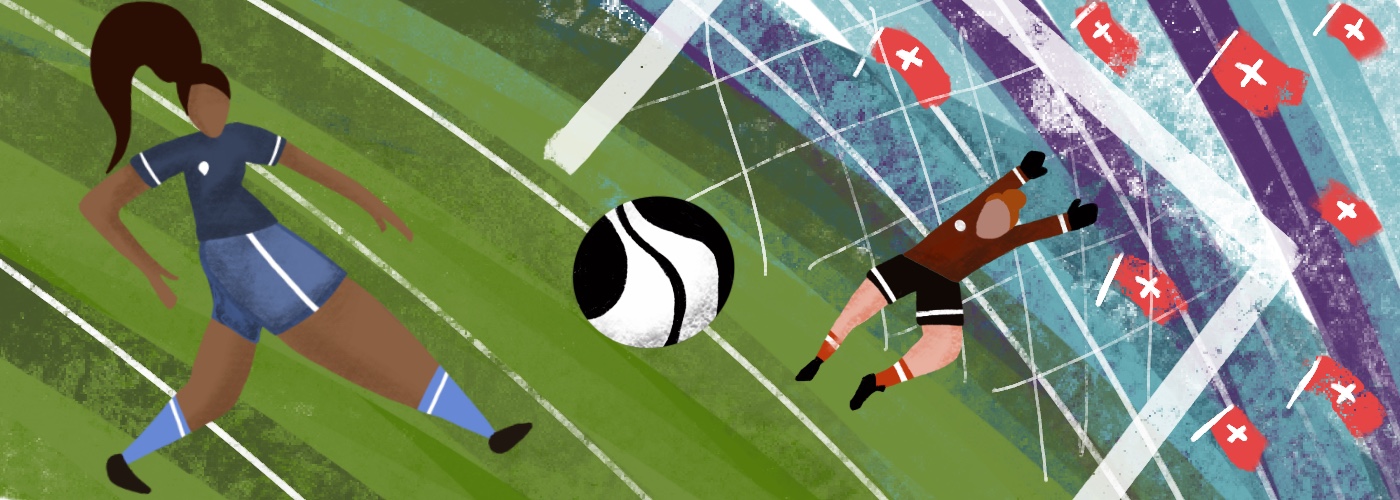
The UEFA Women’s Euro 2025 Championships will be held in Switzerland and will begin on 2 July. Take a look at our dedicated content to the tournament.
Category: Health, Sports & Psychology

Personalise your OpenLearn profile, save your favourite content and get recognition for your learning
The UEFA Women’s Euro 2025 Championships will be held in Switzerland and will begin on 2 July. Take a look at our dedicated content to the tournament.
Recent studies suggest that social media can play a role in promoting gender equality in sport, but are the governing bodies taking sufficient action? Steph Doehler explores in this article.
The women’s World Cup tournament starts on 20 July 2023 and is being held in Australia and New Zealand. Take a look at our dedicated content for the tournament.
In these three audios, Dr Carrie Dunn discusses a number of important areas of women’s football.