Part 4: Water and assimilate movement
2. Assimilates
The assimilates produced by plants in the leaves, through photosynthesis (sugars), are called photoassimilates. These sugars must be moved around the plant to where the energy is required for growth. Growth occurs in the leaves, stems, roots, flowers and fruits and so the phloem carries the sugars to all of these areas.
Other assimilates are taken up through the roots in the form of minerals. They come into the root with the water that is taken up from the soil through osmosis.
Photoassimilates are stored in the form of sucrose or starch. Sucrose is stored in the vacuoles of cells and starch is stored over a longer period in stems and roots. Some plants have specially adapted storage structures such as thickened stems, crowns or tubers.
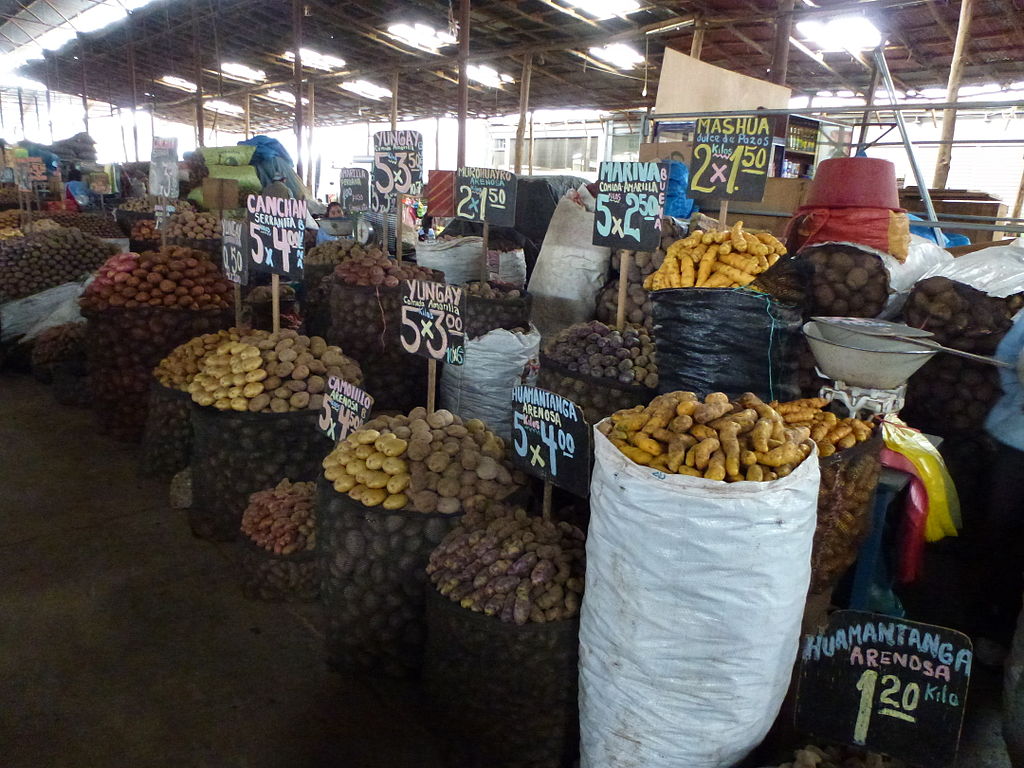
Randal Sheppard / CC BY-SA 2.0
Starch-rich potatoes are the plant’s storage structure.