Part 5: Plant reproduction
4. Stimuli that break dormancy
The seeds from different species of plant are brought out of dormancy by different stimuli. Most seed respond to more than one stimuli, so mimicking one condition when breaking seed dormancy may not be enough.
Some seeds germinate once they have dried out to a certain extent. For the majority of seeds if they dry out so that they contain less than 5% water they can be damaged. Pine trees are included in this group

Swiss pine trees (pinus cembra)
Wolfgang Moroder / CC BY-SA 3.0
Some seeds require extreme high temperatures for the seed coat to be broken to allow germination to take place.
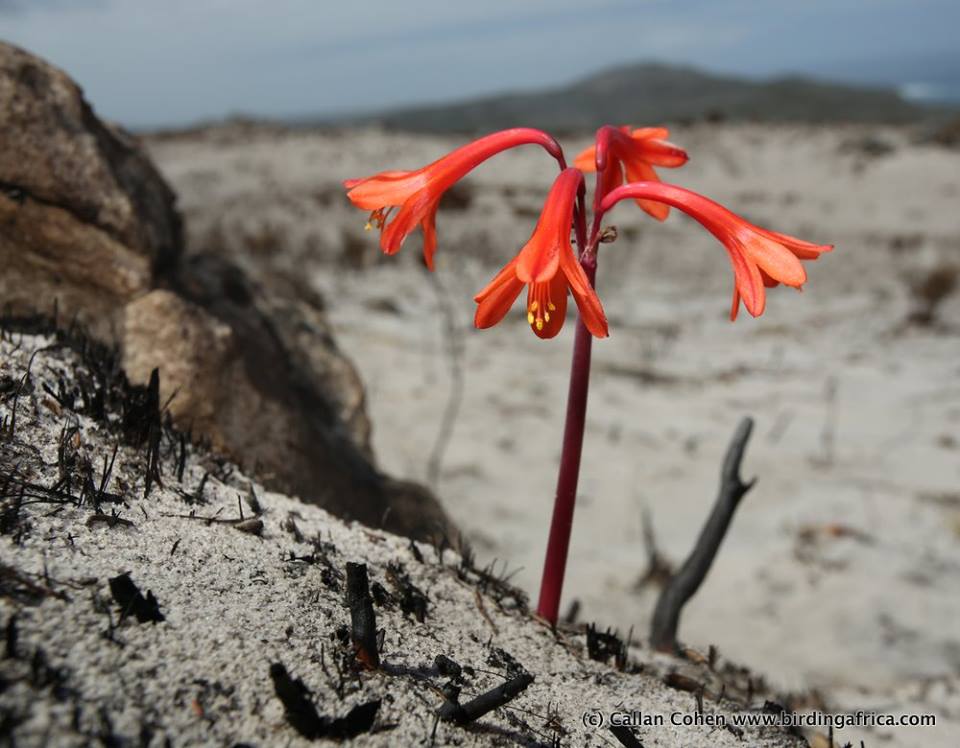
The fire lily (Cyrtanthus ventricosus)
Callan Cohen / CC BY-SA 3.0
Some seeds will not germinate unless they have been eaten and excreted.
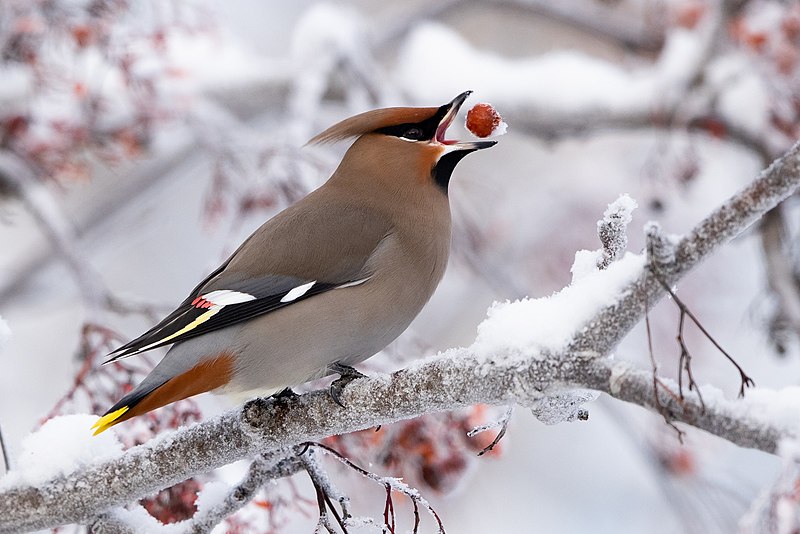
Bohemian Waxwing eating a berry, Kenai National Wildlife Refuge, Alaska
Lisa Hupp/USFWS / Public domain
Some seeds need a cold treatment to germinate which mimics the seeds going through winter. Once the cold spell is over,they germinate in the spring. The process of chilling seeds is often referred to as stratification.
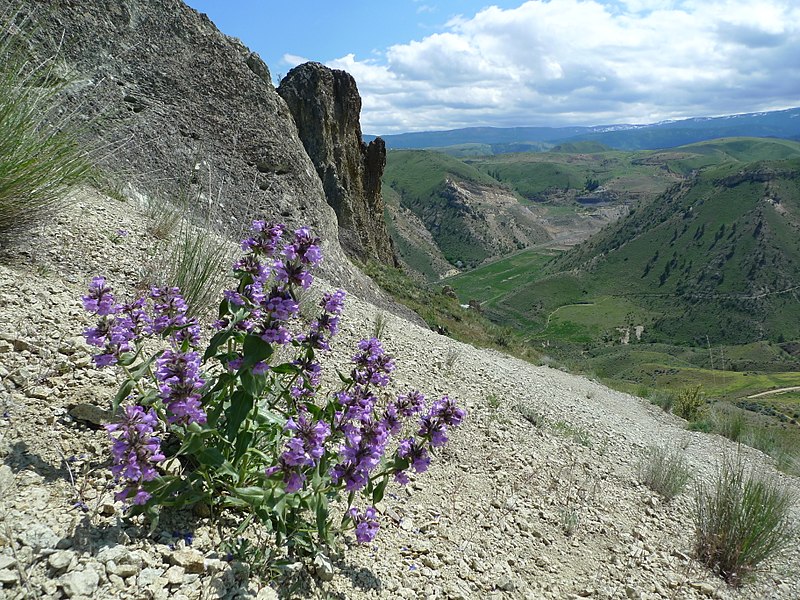
Penstemon eriantherus var. whitedii requires stratification
Thayne Tuason/ CC BY-SA 4.0