What is rewilding and why is it important?
1 Rewilding and ‘big picture’ thinking
1.3 The rewilding mindset
Rewilding means working at scale, across entire landscapes, to rebuild wildlife diversity and abundance.
It means restoring natural processes and giving them the space and freedom to enhance the functionality and resilience of entire ecosystems. It also means taking inspiration from far in the past to create a bold new vision for the future.

To ensure sustained positive effects on biodiversity and resilient ecosystems for future generations, rewilding efforts aim and work on a long-term perspective.

Rewilding means working at scale to rebuild wildlife diversity and abundance and giving natural processes the opportunity to enhance ecosystem resilience, with enough space to allow nature to drive the changes and shape the living systems.
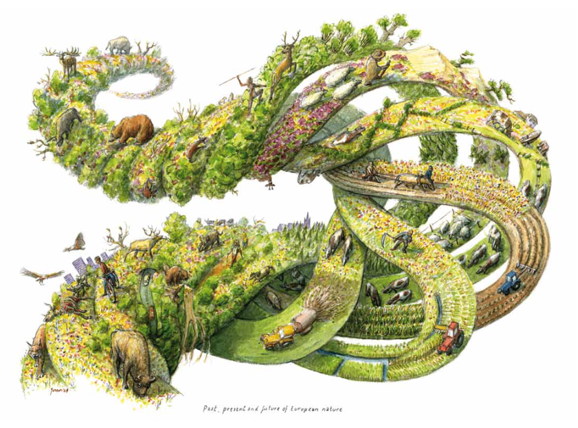
Past, Present and Future of European Nature. Credit: Jeroen Helmer / ARK Rewilding Netherlands.
When we think large-scale and long term, it helps us to put our current situation in context and find new, creative solutions to achieve our imagined future.
This ‘big picture’ approach is what drives rewilding to be transformative and long-lasting – for both nature and people.
Throughout this course, you will have the opportunity to practise using this rewilding mindset. Following a case study from Module 1 to the end of Module 4, you will learn to see what natural processes are missing from a landscape, how they can be brought back, and what opportunities and benefits this could bring.
Before we begin, we need to look deeper at what we mean by ‘natural processes’.