What is rewilding and why is it important?
3 Social context: rural depopulation and opportunities for rewilding
3.3 Rewilding provides hope
Wild nature can be the return of wild animals. It can also be the presence of dead trees, decaying carcasses or rivers that spill over their banks into their floodplains.
Wild nature is messy and unpredictable. To bring that back to Europe we need hearts and minds that embrace it.
The role of people – in and around rewilding areas
It's a popular misconception among those not familiar with rewilding that it's all about nature and not about people. Yet engaging and inspiring people of all backgrounds and ensuring they benefit from nature recovery is vital to the success of rewilding efforts.
People living and working in and around areas that are being rewilded have a critical role to play in the rewilding process – from shepherds, teachers, local officials, and hotel owners to ecologists, lawyers, and artists.

Rewilding embraces the role of people, and their cultural and economic connections to the land. It is about finding ways to work and live within healthy, natural vibrant ecosystems and reconnect with wild nature. We approach rewilding with a long-term knowledge of the environmental and cultural history of a place.

Building coalitions and providing support based on respect, trust and shared values. Connecting people of all backgrounds to co-create innovative ways of rewilding and deliver the best outcomes for communities and wild nature.
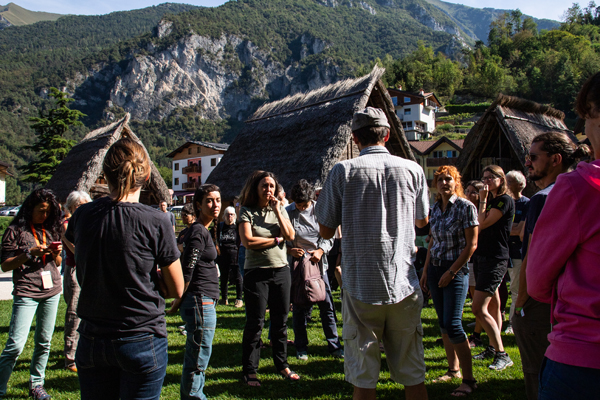
Community engagement event in Italy on coexistence with the wolf. Credit: Io Non Ho Paura Del Lupo.
The role of people – across Europe
It is not only people living in and around rewilding areas that have an important role to play.
Research shows that hope inspires action and promotes long-term care for the natural world. To truly restore nature across Europe, we therefore have to provide hope and inspiration, to motivate behaviours now that will lead to a more positive future.
This is essential in Europe. Here, worries, anxieties and feelings of depression about war, climate change and loss of biodiversity, unemployment and rising living costs, and the pressures of social media, have all made the already-poor levels of mental health worse.
Before the COVID-19 pandemic, one in six people in the EU were living with mental health issues. By 2023, this had risen to almost half of Europeans – 46% of people experienced an emotional or psychosocial problem such as feeling depressed or anxious in the past 12 months (European Commission, 2024a).
Rewilding provides hope because it is positive and inspirational. This provides a contrasting narrative to the more negative messages that dominated conservation in the twentieth century. Rewilding embraces and empowers people, encourages us to reconnect with and live alongside nature, and provides a way for everyone to make a positive difference.
Rewilding principle

Rewilding generates visions of a better future for people and nature that inspire and empower. The rewilding narrative not only tells the story of a richer, more vital tomorrow, but also encourages practical action and collaboration today.
The role of society – acting today for a wilder and better tomorrow
Policies, economic activities, recreation, and transport choices all affect nature. Every time we vote, make a purchase, invest or take a journey, our decisions have an impact on the natural world.
Imagining a positive future for nature in Europe can inspire us to make the decisions and choices that help to realise that future. Our actions today determine whether we will reach our goal of a wilder Europe.

Pair of Wildling Shoes Perto. Credit: Wildling Shoes.

Brands have been slowly moving towards more sustainable and environmentally conscious production.
Wildling Shoes, based in Germany, already has a long history of this type of production and has now developed, in partnership with Rewilding Portugal, a new shoe called Perto which goes even further. A shoe that supports producers who live in a positive way with the Iberian wolf, supported by the LIFE WolFlux project. So anyone can ‘support’ rewilding initiatives through their day-to-day choices.
Rewilding aims to foster a paradigm shift in the way people in Europe and across the world understand and value nature. This will require a change in mindsets, expectations and behaviours. You will learn more about the importance of engaging with people and communicating hope in Module 3.
By taking this course you are already part of this change.