What is rewilding and why is it important?
4 The legal and policy context of rewilding
4.3 Building on a long history of conservation and protection
Restoration is becoming more prominent in policy and law. However, commitment to protecting nature in Europe is not new and some of the oldest legislation within the European Union relates to nature.
Click on each box below to read more.
As a result of these directives, new protected areas were established across the EU.
Protected areas are the backbone of European nature. With more than 100,000 sites designated across the EU alone, such areas cover nearly 1.1 million square kilometres, or 26.1% of EU land (EEA, 2024), with many additional protected areas across Europe and in the sea.
Many of Europe’s protected areas contain unique and frequently awe-inspiring repositories of biodiversity. Yet simply protecting the nature they currently contain isn’t enough to reverse biodiversity decline or slow climate change.
This large area of land already recognised for nature means there is now an opportunity to build on conservation efforts and enhance the invaluable nature they already contain. Rewilding within protected areas can restore natural processes, support the return of European wildlife species, and inspire the millions of people who visit each year to care for nature.
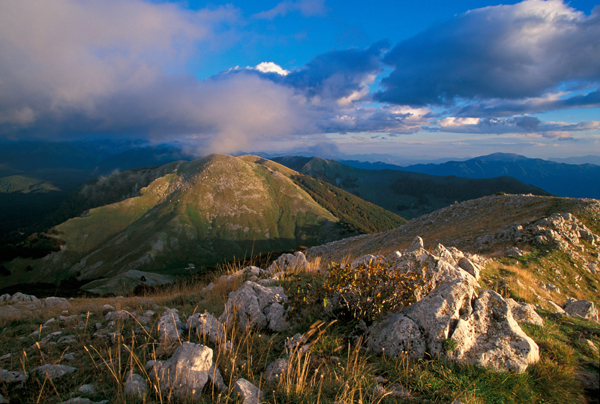
Sunset view of mountain ridges in the Abruzzo National Park showing the characteristic landscape of the Central Apennines in Italy. Credit: Bruno D'Amicis / Rewilding Europe.
You already learned that one of the rewilding principles is acting at nature’s scale. Many protected areas are huge and offer a fantastic opportunity for rewilding.
Others are much smaller in size and through the Birds and Habitats Directives, are protected for a particular habitat or species. This means that they may not always be suitable for rewilding.
This is for two reasons:
- As nature recovers habitats may change, particularly where they have been intensively managed to protect a specific species.
- Rewilding is an open-ended, dynamic process that aims for the recovery of nature processes, some of which require large areas.
In smaller places, rewilding adds value around the protected area by creating areas and space where threatened habitats or species may be able to expand, recolonise or adapt to climate change. In this way, rewilding can complement and benefit existing conservation measures.
Rewilding principle

Rewilding complements more established methods of nature conservation. In addition to conserving the most intact remaining habitats and key biodiversity areas, we need to scale up the recovery of nature by restoring lost interactions and restore habitat connectivity.
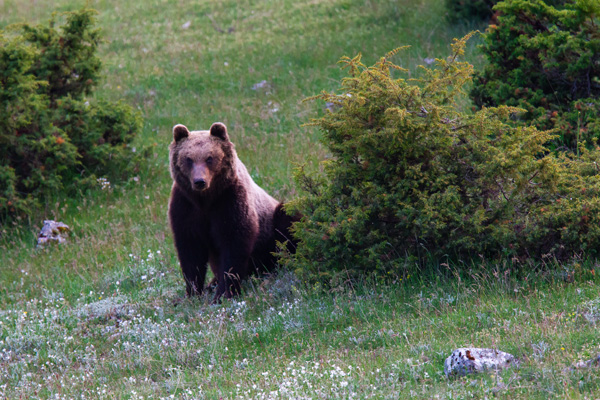
Marsican brown bear in Abruzzo. Credit: Bruno D'Amicis / Rewilding Europe.