Nature recovery
1 Core concepts
1.2 Defining ecological processes
The presence or absence of particular natural processes in an ecosystem reflects its overall health, functionality, and resilience to external influences such as climate change.
In rewilding, we use the concept of ecological integrity. This is a measure of the health of an ecosystem. It takes into account three variables: trophic complexity, dispersal, and natural disturbance.
How do we define ecological integrity?
Trophic complexity
First, what is a trophic level? A trophic level is the group of organisms within an ecosystem which occupy the same level in a food chain.
So, trophic complexity is a measure of the species present within the different trophic levels of an ecosystem. High trophic complexity means that there are a wide range of species at different trophic levels, such as plants, herbivores, carnivores, scavengers, and decomposers.
Dispersal
This is a measure of the ability of a species to move to another area, which lowers competition and can increase genetic diversity. Animals may need to disperse regularly in search of food, shelter or a mate.
Dispersal also allows organisms to escape circumstances which may affect their ability to survive or thrive, such as habitat degradation caused by human activity or less favourable conditions caused by climate change. Infrastructure such as cities, agricultural fields, dams, roads and fences, as well as artificial light and sounds, can act as barriers to dispersal. Increasing connectivity by creating nature corridors or dam removal can increase dispersal.
Natural disturbance
This is a measure of factors causing natural change in ecosystems, such as floods or wildfires. However, humans intervene in natural disturbance because of how it may affect them. Through rewilding we can increase natural disturbance by restoring natural river dynamics or enhancing natural grazing.
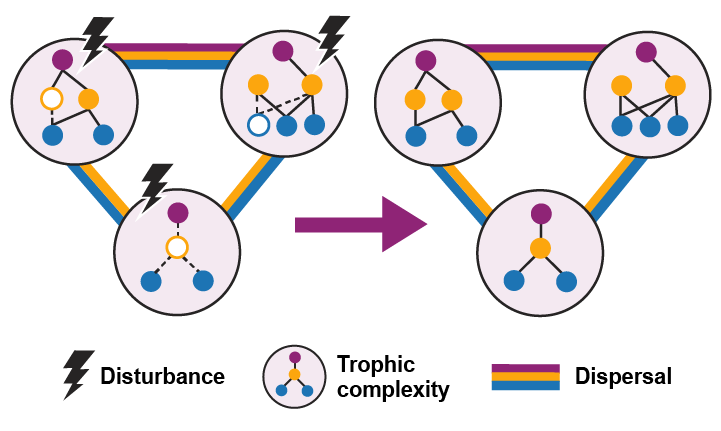
The diagram above highlights the interconnectedness of dispersal, trophic complexity and disturbance in maintaining ecological integrity. Ecological integrity improves from left to right.
Measuring changes in ecological integrity over time can help those involved in rewilding understand the impact of their efforts. You will see this term come up again in Module 4.