Nature recovery
3 Give nature a helping hand – bringing back wildlife
3.1 Keystone species
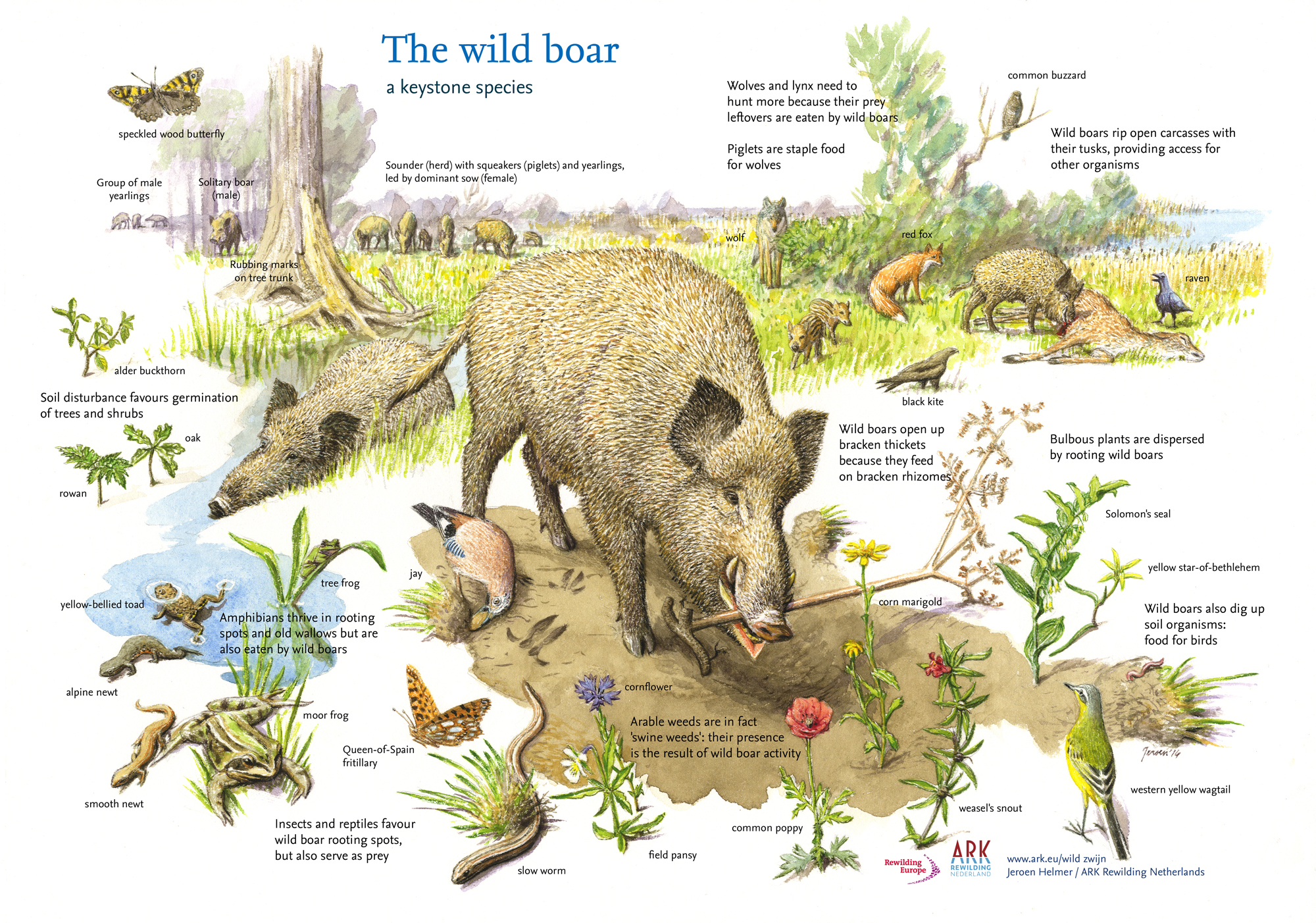
From a rewilding perspective some of the most important animals are keystone species. These are organisms that have a disproportionately large effect on their natural environment relative to their abundance. The same species may be a keystone species in one context and not in another, depending on the habitat and which other species are present. Some examples of keystone species are:
- European bison in forest mosaic landscapes
- Eurasian beavers in riverine landscapes
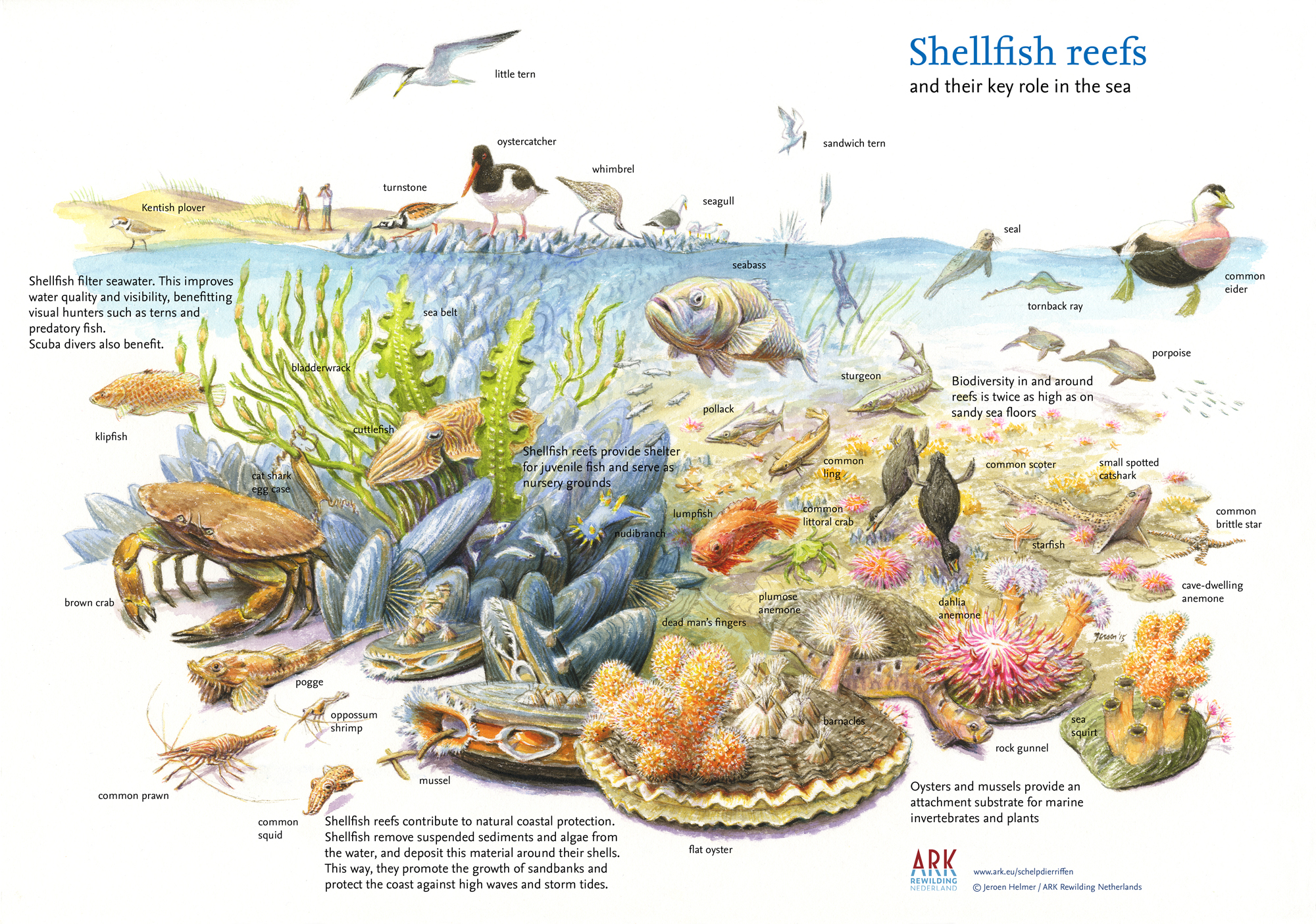
- whales in the ocean.
Keystone species not only exert their effects downwards from the top of the food chain, as is the case with predators such as wolves and lynx, but also upwards from the bottom, as is the case with beavers and rabbits. A wide range of organisms including plants and fungi can also be considered keystone species.
The loss of keystone species such as wolves, beavers, or mycorrhizal fungi, can cause an entire ecosystem to collapse. Helping a keystone species return to an ecosystem and thrive within it can have a hugely positive ecological impact and benefit countless other wildlife species.
Beavers: an example of a keystone species
Consider what happens in nature when a beaver fells a tree.
- The tree falls and floods part of the river.
- This creates a pond, which attracts insects and fish.
- These attract birds, which carry seeds, which grow more trees.
- These help to mitigate the effects of heavy rains, which may stop the flooding of towns and villages – and so the whole, interrelated system continues.
This gives a clear illustration of how both nature and people benefit from the presence of one or more keystone species.
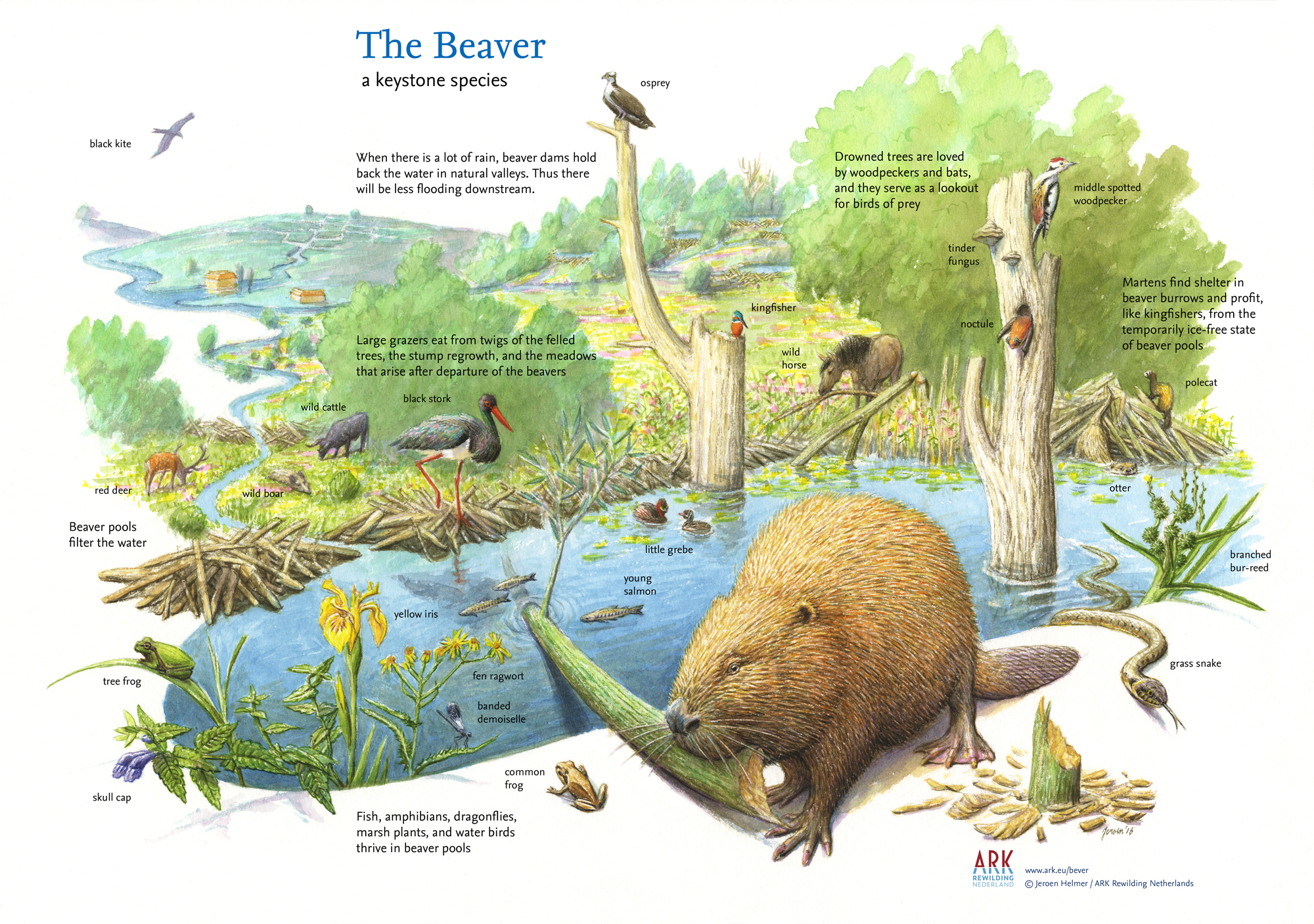
The beaver: A keystone species. Credit: Jeroen Helmer / ARK Rewilding Netherlands.
Click here for an enlarged version of the above image.

Forest dynamics in a stream valley with a beaver pond. Credit: Jeroen Helmer / ARK Rewilding Netherlands.
|