The economic opportunity of rewilding
1 The role of rewilding in boosting local economies
1.2 Building nature-based economies in rewilding landscapes
For rewilding to become truly sustainable and for wild nature to have a permanent place in Europe, rewilding has to become a financially competitive form of land use.
There is a variety of economic activities (or business models) that can be developed to support or create incentives for rewilding at landscape scale.
Two examples of sectors are:
- Nature-based tourism.
- The production and sale of local products.
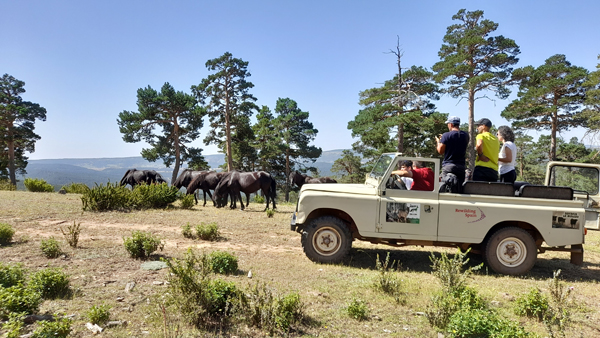
La Maleza Safari Tours in the Iberian Highlands, Tourists in Jeep. Credit: Lidia Valverde / Rewilding Spain
Both tourism and local products can be developed or aligned to rewilding principles:

By developing new economic opportunities or adapting and maintaining existing ones, such as catering and accommodation for tourists, wildlife guiding, or processing and marketing local goods.

Rewilding embraces the role of people, and their cultural and economic connections to the land. Tourism can recognise and celebrate local cultures, while natural products can sustain traditional methods of preparing and using natural products.

By inspiring visitors to rewilding areas, supporting employment that fosters pride in the local environment, and providing opportunities to sell and purchase products that support nature’s recovery.