Terrestrial rewilding
2 Forests and natural processes
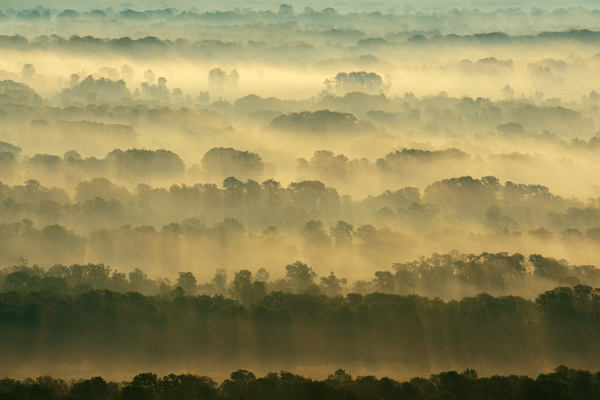
Aerials over the Letea forest, Danube delta rewilding area, Romania. Credit: Staffan Widstrand / Rewilding Europe
Despite the lack of primary forests, Europe's forested landscapes still play a critical role in the environment and economy. They provide essential ecosystem services such as carbon sequestration, water regulation, soil protection and habitat for wildlife. Forests also offer recreational opportunities and cultural value, contributing to the wellbeing of European societies.
Despite the value of European forests, historical and ongoing human management means natural processes are often missing or significantly degraded. These processes are crucial for maintaining ecological dynamics, biodiversity, and ecosystem services such as carbon capture.
Click on the icons below to learn more about some of the natural processes that are potentially missing.
You will learn more about some of these important natural processes in this module.
Forest fragmentation
One of the main ecological constraints of European forest ecosystems is their fragmentation. Many forests are divided into small, isolated patches which can hinder the movement of species and reduce genetic diversity.
In addition, many ‘forests’ are in reality monoculture plantations managed for timber production, where natural processes are prevented from taking place. This has a negative impact on biodiversity as well as ecological resilience and functionality.
The impact of climate change
Climate change poses another significant threat to Europe's forests. Rising temperatures, changing precipitation patterns, and increased frequency of extreme weather events can stress forest ecosystems and make them more susceptible to pests and diseases.
Shifting climate zones mean habitats that were once suitable for specific tree species gradually become unsuitable, meaning trees effectively need to migrate, which is very difficult as trees are static and their dispersal is often constrained by forest fragmentation.