Terrestrial rewilding
2 Forests and natural processes
2.1 Deadwood
Deadwood can be standing (snags) or lying (fallen logs). Both are critical components of forest ecosystems as they provide habitat for a wide range of organisms, including fungi, insects, birds, and mammals.
Deadwood is essential for nutrient cycling as it decomposes and returns nutrients to the soil. In many managed forests, deadwood is removed to reduce fire risk or for aesthetic reasons, leading to a loss of biodiversity and ecological functions.
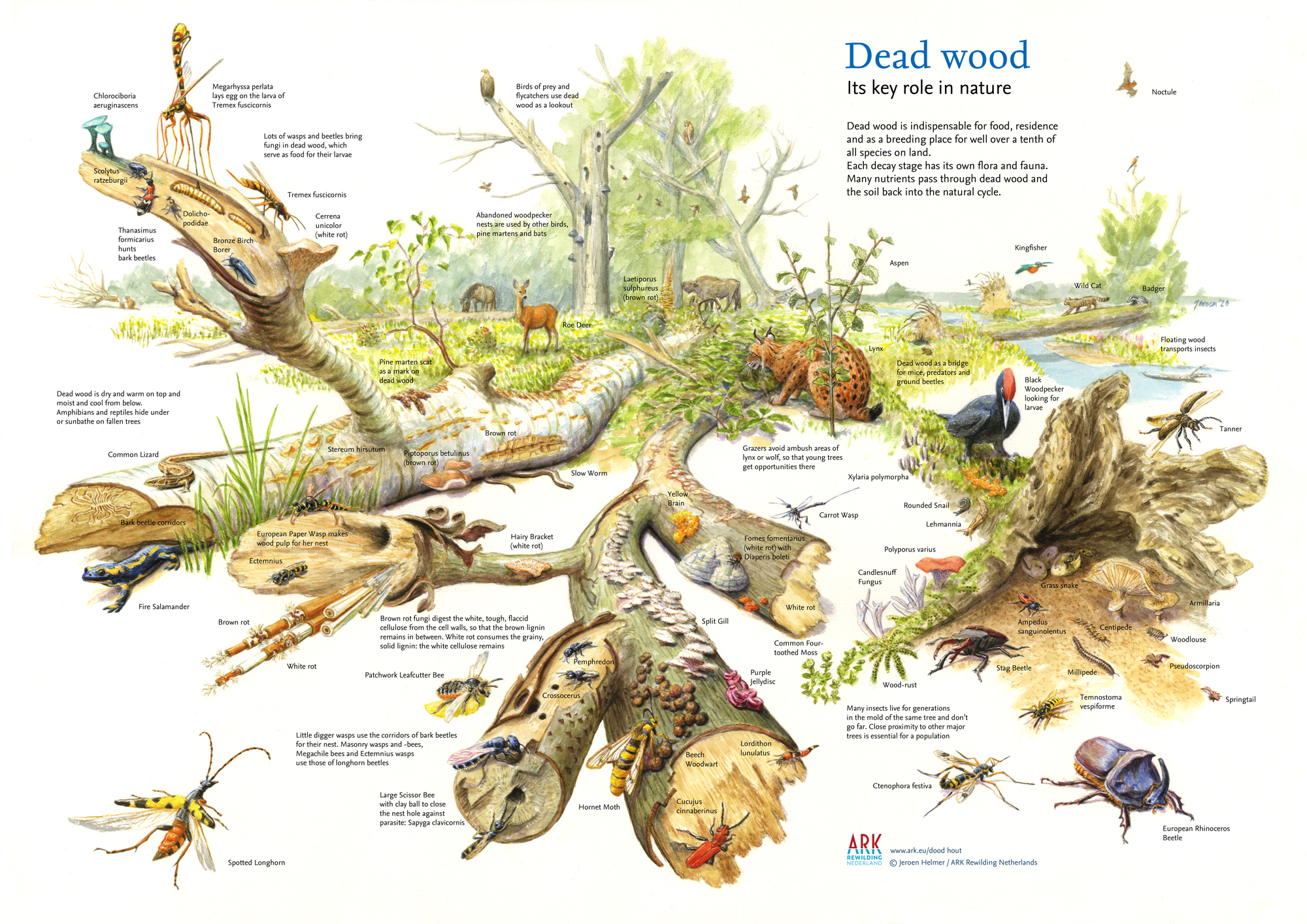
Dead wood: Its key role in nature. Credit: Jeroen Helmer / ARK Rewilding Netherlands.