Terrestrial rewilding
5 Grasslands
5.2 Grassland case studies
Case study 1: Tarutino Steppe, Ukraine
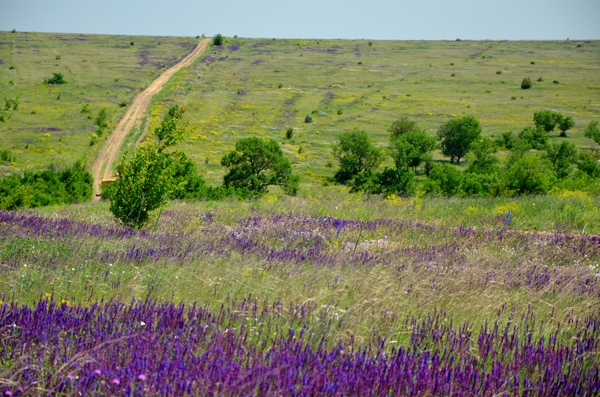
Tarutino Steppe in Spring, Ukraine Credit: Deli Saavedra / Rewilding Europe.
In Ukraine, the rewilding of grasslands is taking place in areas such as the Tarutino Steppe, close to the Danube Delta. This is one of the largest preserved steppe fragments in Ukraine and has seen significant restoration efforts, including the reintroduction of grazing animals.
Species such as kulan (wild donkeys), deer, steppe marmots and susliks have been released to help maintain open grassland.
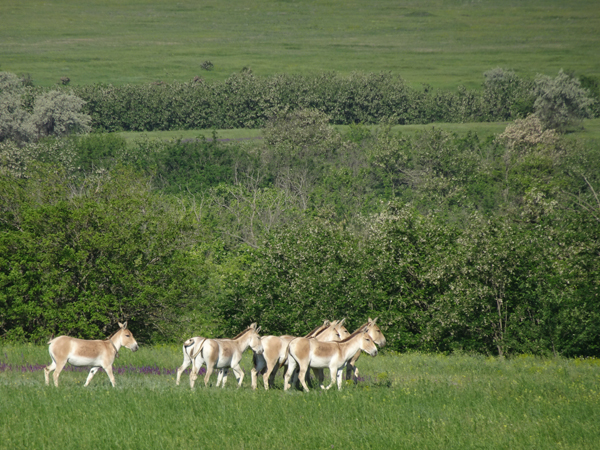
Herd of kulan in Tarutino steppe. Credit: Deli Saavedra / Rewilding Europe.
The impact of these herbivores on the landscape has led to the creation of more varied habitats, which support a diverse array of wildlife. It has also boosted seed dispersal, further enhancing plant diversity. Rewilding efforts on the Tarutino Steppe demonstrate how natural grazing can help to restore and maintain grassland ecosystems (Rewilding Europe, 2023).
Case study 2: Lika Plains, Croatia
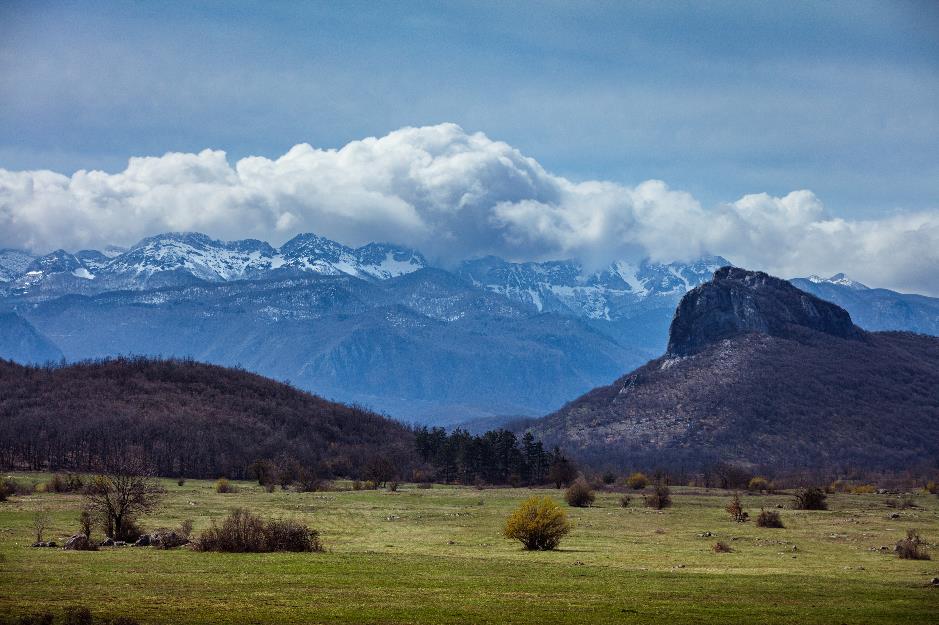
Velebit Mountains from Lika Plains. Credit: Neil Aldridge / Rewilding Europe.
The Lika Plains are located near the Velebit Mountains of Croatia, a region known for its karst landscapes and rich biodiversity. Here, large herbivores such as semi-wild bovines and horses were reintroduced to prevent the encroachment of shrubs and trees (Rewilding Europe, 2020).
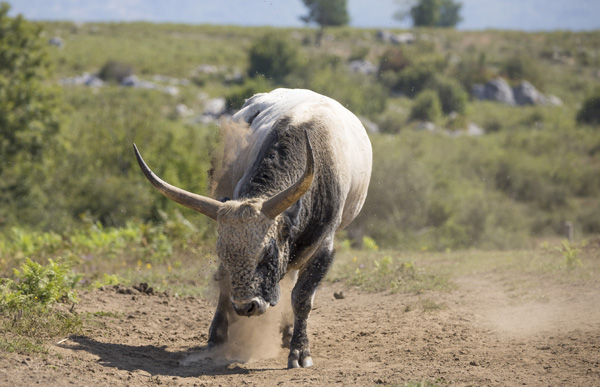
Tauros wallowing at Lika Plains. Credit: Daniel Allen / Rewilding Europe.
Through their interaction with the landscape these herbivores maintain a dynamic, semi-open mosaic of habitats that support a wide range of species, including birds, insects and small mammals. The Lika Plains are home to several endangered species, such as the European ground squirrel and corncrake, which benefit from open grassland habitats maintained by grazing.