Marine rewilding
Introduction
The ocean covers nearly three-quarters of the Earth's surface. It provides us with food, transport, recreation and supports the vital web of life that underpins our planet.
Critically, it is the source of around half the Earth's oxygen.
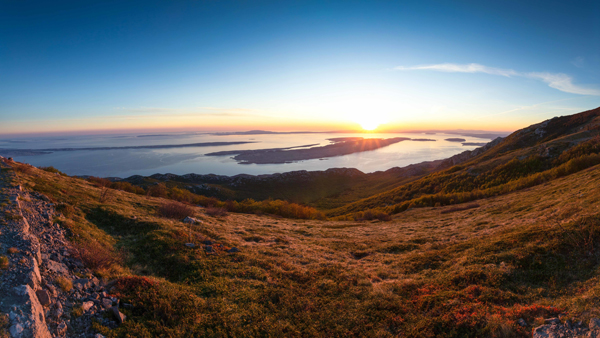
Sunset over the Adriatic Sea, Šljuka area. Credit: Nino Salkić.
Today, estuarine, coastal and marine environments face an array of mounting pressures but there is hope for the future. Rewilding can restore marine ecosystems and their natural processes, reversing decades of degradation caused by pollution, habitat loss, overfishing, destructive human activity and climate change. Through marine rewilding our oceans, seas, and coastal waters can flourish once again.
 Learning outcomes
After completing this module, you should be able to:
- Determine what rewilding principles are most relevant and suitable to rewilding seascapes.
- Explain the ecological, social, climatic and economic importance of marine ecosystems.
- Assess the impacts of key threats to marine ecosystems and how they disrupt natural processes.
- Compare different approaches to rewilding within the marine environment.
- Evaluate the role of keystone species and natural processes in maintaining healthy marine ecosystems and assess how their restoration can enhance ecological balance.
- Analyse case studies of marine rewilding in Europe.
- Compare the similarities and differences between terrestrial and marine rewilding.