Marine rewilding
6 Active rewilding in the sea
6.2 Habitats
Active marine rewilding can also take a habitat focus.
Saltmarsh is a natural habitat that absorbs storm surges onto land, reducing the impact of flooding and providing important habitat for coastal plants, mammals and birds. In the past, saltmarsh was drained, built over for development and agricultural purposes or polluted, meaning that these important ecological functions were lost.
Saltmarsh restoration can be expensive and some initiatives have been taking place for many years. For example, restoration of Wallasea Island, a saltmarsh habitat in the east of the UK, began almost twenty years ago.
More recently, materials such as coir and rope have been used to help salt marshes recover, and students have been engaged to keep monitoring costs low. Watch this video (Essex Wildlife Trust, 2021) to find out more about this approach:
Oysters are a crucial component of global ocean health, as both a species and a habitat creator. These animals filter and clean the surrounding water. Dense oyster colonies fuse together to form reefs that create habitat for numerous species. Mussels, barnacles, and sea anemones settle on oyster reefs, creating abundant food sources for commercially valuable fish such as anchovies, herring, and shrimp.
These can also be known as shellfish reefs. Oyster reefs also provide habitat to forage fish, invertebrates, and other shellfish. In some places, oyster reefs can serve as barriers to storms and tides, preventing erosion and protecting productive estuary waters.
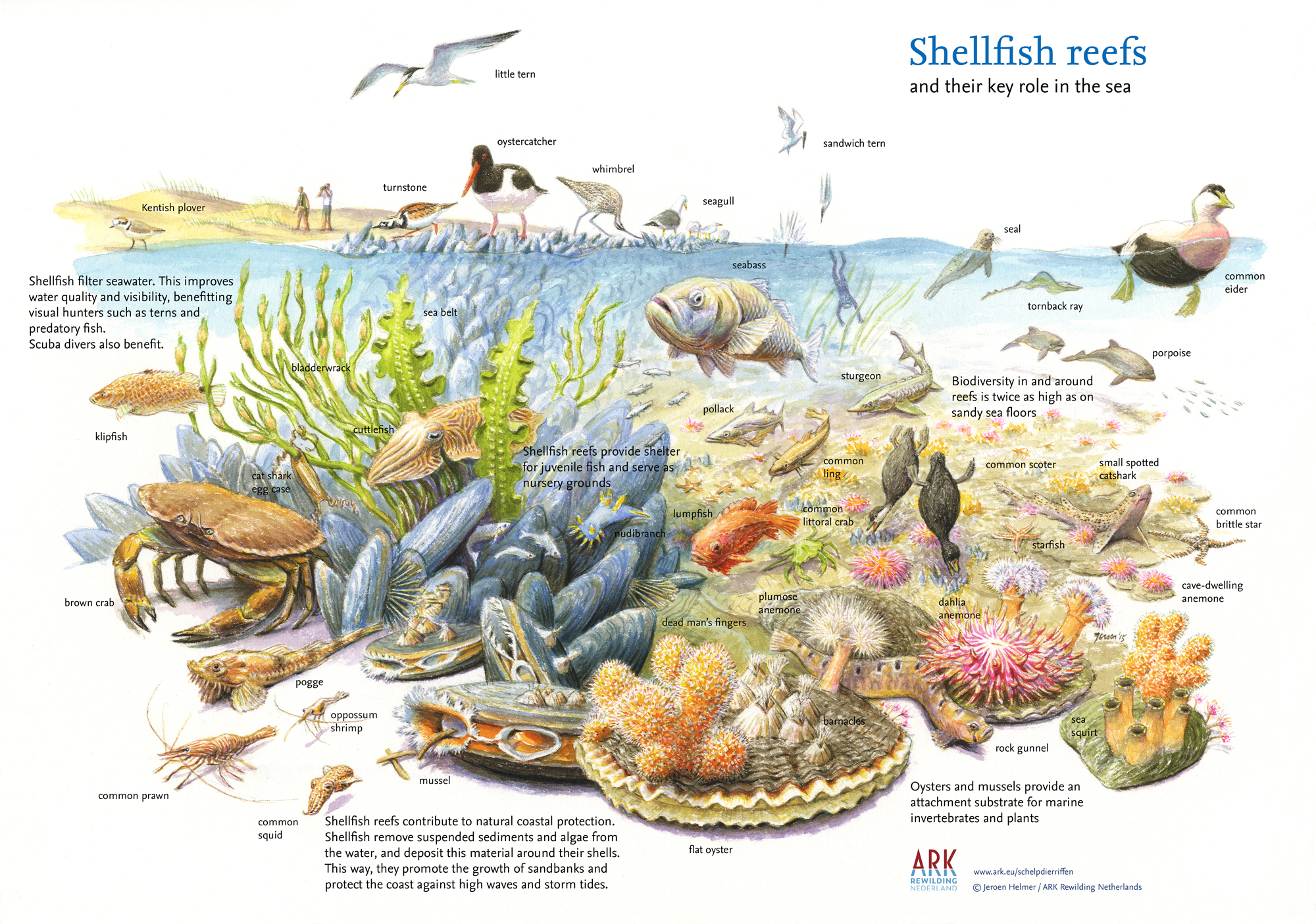
Shellfish reefs and their key role in the sea.
Click here for an enlarged version of this interactive.
Now is a good time to revisit the film by Oyster Heaven (from Module 4) about their efforts to restore oyster beds at scale.
Large-scale and long-running native oyster restoration projects are also taking place in the Netherlands, Scotland, USA and Australia.