Marine rewilding
8 Financing rewilding in the sea
The gap between the need for restoration and the finances available is dramatic. This is why we can’t continue as we are, but instead have to adopt new, practical approaches such as rewilding.
While letting nature lead helps to keep costs low, creating space for nature in the sea can still incur costs.
Areas designated for nature may need to be patrolled to deter illegal fishing and generating new revenues for coastal communities needs inputs of time, expertise and potentially commercial loans.

The Sea Ranger Service (n.d.) is a social enterprise dedicated to ocean conservation and marine rewilding. They provide maritime training, employment and coaching opportunities to young people in coastal areas, preparing them for careers in the maritime industry. Simultaneously, they deliver offshore services to assist governments with the management, conservation and restoration of marine environments.
Their initiatives include planting seagrass, conducting hydrographic surveys and monitoring marine protected areas (MPAs). By combining social impact with environmental restoration, the Sea Ranger Service aims to restore one million hectares of ocean biodiversity by 2040 while fostering the next generation of maritime professionals.
A potential avenue to fund the costs of these activities is through the biodiversity and carbon credit markets (see Module 4). The opportunity for companies to invest in the restoration of degraded marine ecosystems and voluntarily offset their activities is being explored by scientists, NGOs and policy makers.
Most of the initiatives to rewild the ocean or coastal zones by actively restoring habitats and reintroducing species are relatively new. There is large scope for reducing costs through technology improvements or scaling.
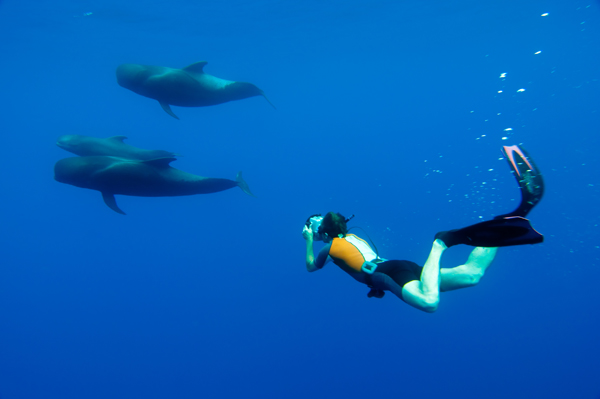
Shortfin pilot whales underwater in Canary Islands, Spain, Europe. Credit: Iñaki Relanzon/ Wild Wonders of Europe.