Start your rewilding journey
2 Accessing land for rewilding
2.1 Case studies 2
Scotland
When part of a large private estate in Scotland was put up for sale the local community knew they needed to seize the opportunity to buy the land and bring it under local management for the community and nature.
Go to Rewilding Britain and scroll to page 29 to learn what happened next.
Spain
In the Iberian Highlands of Spain, Rewilding Spain (n.d.) have been able to access 20,000 hectares of land for natural grazing. Owned by the local municipal government, local farmers had previously paid for the right to graze their animals on this land. But with so many people leaving the area to live in cities the land had become almost unused. With the impact of grazing removed scrub began to encroach and dead plant matter accumulated. This not only increased the risk of catastrophic wildfire outbreaks but also deprived the municipal government of a source of income.
Rewilding Spain has been able to lease the land and as it is already designated for grazing, release semi-wild horses in the area, supporting the recovery of the endangered Przewalski's horse and bringing all the benefits of natural grazing.
Watch this film by Emmanuel Rondeau (Rewilding Europe, 2024) to learn more.
Sweden
The Vindelälven-Juhttátahkka Biosphere area is Sweden's largest biosphere area. Covering 1.3 million hectares it encompasses mountains, rivers, forest and coast. Within the Biosphere Reserve representatives from three reindeer herding communities are joining forces with the Biosphere Authority, Rewilding Sweden and other local organisations.
Together they aim to create and expand more natural conditions where the reindeer can graze and move freely in the forests, and in winter along frozen rivers, following their migration routes.
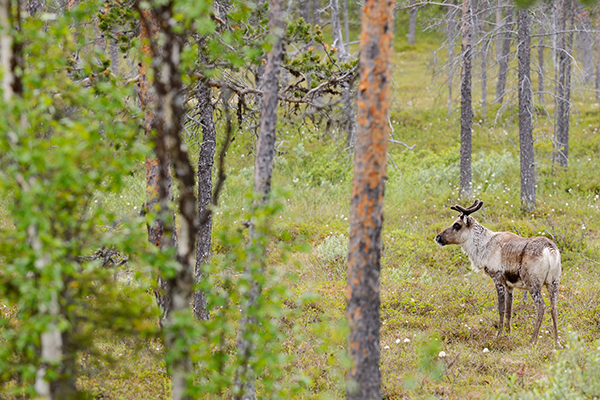
Reindeer in Nordic Taiga, Sweden. Credit: Staffan Widstrand / Rewilding Europe.