3 Ensuring legal compliance
Legal context
The law is present in almost every aspect of our lives. Those who decide to embark on a hands-on rewilding journey need to know what areas of law are involved.
Existing legal regimes were not designed with rewilding in mind. Rewilding practitioners will find that although there may be some restrictions to overcome, legal frameworks also offer opportunities to support and strengthen the impact of rewilding.
Legal areas to consider
These are some of the relevant areas of law involved in rewilding as well as some key questions that those looking to access land and rewild it should ask.
Click on each list item below to gain more knowledge:
Obtaining and securing land
- What is the long-term status of the land I am acquiring access to – e.g. could it be reverted to intensive agricultural land when my lease ends?
- Are there legal mechanisms available to ensure the land remains dedicated to rewilding in the future?
- Is the land free of any influences or requirements that may jeopardise my plans?
- Do third parties, present or future, have power to interfere with my plans for the land and/or could they change its use in the future?
Developing and managing land
- What are the land uses and management plans applicable to the land and do they restrict what I can do?
- Do I need licences or permissions to implement my rewilding plan?
- Do I need to undertake any environmental assessments before developing rewilding activities?
- Is my area of land in a protected area – what limitations and opportunities does this present?
Legal responsibilities and liabilities
- Am I required to, or can I choose to, grant access to the public? Can I revoke such access? What steps should I take to minimise risks associated with public access?
- What am I responsible for when there are people on the land? How can I reduce liability risks?
- Could my actions impact neighbouring landholders and do I have any obligations to prevent any negative impacts?
- What am I responsible for when there are animals on the land? Does this change depending on whether I have any control over the animals or if they are wild?
Rewilding and animals
- Are the animals I wish to have on my land considered to be wild (e.g. lynx) or domestic (e.g. cattle and horses)? This will determine the applicable legal regimes.
- If I wish to reintroduce wild animals, do I need a licence? Which species and where can I release them? What obligations am I required to follow to capture, transport and hold these animals before releasing them? What rules apply if the animals are sourced from abroad?
- If I wish to use domestic species such as cattle and horses, what legal regimes apply in relation to ear tagging, disease control and welfare, for example? Are any legal exemptions relevant if the animals are not intended for human consumption?
- Can I leave carcasses of animals where they die or do I need to remove them? Can I set up a specific feeding station where carcasses are placed?
Taking inspiration from the law
Laws that are relevant to rewilding can be used to advance and support rewilding. Thinking creatively to come up with legal solutions can be both motivating and productive. It is also inspiring to see how legal obligations around nature protection and recovery can be enforced to benefit both nature and people.
The power of law also comes from its replication effect. Policies and legislation can be influenced by good practices elsewhere. As a rewilder you can stay on top of the latest legal developments applicable to rewilding and advocate for them to be replicated in your area.
Case study – Portugal
To ensure the land they own is used for rewilding in perpetuity, Rewilding Portugal (n.d.) is moving from an association to a foundation. This change means that even if Rewilding Portugal disappears this rewilding purpose for the land will remain. Future generations will be able to witness the impact of rewilding across an extensive area because a group of ambitious people leveraged legal opportunities to safeguard their rewilding efforts.
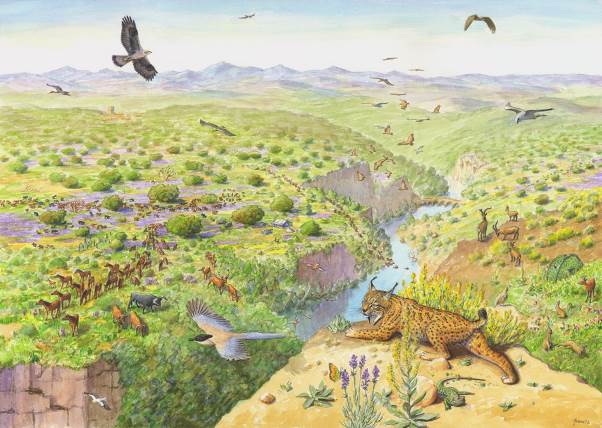
Greater Côa Valley, Portugal. Credit: Jeroen Helmer / ARK Rewilding Netherlands.
You can find more information on rewilding and the law in the Further Reading and Resources section of this module.