3. Energy Use and Smart Devices
5. How to save energy
When we consider how to reduce our energy consumption, we also need to consider how we can use energy more efficiently.
Some ideas for how to save energy are shown in this International Energy Agency (IEA) graphic. It also has an accompanying article Things you can do to use less energy and cut your bills.
Figure Two: 7 ways to save energy.
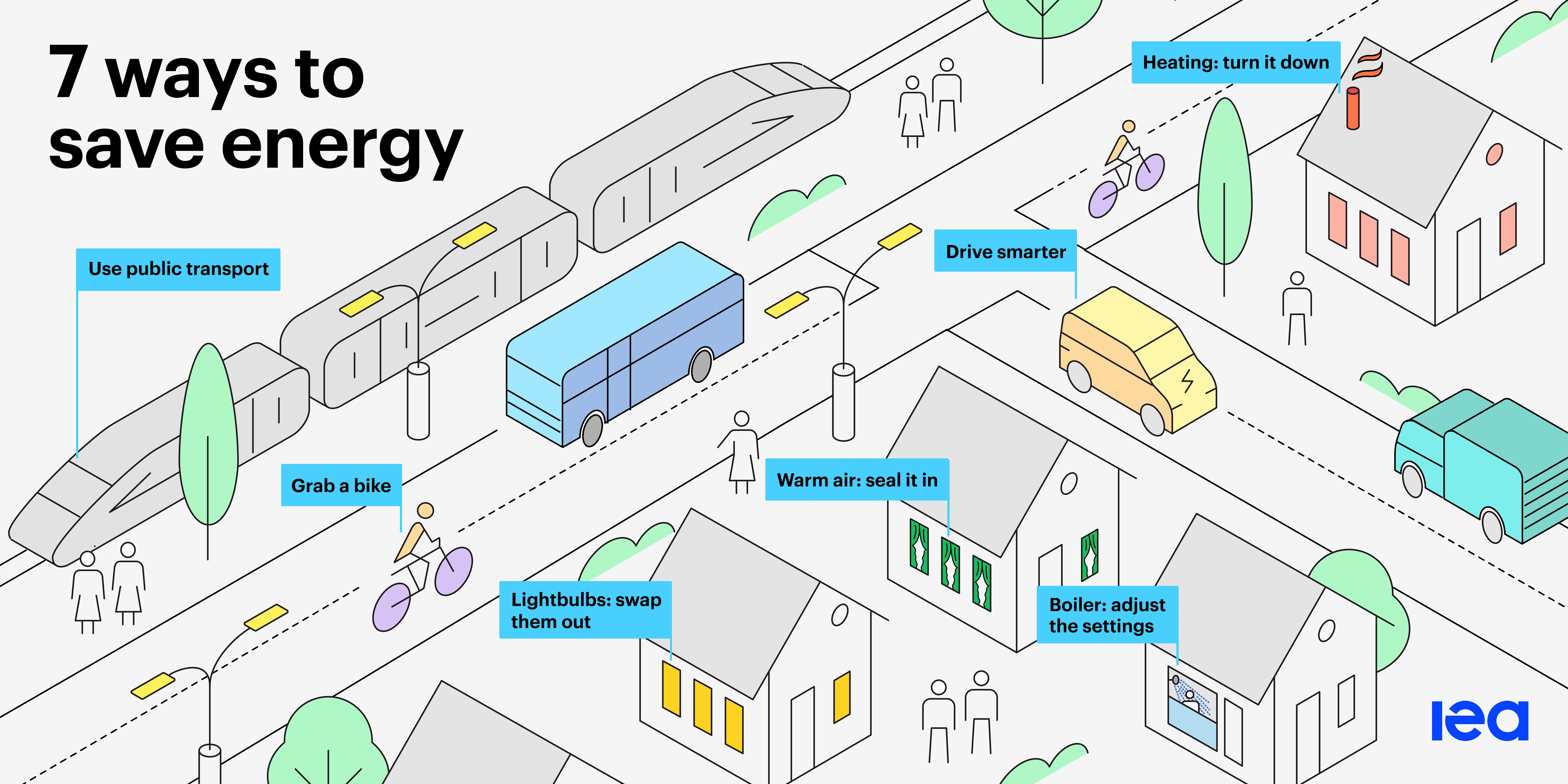
We could save energy by:
Reducing waste
We can reduce our energy consumption in a variety of ways including insulating roofs or switching off appliances when not in use.
We can also reduce our consumption of energy from fossil fuels by choosing energy from clean technologies. For more advice on how to save energy, you might want to explore the Energy Saving Trust (UK) article Quick Tips to Save Energy. Although produced for the UK context there are useful tips that can make a real difference to your energy consumption, wherever you’re based. If we all chose to make small changes, these could have a big impact!
Changing our behaviour
When we understand how we use energy around the home, we can choose to use it more efficiently. For example, by only boiling the amount of water you need for a hot drink or deciding to walk or cycle to work rather than drive a car. A better understanding of how and when we use energy enables us to make changes and save energy and money, without reducing our comfort.
Making our appliances more efficient
For example, we may be able to install a heat pump, install energy saving lightbulbs or devices, update our heating system or use low-temperature heating such as underfloor heating systems.
In whatever way we choose to save energy, we should also be aware of the wider impact of our behaviour. Using less energy means the grid’s capacity is increased. If we’re a prosumer, energy we don’t need is sent to the grid for others to use. If more of us choose active forms of travel (e.g. walking or cycling) or public transport, we reduce emissions overall and make our cities and towns more pleasant to be in. Little changes can really add up to make significant overall impacts.
Finally, whilst we may choose to use energy more efficiently, switch to energy from clean technologies or make use of energy saving devices, it’s important that we don’t unintentionally change our behaviour to negate any benefits and therefore increase our overall energy consumption!
We need to remain vigilant for what is described as the rebound effect. For example, you may save money through reducing your use of electricity by using energy efficient devices and lightbulbs. However, your overall energy consumption may remain the same or increase as you now no longer routinely switch off lights or appliances when they are not needed. Although you may still be saving money, any actual energy saving is effectively cancelled out.
Activity: The Rebound Effect (10 minutes)
You’ve just installed energy efficient LED lightbulbs throughout your home. Describe a scenario where the “rebound effect” might occur, potentially offsetting your energy savings. What actions could you take to avoid this, without reducing your comfort?
Write down your thoughts. If you are working through the course with others you may like to discuss your scenario and possible actions together.