Astronomy for Mental Health and Well-being
3. Module 2: Mental Health
Learning outcome
By the end of this module you will understand what mental health is, how it is shaped, and how different dimensions of mental health interact. You will also learn how mental health moves along a continuum and why small changes can create positive ripple effects.
Definition
Mental health is a fundamental human right and an essential part of overall health. As the World Health Organization states, there is no health without mental health. Good mental health enables people to realise their potential, to study or work effectively, to build relationships, to contribute to their communities, and to make everyday decisions.
Mental health is holistic and dynamic. It is shaped by biology, life experiences, culture, and the social and physical environments around us. At the same time, our mental state influences how we perceive and respond to those environments, making them feel either more supportive or more stressful. Importantly, mental health can be strengthened, supported, and improved.
Dimensions of mental health
Mental health is not a single thing. It is a set of interconnected dimensions that rise and fall together. Seeing these dimensions clearly helps us notice strengths, spot early warning signs, and choose practical next steps.
Emotional
This dimension relates to how we experience and regulate feelings such as calm, worry, or frustration. Skills like naming emotions, soothing the body, and using grounding techniques provide support here.
Cognitive (Thinking)
This dimension involves attention, memory, problem-solving, and the stories we tell ourselves. Unhelpful habits such as all-or-nothing thinking can narrow choices, while flexible thinking opens them up.
Behavioral (Actions)
This dimension refers to daily habits and coping strategies. Sleep, movement, nutrition, and helpful routines build resilience. Avoidance and short-term fixes, however, can keep us stuck.
Social (Connection)
This dimension reflects the quality of relationships and sense of belonging. Supportive ties can buffer stress, while isolation and conflict increase risk.
Physical and Biological
This dimension captures brain–body links including sleep, hormones, medical conditions, and substance use. Body states strongly shape mood and attention.
Meaning and Values
This dimension is about sense of purpose and alignment between actions and what matters. In Acceptance and Commitment Therapy terms, it involves clarifying values and taking committed action, even in the presence of difficult thoughts and feelings.
Environment and Culture (Context)
This dimension covers safety, income, workload, stigma, discrimination, and access to nature and services. Context can either help or hinder every other dimension.
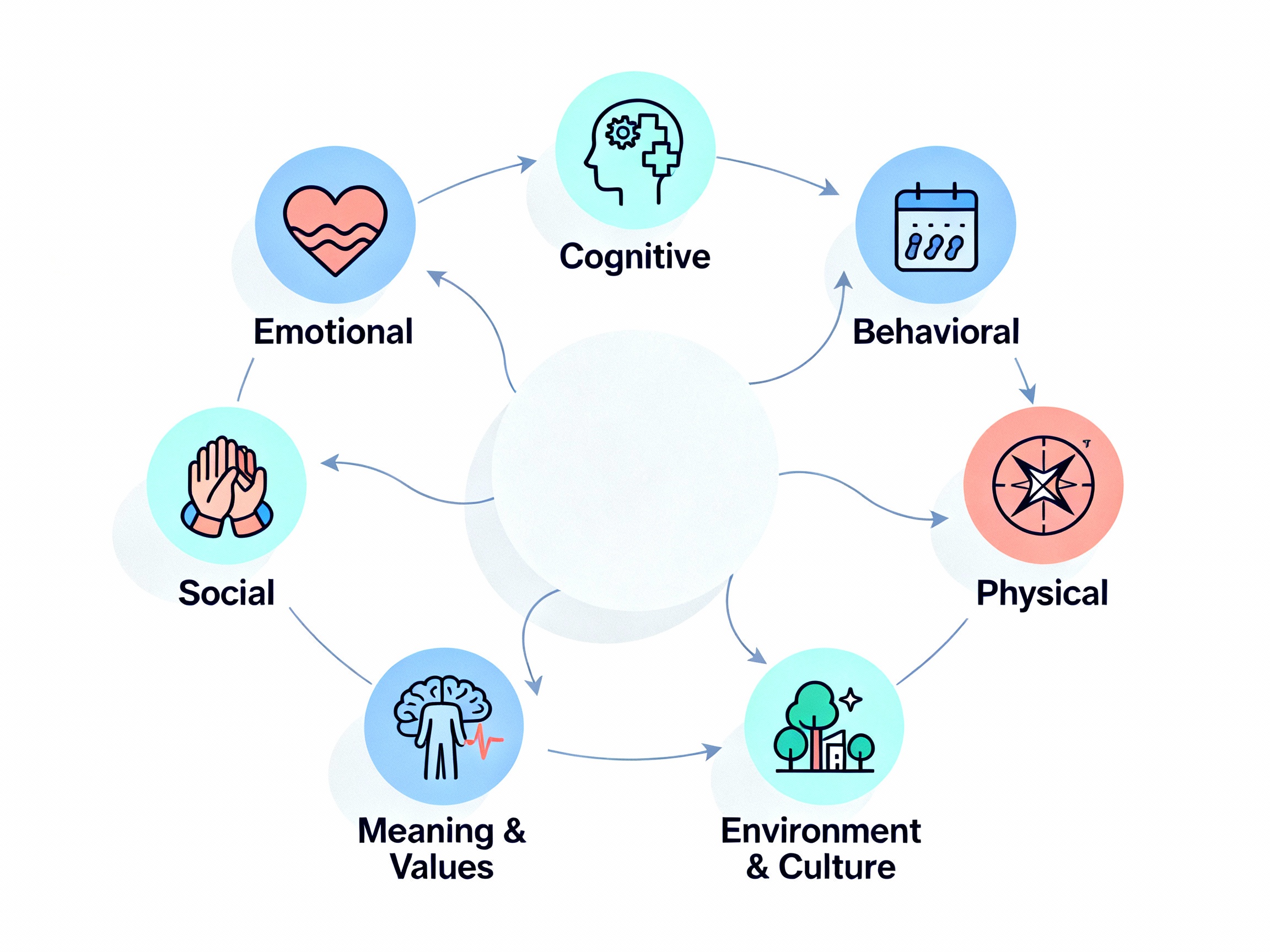
Image caption: Dimensions of Mental Health.
Key idea
Small, doable changes in any one dimension often ripple across the others. For example, better sleep, a values-guided action, or a supportive conversation can have wider benefits.
Mental health as a continuum and fluid system
Mental health is not an “on or off” state. It sits on a continuum that shifts over hours, days, and life stages. You may feel steady in some dimensions such as relationships while feeling strained in others such as sleep or workload, and that is normal.
A simple way to picture this is a slider that moves between Thriving, Coping, Struggling, and Crisis. People move in both directions over time.
Mental health also behaves like a fluid system. The dimensions interact in loops. Better sleep can lift mood and attention. Social connection can reduce stress. An unfair workload or stigma can push the whole system toward struggle. Small, values-guided actions can create positive ripple effects across the system.
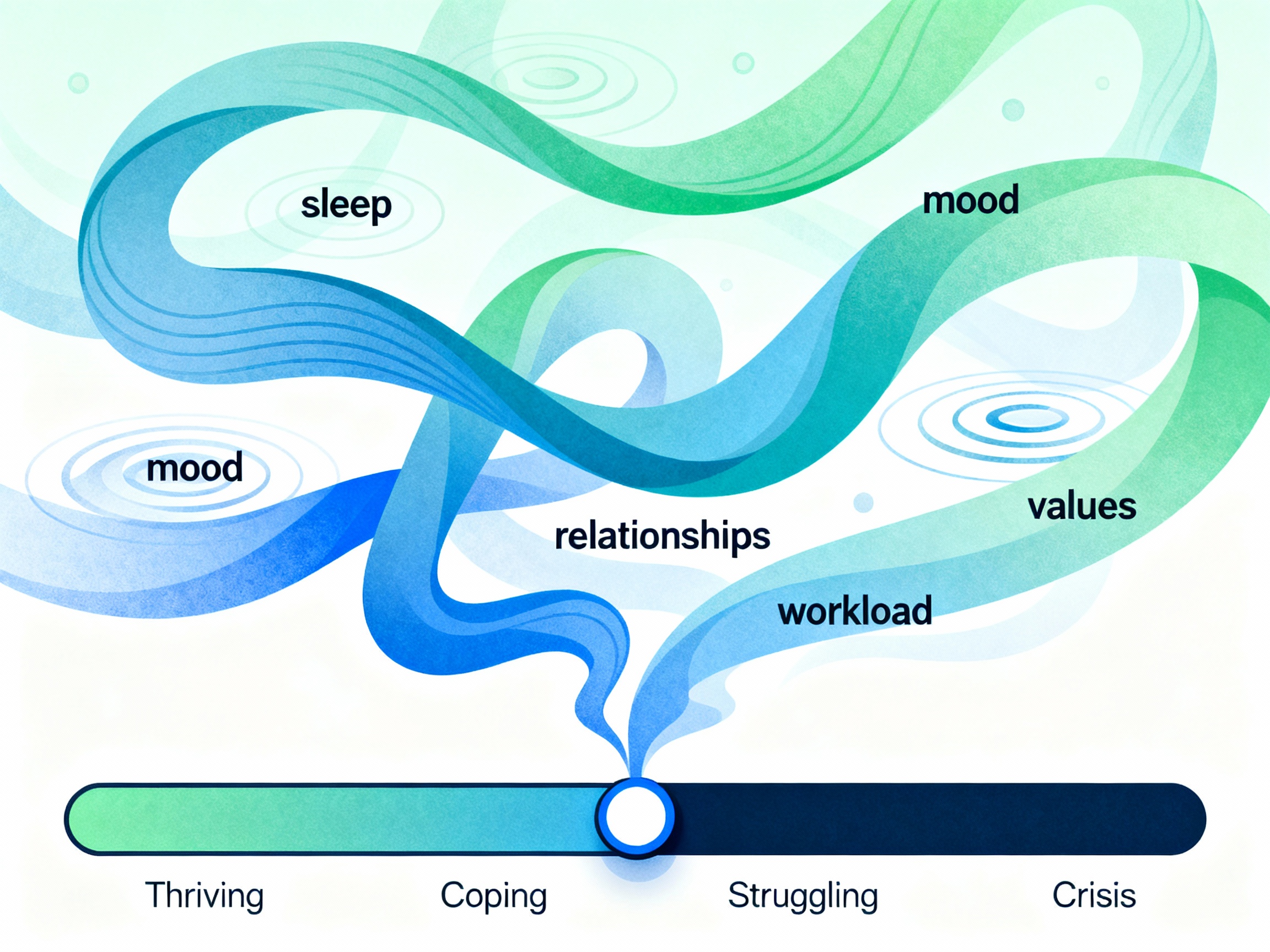
Image caption: Mental Health Continuum.
Final reflection
Understanding mental health as dynamic, interconnected, and fluid allows us to see both risks and opportunities. No single dimension tells the full story, and no state is fixed. By noticing shifts and making small changes, we can strengthen resilience and support ourselves and others in meaningful ways.