Conducting a Risk Assessment
9. AIR QUALITY MONITORING
Air quality monitoring helps to ensure that the steps taken to maintain air pollutant concentrations as low as possible are effective. Actively monitoring air quality provides the operator with an opportunity to identify trends in real-time, allowing action to be taken to lower air pollutant levels.
Note: There is no legal requirement for ice arenas to install carbon monoxide and or nitrogen dioxide sensors. However, facilities should implement real-time air quality sensors and alarms to promptly detect elevated pollutant levels.
Continuous air monitoring systems with digital readouts and readings recorded in a logbook are the best option.
SAMPLE AIR QUALITY MONITORING LOG SHEET
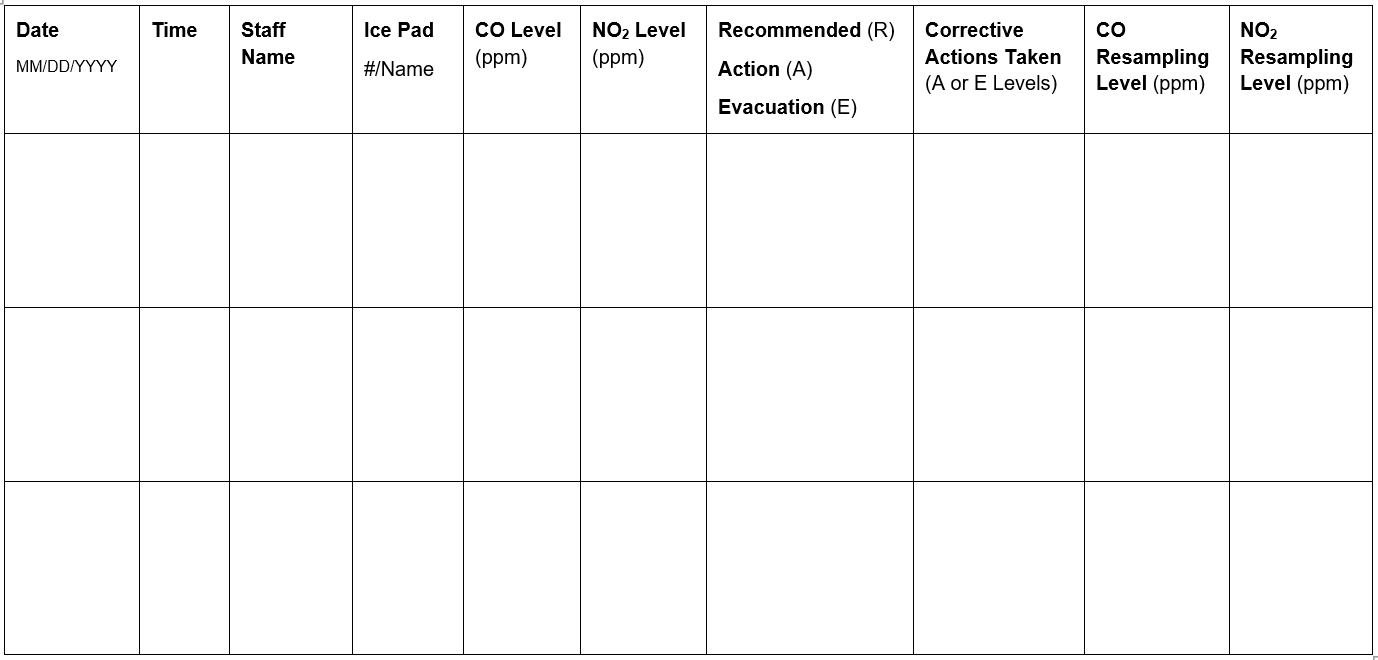
If continuous air monitoring systems are unavailable, portable air monitoring equipment should be used to measure weekly one-hour averages, and the readings should be documented in a logbook. A one-hour average refers to monitoring 30 minutes at the player's bench and 30 minutes at the spectators' area.
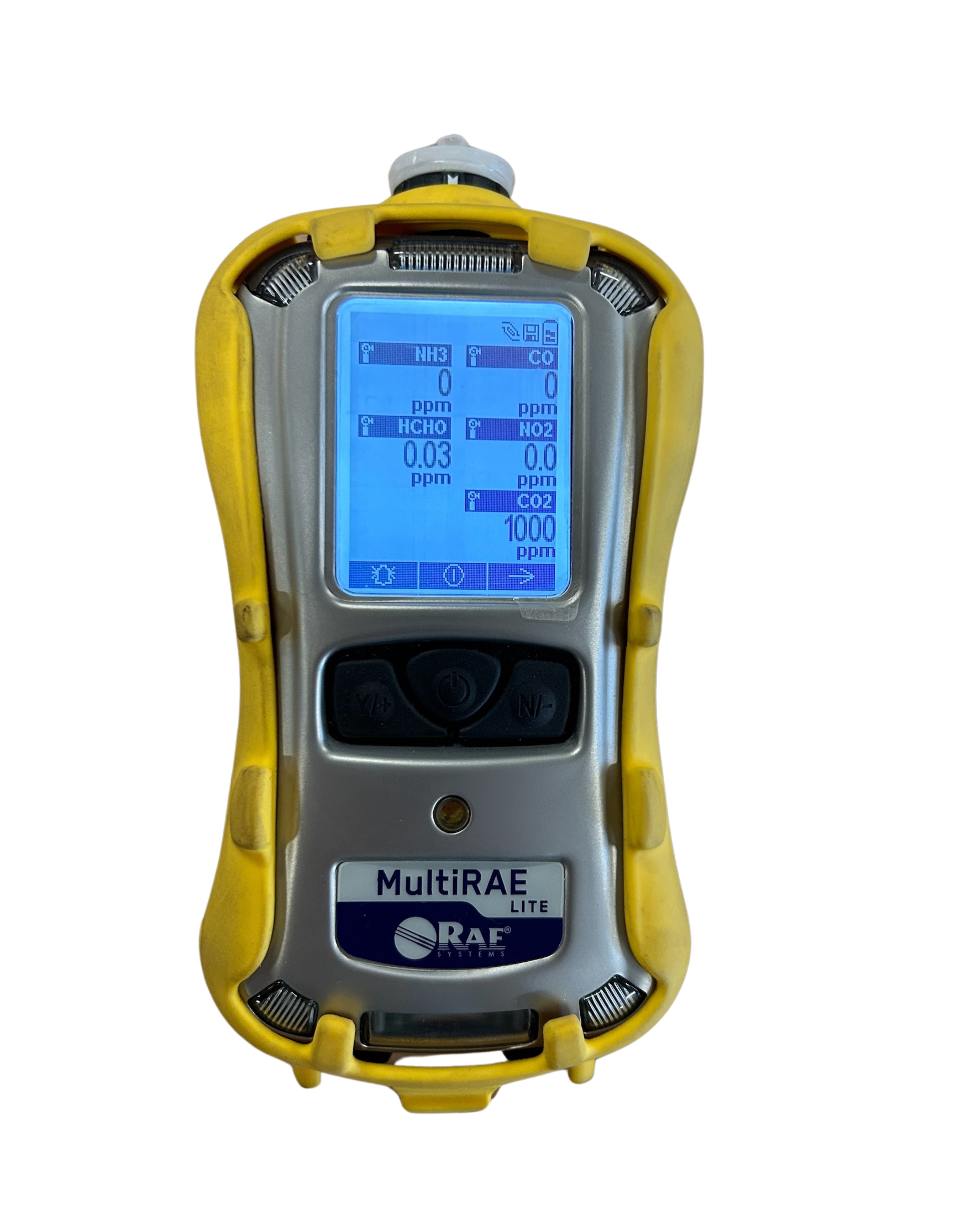
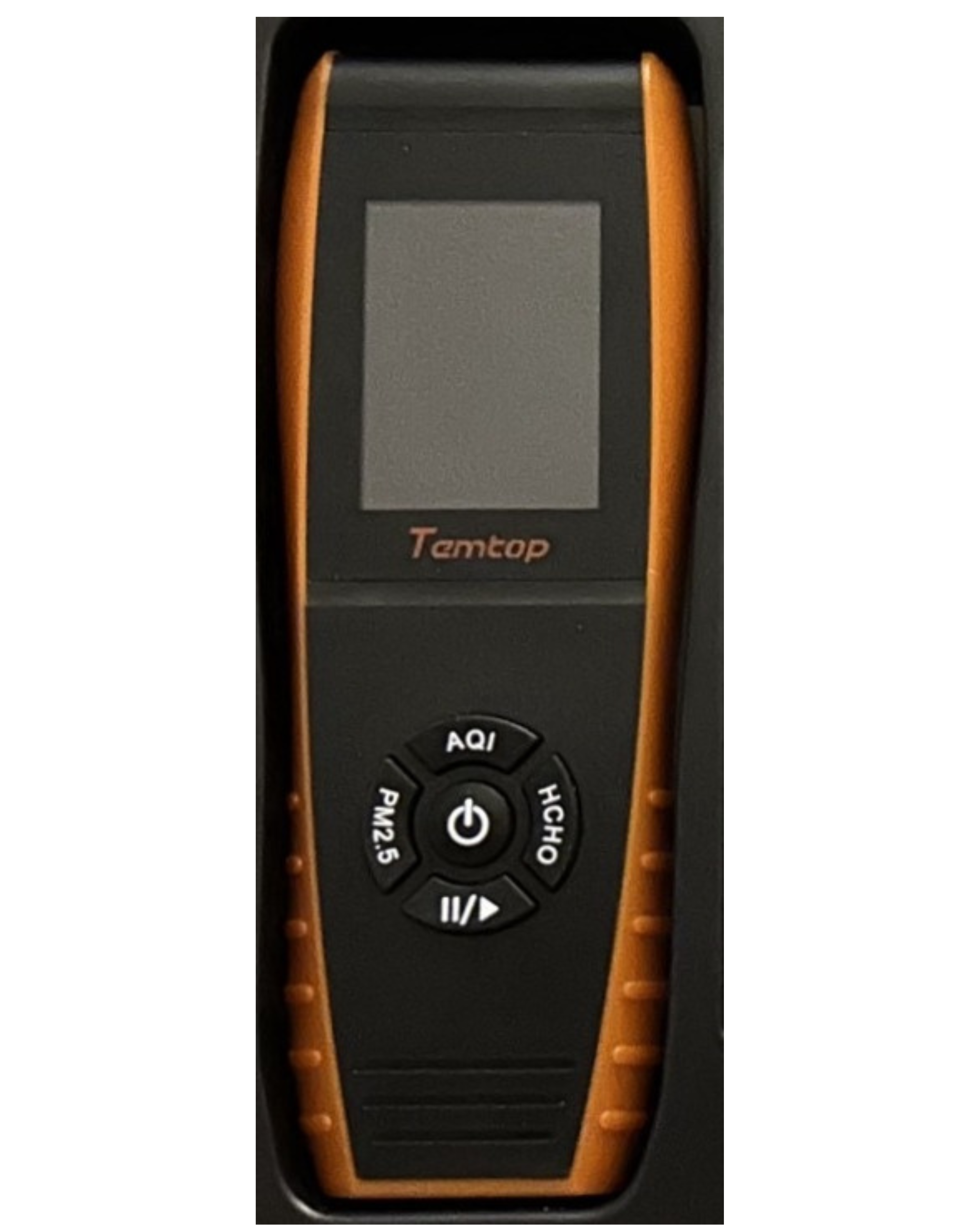
HANDHELD AIR MONITORING DEVICES
The images below show examples of handheld air quality monitoring devices commonly used in ice arenas. These devices are portable, easy to operate, and allow operators or inspectors to measure contaminants such as carbon monoxide and nitrogen dioxide in real time.
It is recommended that continuous air monitoring systems be equipped with an audible alarm and set to sound at a level below occupational levels or to the threshold set by the public health unit to reduce the air pollutant levels.
Setting the air monitoring system to alarm at these levels is more protective of the health of susceptible populations and will avoid emergency situations.
Operators should ensure gas sensors meet the required resolution range and precision required, and are calibrated and replaced according to manufacturers' instructions. They should also consult with the indoor air quality equipment company to determine the number and location of adequate gas sensors.