Week 3 Readings
2. The Motif-to-Meaning Toolkit (use in 3 steps)
2.1. 2-minute Practice: Motif spotting
Figure 1: Ming dynasty blue and white dragon vase.
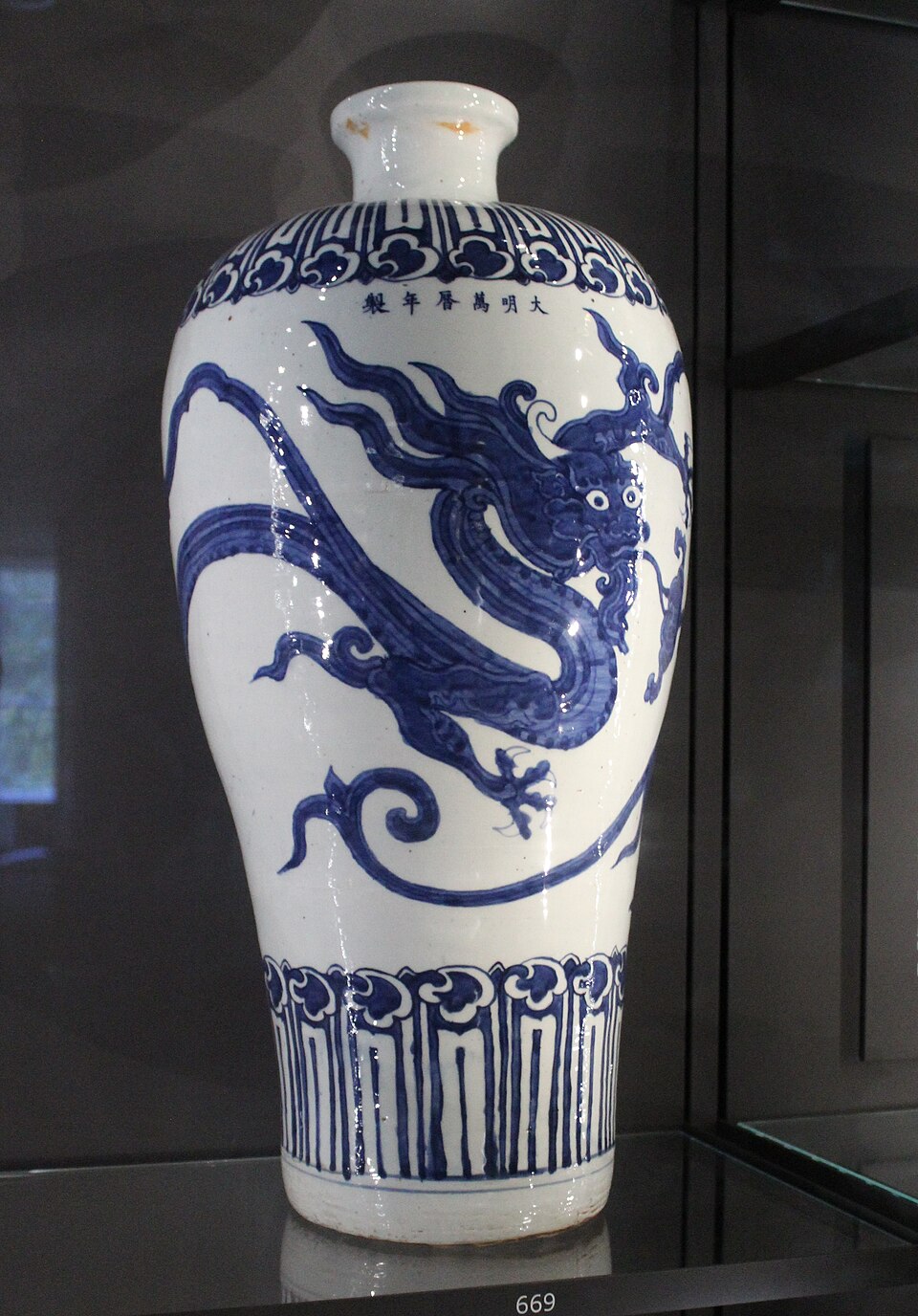
In 2 minutes, write:
-
3 motifs you can name (even if simple)
-
1 layout type (bands/panels / central/all-over)
-
1 sentence beginning “I observe…”
Reveal (Example):
3 motifs: dragon; cloud scrolls; wave/sea pattern (water band).
1 layout type: bands (decorative bands wrap around the vessel).
I observe… a blue-and-white vase with a large dragon as the main motif, surrounded by swirling cloud forms, with patterned border bands and a wave band placed around different sections of the body.
Quick check: Are your motifs visible, not assumed?