2.4 Roles Under Pressure and What this Means for You
2. Regional Trends in Southeast Asia (Pg 2/5)
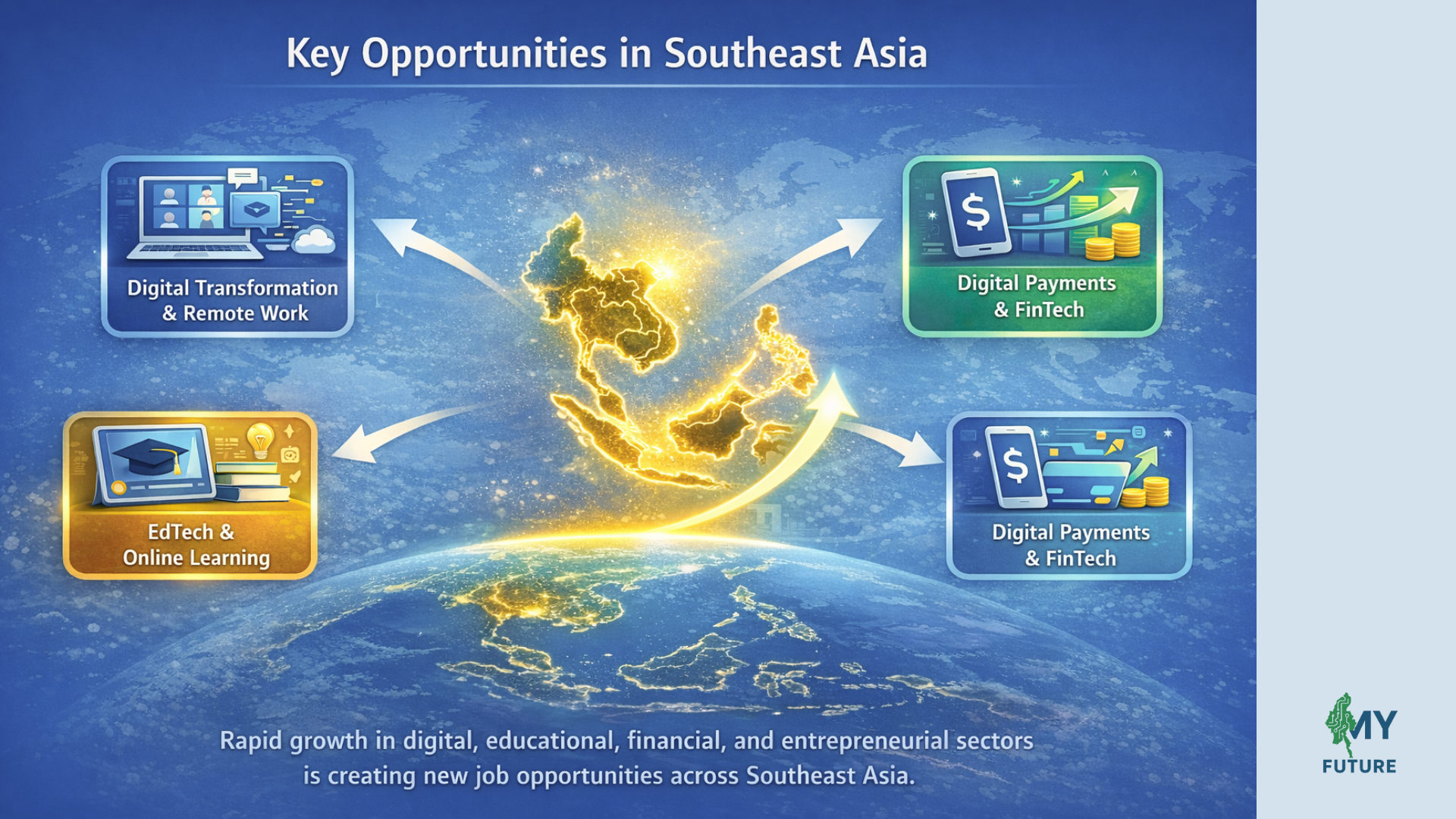
Let's now explore the key opportunities in the next 5-10 years in Southeast Asia:
Click to view the image in full screen
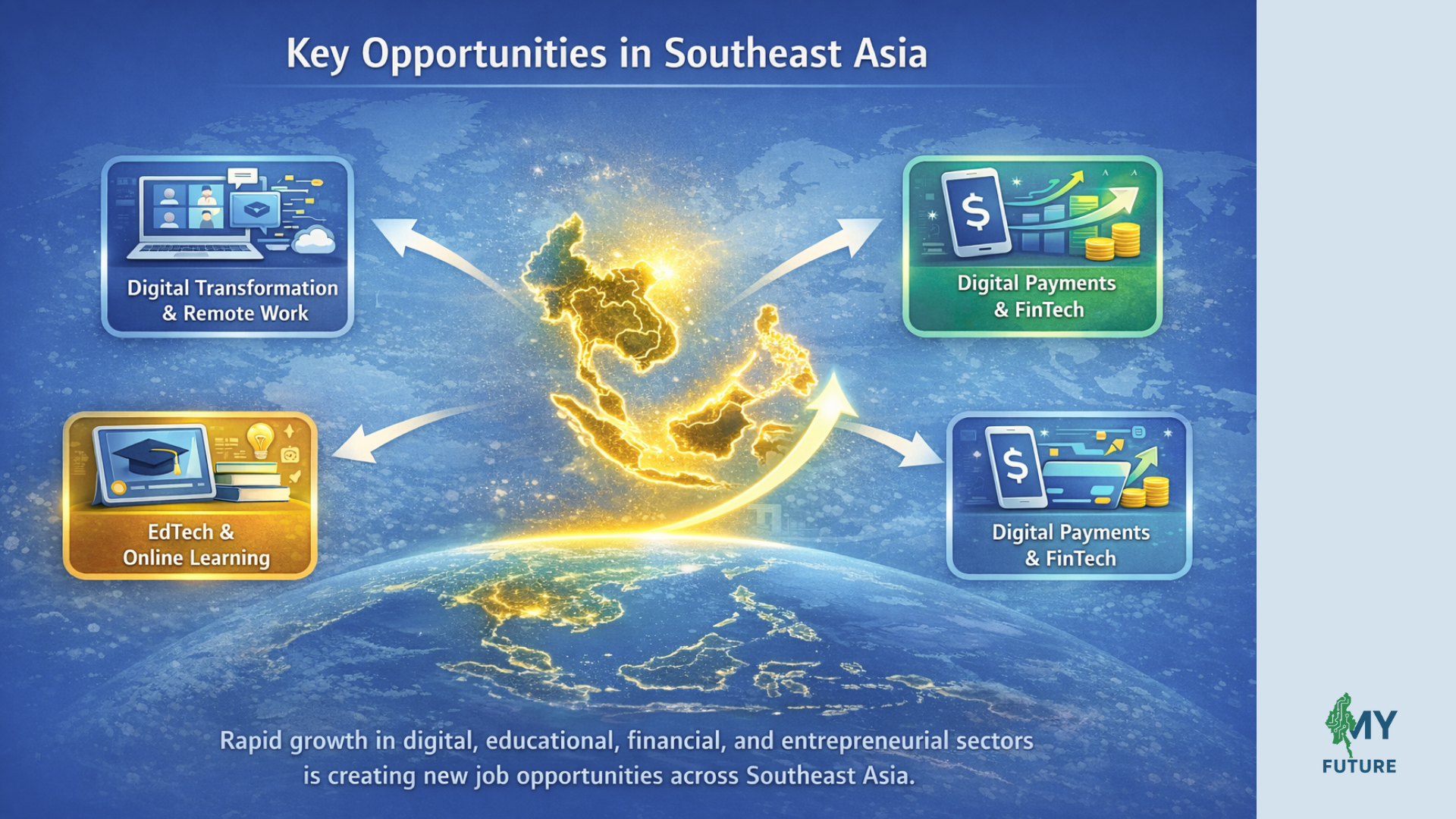
Southeast Asia is one of the fastest-growing regions in the world, with young populations and rapidly changing economies. Across the region, the job market is being shaped by technological advancement, demographic shifts, and globalisation. While some countries face high youth unemployment and skills mismatches, regional trends suggest significant opportunities in digital work, IT, entrepreneurship, and service-oriented sectors. Click on each of the following to read a bit more about changing roles in the sectors illustrated in the diagram above:
▶Digital transformation and remote work
-
Digital adoption across ASEAN countries is accelerating. By 2030, the regional digital economy is projected to reach over USD 1 trillion, and remote freelance work is expanding in sectors like IT services, e-commerce support, digital marketing, and content creation. Many roles do not require advanced degrees, making digital work an accessible entry point for youth.
-
▶EdTech & Online Learning
Southeast Asia’s EdTech market is expected to grow by 14–16% annually until 2030, driven by online schools, tutoring platforms, and skill-training apps. This creates demand for online teachers, course designers, learning facilitators, and content creators. These roles allow young people to quickly gain employable skills, often through short, affordable training programs rather than full degrees.
-
▶Digital Payments & Fintech
Fintech adoption is surging across the region. Over 60% of ASEAN consumers use fintech solutions as a recent report shows. This growth is creating roles in financial technology, data analytics, credit risk management, and payment security. As digital finance becomes more widespread, youth with skills in technology, finance, or digital literacy can access well-paying, high-growth opportunities.
-
▶Small & Micro-entrepreneurship
Across developing Asian economies, over 70% of new jobs are created by micro and small enterprises. The growth of social media commerce and digital payments has enabled thousands of young people to launch online shops, niche services, or small social enterprises. These ventures typically have low start-up costs (often less than USD 50–100) and can grow steadily with digital skills and community networks.
Remember
ASEAN’s job market is expanding across digital work, EdTech, entrepreneurship, fintech, AI, and other tech-driven roles, requiring up-to-date digital and socio-emotional skills.
Reflect
Which sectors or technology-driven roles interest you most, what can you do now to start developing the skills needed for future opportunities, and are you thinking about working abroad?