2.4 Roles Under Pressure and What this Means for You
3. Myanmar Context (Pg 3/5)
Myanmar: Context & Challenges
Since the significant changes to the political context in Myanmar in 2021, the country has faced a range of challenges that have taken a toll on the job market and the wider economy. It is important to acknowledge the decline in job quality and the rise in youth unemployment during these years.
1 in 4 Youth
(Nearly 4 million) are not employed.
1 in 5 Youth
(Around 3 million) are NEET (Neither in work, education, nor training).
🔗 Source: UNDP Data
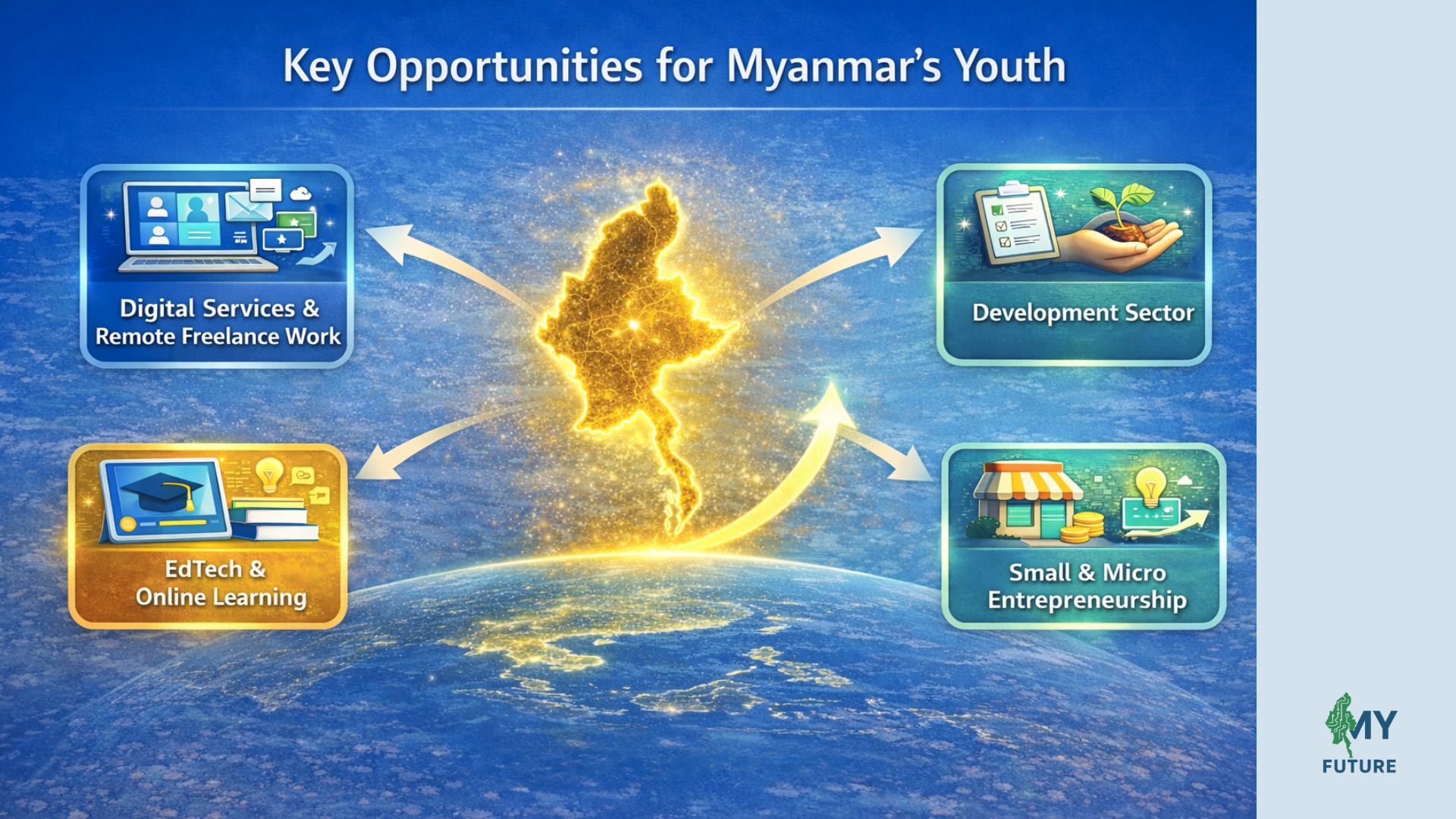
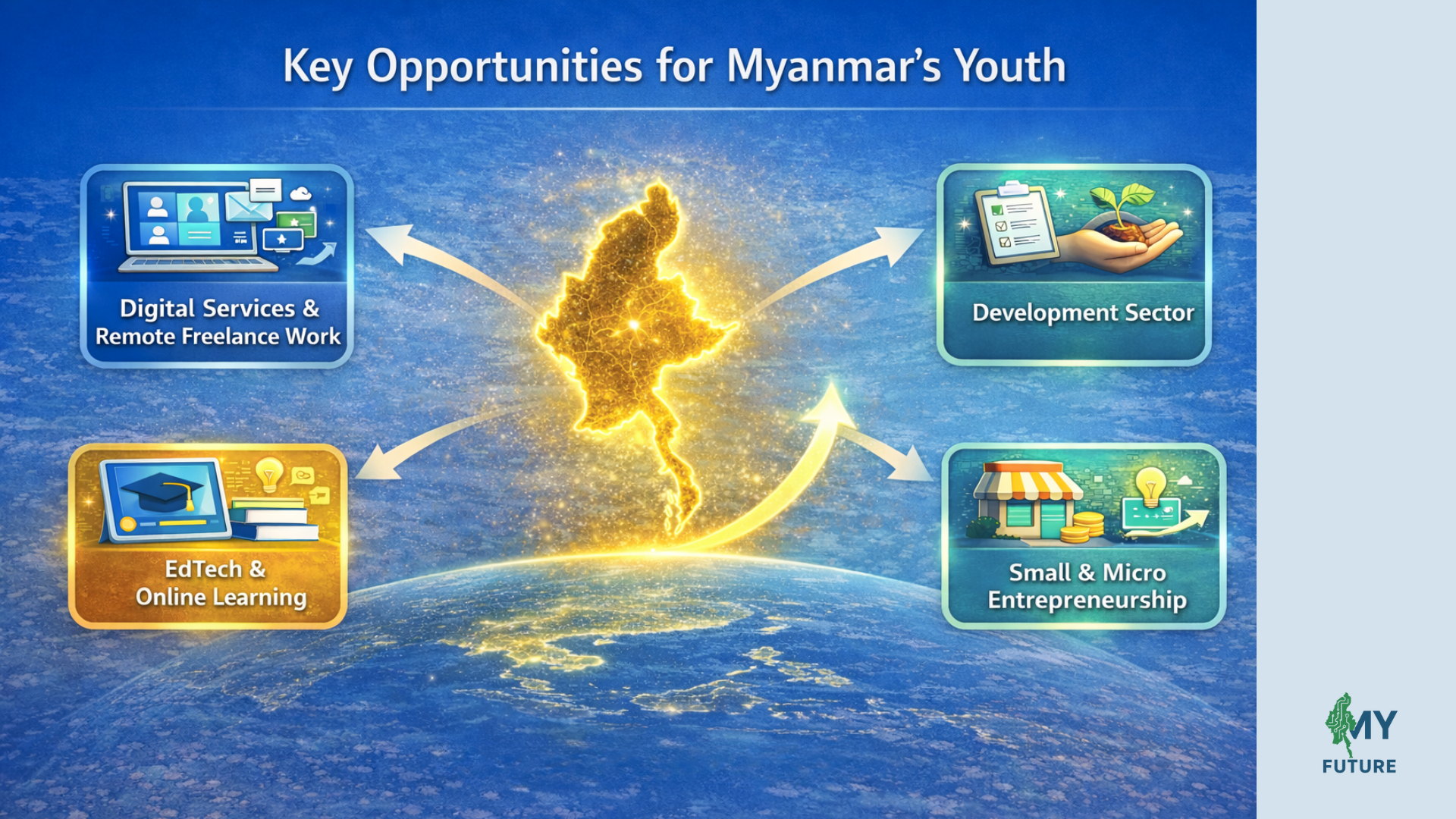
Yet, as is true in any society facing hardship, people continue to strive for better conditions. In doing so, they have created small bubbles of sectors and communities that are still managing to grow in their own way.
Key Opportunities in 5–10 Years
Click to view the image in full screen
Click on each of the cards below to read more about the different areas of opportunity:
Youth unemployment in Myanmar is high, and many young people are neither in work nor education. Emerging sectors like digital services, EdTech, small businesses, and development offer real opportunities for skill-building and income.
Reflect
Which of these opportunities could best fit your skills and interests? What steps could you take to prepare for work or learning in these sectors?