Examples of Sector Changes
Technology is one of the main forces reshaping industries around the world. As technological advancement continues, significant changes are occurring across many sectors, affecting how services are delivered, how people work, and what skills are needed.
Click each sector to explore how technology is transforming it.
✈️ Tourism +
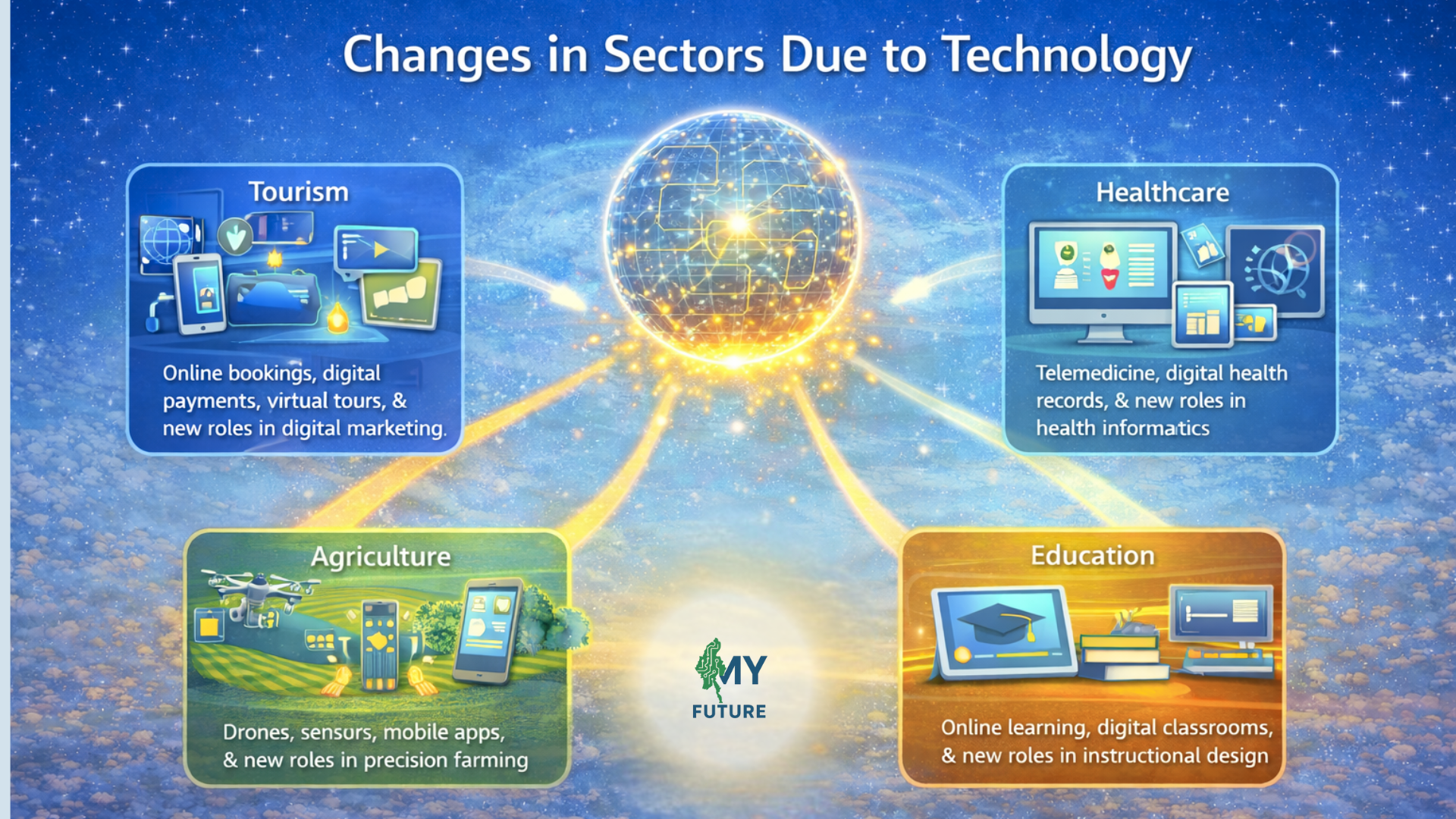
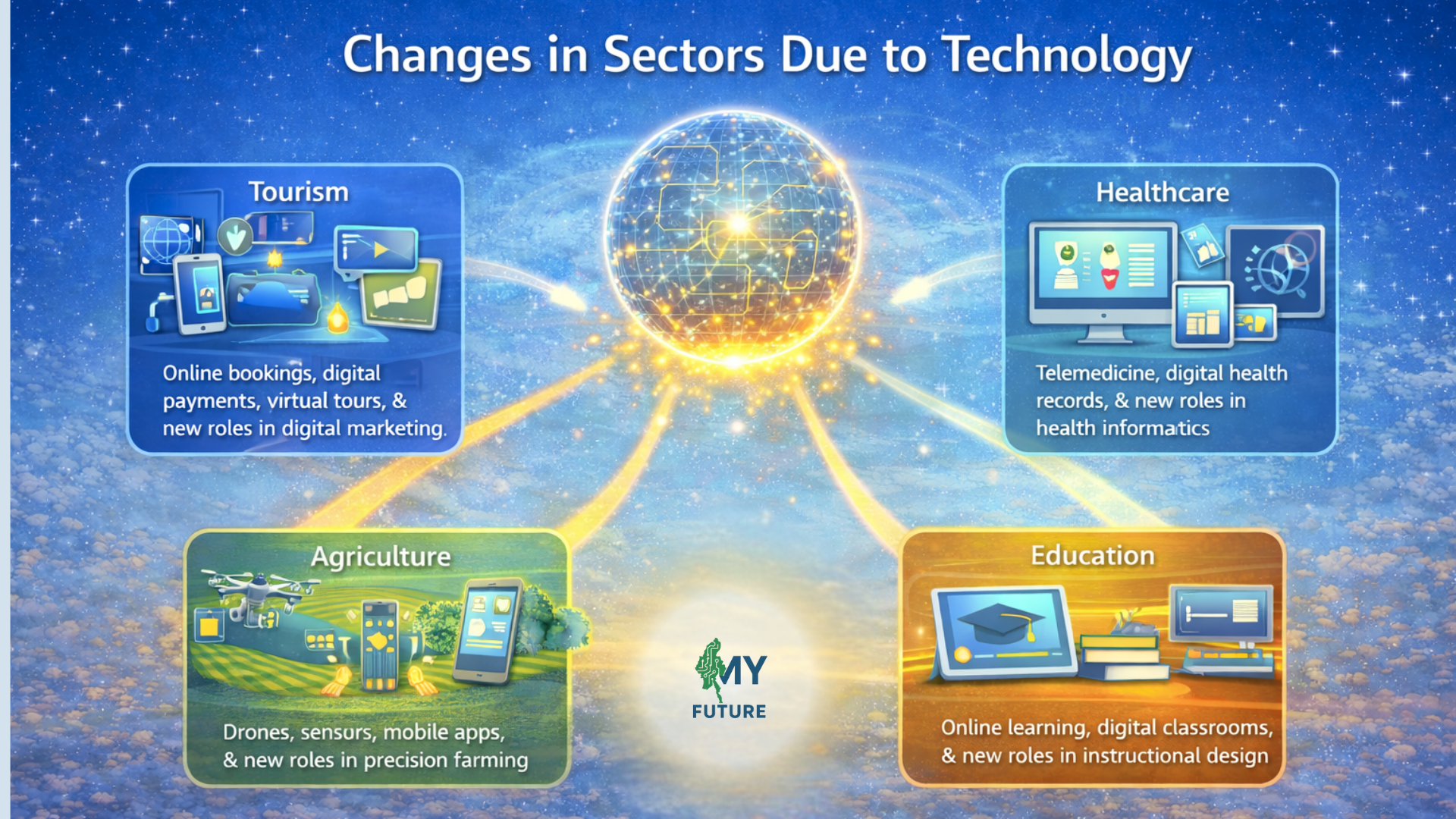
Digital platforms have transformed tourism through online booking systems, travel apps, digital payments, and social media marketing. Traditional travel agents are less common, while new roles have emerged in digital marketing, online customer support, content creation, and data-driven tourism planning. Virtual tours and AI-powered recommendation systems are also changing how travellers plan their trips.
🏥 Healthcare +
Technology has reshaped healthcare through telemedicine, electronic health records, medical imaging, and health data systems. Patients can now consult doctors online, and healthcare professionals increasingly use digital tools to diagnose, monitor, and manage care. This has created demand for roles in digital health, health informatics, medical data analysis, and healthcare technology support.
🌾 Agriculture +
Agriculture has moved beyond manual labour toward more technology-driven practices. Drones and sensors, mobile apps, and data analytics are used for monitoring crop conditions, detecting crop diseases, irrigation planning, and pest control. These changes have created new roles in precision farming, agricultural technology, data-supported decision-making, and sustainable resource management.
🎓 Education +
Education has been transformed by online learning platforms, digital classrooms, learning management systems, and AI-supported tools. Teaching is no longer limited to physical classrooms, and new roles have emerged in online teaching, instructional design, digital content creation, and learning facilitation. At the same time, learners are expected to develop stronger digital skills and become more independent in how they learn.