Part 1 - The Dynamics of Digital Evidence.
1. The Dynamics of Digital Evidence
Summary of our Research Methods
Before we follow the evidence through the Clarusia case, it is worth briefly explaining where the ideas in this module come from.
The Clarus project research involved a daily diary with forensic practitioners. This enabled the research team to capture the everyday work of forensic practitioners and their communication and interaction with others.
In addition, interviews, focus groups and a survey with people with different roles and responsibilities in investigation teams across the different countries have helped researchers understand how processes for handling digital forensic evidence operate in practice and identify where miscommunication and bias in the investigation process may become a risk.
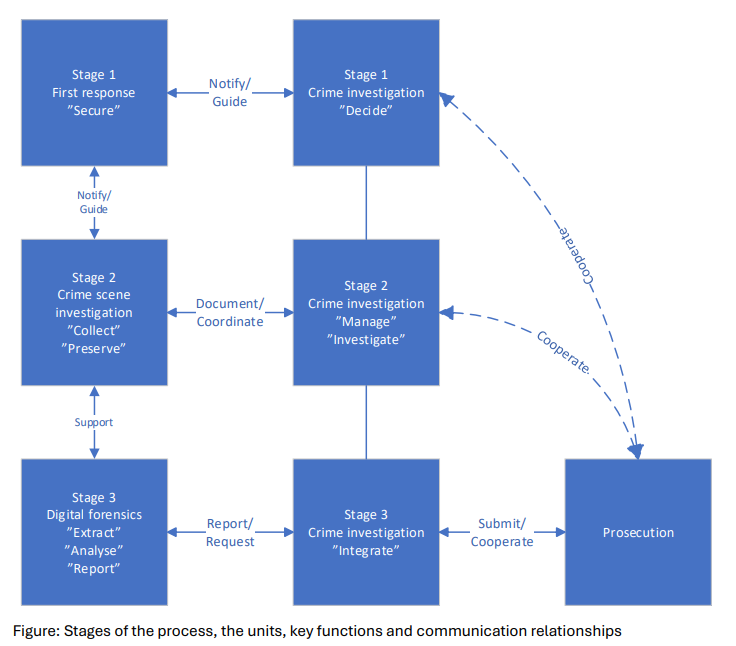
The research has allowed researchers to build both static and dynamic models of digital forensic and investigative work based on the practical reality of how people ask for clarification, solve problems, explain evidence and adapt to urgent situations.
A static model shows the main roles and structures in the system.
A dynamic model follows the journey of digital devices and evidence through different stages of an investigation.
Dynamic Model:
OPTIONAL LEARNING: Read more about the research work using diaries.
Move to the next page by clicking the arrow on the top right to move to the next page in this section.