Module 1
Introduction to Modern PMOs
In this module you will explore what a modern PMO should be, how PMOs develop over time, and why so many struggle.
Estimated study time: about 50 minutes. Suggested week: 1.
1.1 What a PMO is, and isn't
A Project Management Office (PMO) is the function that sets up, supports and oversees how an organisation delivers its projects and programmes. In practice PMOs take many forms, from a small team that keeps a register of projects to an enterprise function that shapes which change the organisation invests in.
A PMO without structure becomes reactive, focusing on reporting rather than results. It collects status updates, chases late reports and produces packs that few people read. The work is busy, but it does not change outcomes.
A modern PMO is a strategic partner. It enables predictable, value-driven delivery by:
- giving leaders a trusted and consistent view of delivery
- helping delivery teams plan, manage risk and handle dependencies
- keeping projects linked to the organisation's strategy and to the benefits they promised
A modern PMO is not a reporting line, a policing function, or a team that does things to delivery teams. It works with them.
1.2 The shift from reactive to strategic
PMOs develop over time. This course uses a five-level maturity model, shown in Figure 1:
- Reactive: firefighting, no governance.
- Structured: order emerges and governance begins to take shape.
- Proactive: the PMO enables delivery rather than just observing it.
- Strategic: the PMO influences decisions and acts as a strategic partner.
- Enterprise: the PMO drives organisational change.
Maturity is not a race, and not every PMO needs to reach the top level. The right level depends on what the organisation needs. What matters is knowing where you are and choosing where to go next. You will use this model in depth in Module 8.
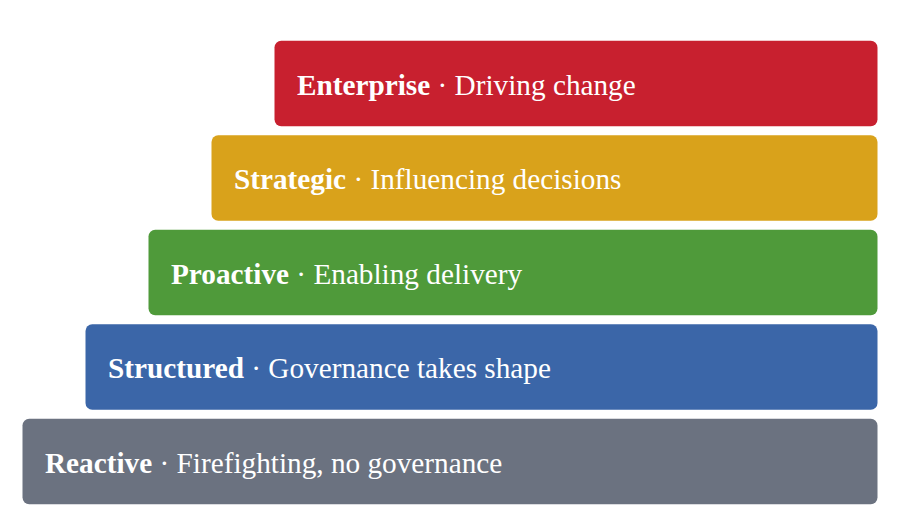
Figure 1: The five levels of PMO maturity, from Reactive to Enterprise
1.3 Why PMOs fail
Five patterns appear again and again:
- No governance: nobody is clear who decides what, so decisions are slow or reversed.
- Inconsistent delivery: each project works differently, so results cannot be compared or predicted.
- Poor stakeholder confidence: reports are late or not trusted, so leaders stop relying on the PMO.
- A supplier-versus-client mindset: the PMO and delivery teams see each other as opposing sides rather than one team.
- Cultural breakdown: blame replaces openness, so problems are hidden until they are large.
These patterns feed each other. Weak governance leads to inconsistent delivery, inconsistent delivery erodes confidence, and low confidence makes governance harder to introduce. The rest of the course shows how to break that cycle.
Key points
- A PMO supports and oversees delivery; it is not just a reporting line.
- A modern PMO is a strategic partner that enables predictable, value-driven delivery.
- PMOs move through five maturity levels, from Reactive to Enterprise.
- Common failure patterns are linked, so fixing one helps the others.