Module 7
1. Gap analysis
Purpose
Teach you how to identify development needs by comparing where you are with where you need or want to be.
Learning objectives
By the end of this module you will be able to:
- Explain what a gap analysis is and when to use it
- Compare current and target competency levels
- Prioritise gaps
- Identify development opportunities that address them
7.1 What is a gap analysis?
A gap analysis compares your current capability with a target capability and identifies the difference. In CPD, the target might be:
- The expectations of your current role at a higher standard
- A promotion or career move
- A professional body requirement or chartership
- A new area your organisation is moving into
7.2 Comparing current and target competency
Step 1: Define the target. Use a role profile, framework or job advert and note the competencies and levels expected.
Step 2: Establish your current position from your competency map and evidence.
Step 3: Calculate the gap: target level minus current level.
Step 4: Prioritise. Rank gaps by importance to your goal and by urgency.
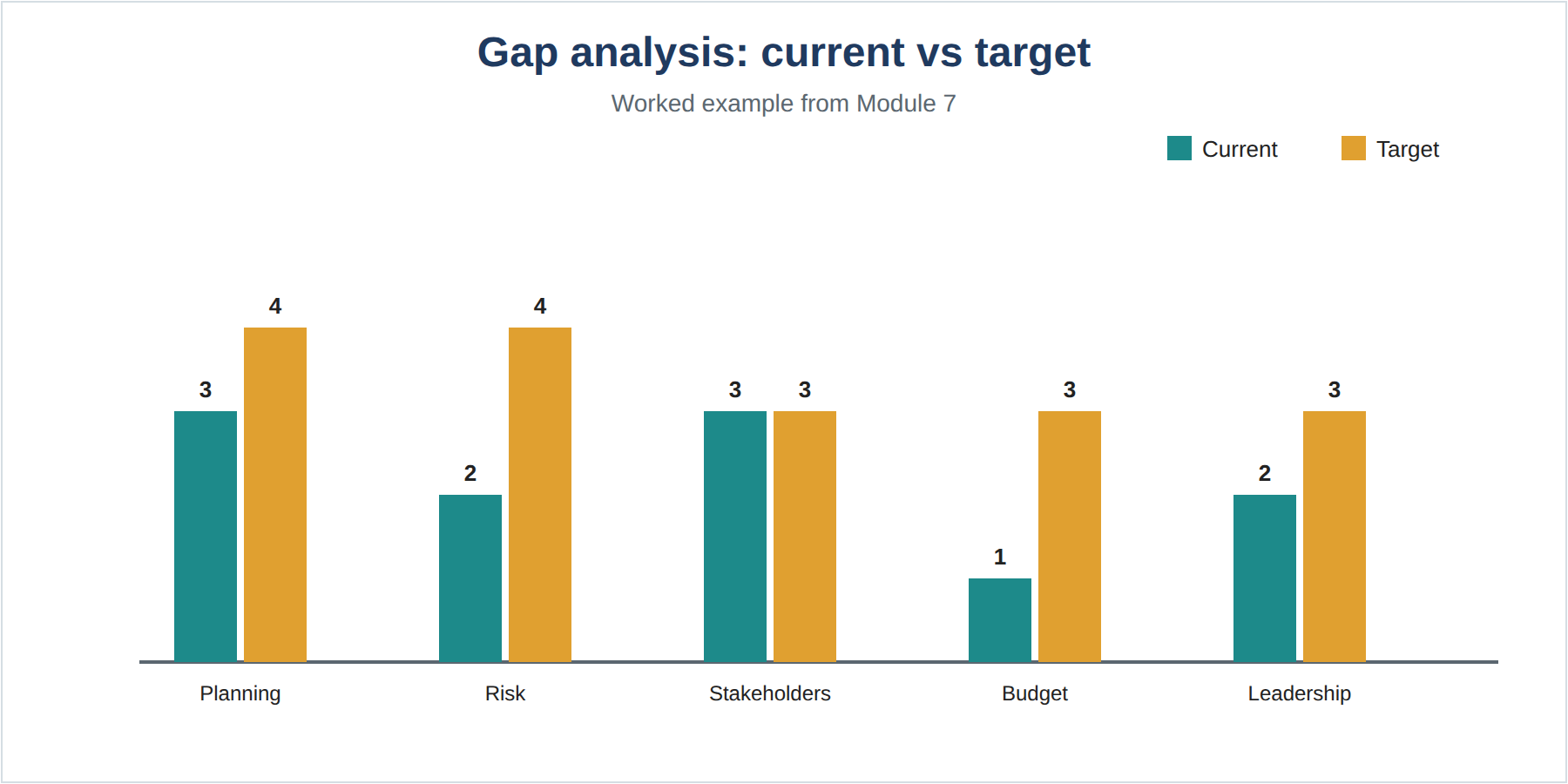
Worked example (aspiring project manager)
| Competency | Current | Target | Gap | Priority |
|---|---|---|---|---|
| Planning & scheduling | 3 | 4 | 1 | High |
| Risk management | 2 | 4 | 2 | High |
| Stakeholder engagement | 3 | 3 | 0 | Maintain |
| Budget & cost control | 1 | 3 | 2 | Medium |
| Leadership | 2 | 3 | 1 | Medium |
Risk management and budget control show the biggest gaps, but risk is rated highest priority because the target role depends on it heavily.
7.3 Identifying development opportunities
Think beyond courses:
- Learn: course, certification, reading, webinar
- Practise: take on a task, lead a workstream, volunteer
- Observe: shadow someone, attend a review meeting
- Get support: find a mentor, ask for feedback, join a community
- Teach: present to colleagues; explaining a topic consolidates it
A rule of thumb is the 70-20-10 model: roughly 70% of development comes from experience on the job, 20% from other people and 10% from formal learning. It is a guideline, not a law, but it reminds us that experience should be the core of a plan.
7.4 Using gap analysis for career planning
Repeat the analysis against two or three possible next roles. This often shows which move is most within reach and which competencies matter across all of them, the best ones to invest in first.
Key takeaways
- A gap analysis compares current capability with a defined target
- Prioritise gaps by importance and urgency, not just size
- Close gaps through experience, people and learning, not courses alone
- Gap analysis directly feeds your development plan.