Week 3: Creating a learning organisation
| Site: | OpenLearn Create |
| Course: | Creating an Inclusive School |
| Book: | Week 3: Creating a learning organisation |
| Printed by: | Guest user |
| Date: | Saturday, 3 October 2026, 11:56 PM |
1. Introduction to Week 3
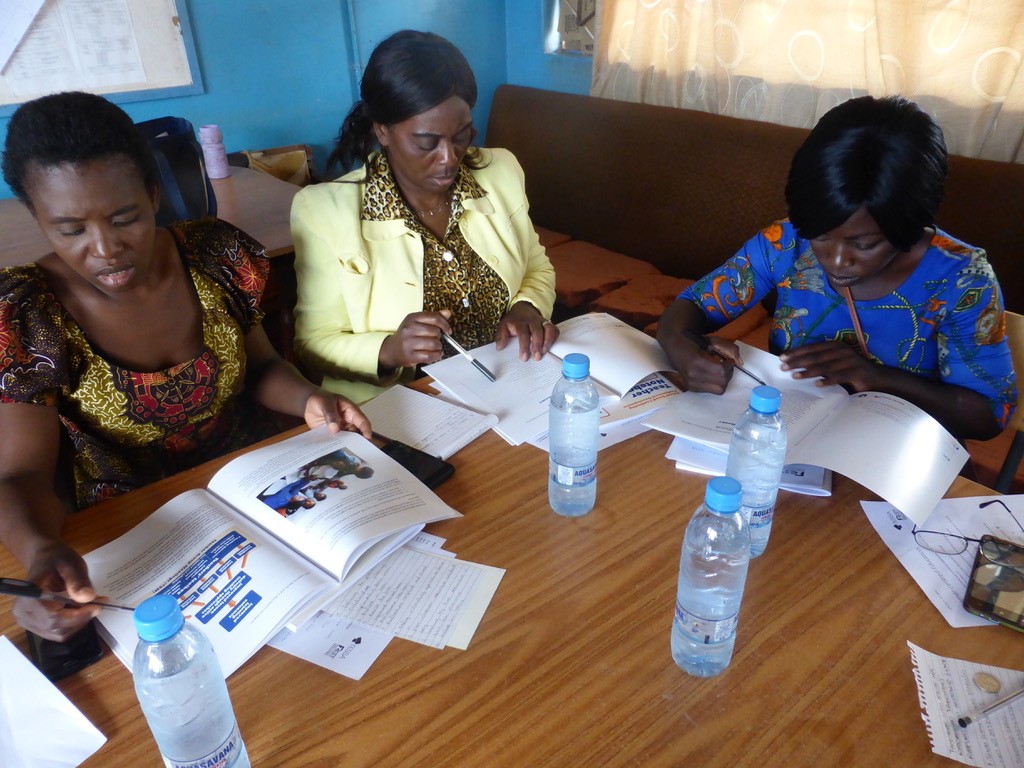
Teachers in Zambia working together to explore resources to support their planning
Creating a culture in which everyone sees themselves as a learner – willing to adapt and find new ways of supporting all learners – is an important aspect of creating an inclusive school.
This week considers how to create the conditions for becoming a learning organisation and in this the central role of professional development and whole school monitoring
In order to develop as inclusive teachers, teachers need support. In order to develop the sort of active approaches to teaching and learning that were explained in the course ‘Inclusive Teaching and Learning’ they need access to professional development and the opportunity to collaborate, practise and reflect. This week considers the role of professional development in bringing about change. It describes a model for school-based teacher development (SBTD); provides an opportunity for you to critically review resources to support SBTD; and presents two case studies that describe how schools can bring about change through a collective focus on classroom practice.
A learning organisation is one which monitors how it is performing. New initiatives may have unintended consequences and will be experienced differently by different stakeholders. An effective inclusive school will regularly review what they do and why they do it. This week you will consider what might be monitored and by whom.
In this section you will:
- Engage with ideas about professional learning
- Consider models for SBTD and review some resources
- Learn about examples of how SBTD has supported change
- Explore ways in which a school could be monitored for inclusivity.
1.1. Activity Guide
|
Activity number |
Title |
Details |
Time |
|
3.1 |
What is a learning organisation? |
Reflect on what it would feel like to be part of a learning organisation. |
20 mins |
|
3.2 |
Experiences of professional development |
Consider your own experiences of continuing professional development and write a forum post |
20 mins |
|
3.3 |
Being an effective inclusive teacher |
Using your experience to identify what it is that effective inclusive teachers need to know, understand and be able to do. Consider how this links to CPD |
40 mins |
|
3.4 |
What kind of professional development? |
Use your responses to the previous activities to reflect on why traditional cascade models of professional development are not considered to be very effective. |
20 mins |
|
3.5 |
Example from practice |
Read about and analyse an example of school-based teacher development |
40 mins |
|
3.6 |
School-based teacher development |
Listen to an audio and make a forum post |
20 mins |
|
3.7 |
Resources for school-based CPD |
Browse some resources to support SBTD and suggest how they might be adapted for your context. |
40 mins |
|
3.8 |
Monitoring inclusivity |
Make a list of features you have used and contribute to the forum |
20 mins |
|
3.9 |
Monitoring tools |
Use the tools to see how effective they are |
30 mins |
|
3.10 |
End of week assessment |
2. Building a learning organisation
A ‘learning organisation’ is one in which everyone has the opportunity to learn and in which ‘learning for all’ is part of the ethos of the school. School-based teacher development provides such an opportunity for teachers, in a way which is likely to be effective in developing their classroom practice.
Organisational learning, also requires collective monitoring and reflection on new initiatives, systems and processes. A ‘learning organisation’ is one which reviews the impact of school, policies, roles and ways of working, so they know what they need to change.
Activity 3.1: What is a learning organisation?You are advised to spend 20 mins on this activity
|
2.1. Optional reading
The OECD and UNICEF have published a booklet about schools as learning organisations, which you might be interested to read and use in your work:
https://www.oecd.org/education/school/school-learning-organisation.pdf
OECD (2016) What makes a school a learning organisation? A guide for policy makers, school leaders and teachers. Paris: OECD
2.2. Professional development
Professional development is an opportunity help teachers become more effective when faced with the challenge of meeting the diverse needs of learners in their classroom. This might involve challenging teachers’ attitudes to learners with particular needs and supporting them to examine their classroom practice and learn strategies that will involve all learners. Professional development activities might be formal – attending a course or taking a qualification - or informal – working with colleagues to develop resources.
Activity 3.2: Experiences of professional developmentYou are advised to spend 20 mins on this activity Think about the opportunities that you have had for professional development. Make a list in your study notebook. Highlight which one was the most memorable and most effective, and the one which was the least. Explain why they were effective or not. Make a short post on the Week 3 forum briefly describing a professional development experience which challenged your thinking or helped you to improve your practice. Say why you found it to be effective. |
2.3. Focus on knowledge for teaching
Experienced teachers have a great deal of knowledge: some is formal and academic, and some is informal, developed through experience.
- If they have been formally trained, they will know about theories of learning, of child development, curriculum design, and they will have the subject knowledge required to teach the syllabuses in their school.
- Over the years, they will have developed sound instincts – everyday they will make many decisions during their teaching about who to ask a particular question, how to respond to students, how to manage time in a lesson and so on. They will know how to pick up clues that tell them whether students are learning effectively and, if necessary, they will be able to change their lesson plan to help them learn better.
- They will also ‘know’ a great deal about the context in which they work – the culture in the towns or villages where their student come from, their aspirations, their attitudes, and where they live. They will have certain resources available to them and they will know how to use these most effectively.
The first type of knowledge is relatively easy to learn: they will have had lectures, read books and probably passed an examination. The second and third types of knowledge are more difficult to acquire, yet they are what are needed to be a really effective inclusive teacher.
If you studied the first course, you will have encountered these ideas in Week 4 where they were termed as:
- knowledge for practice (theoretical knowledge about teaching);
- knowledge in practice (knowledge about how to organise and teach a lesson, and how to respond to learners);
- knowledge of practice (knowledge of the context in which you are working).
You also learnt about reflection – a tool that individual teachers can use in order to evaluate and improve their own teaching. In this course, the focus is on working collaboratively to develop skills, through the process of ‘school-based professional development’.
Activity 3.3: Being an effective inclusive teacherYou are advised to spend 40mins on this activity Think about the attributes of an effective inclusive teacher. In your study notebook:
Now, look back on your response to Activity 3.2, and at some of the responses in the Week 3 course forum. If you are a teacher, consider what sort of PD opportunities your need. If your work involves supporting teachers, consider how you might support teachers in developing the different types of knowledge. |
2.4. Focus on professional development
Professional development often takes place in the school holidays, so as not to disrupt teaching, in a central venue, so people from various schools can attend. Alternatively, it can take place after school, or in the school day, with teachers being released from teaching to attend. Professional development is often linked to new initiatives, a new curriculum, or new examination syllabuses. In some countries, teachers get paid for attending; in others the cost of food and transport may be covered. Evidence suggests however, that traditional forms of professional development, based on a casade model, when a ‘master trainer’ passes on information by giving a formal presentation or lecture, are not very effective (power et al)
Evidence from Education sub-Saharan Africa (ESSA – a database of research from Africa – www.essa-africa.org) suggests that:
In-service training programmes are more beneficial if teachers are involved in their development and resources are provided for teachers to use the knowledge and skills gained through training. (https://essa-africa.org/node/1241)
Activity 3.4: What kind of professional development?You are advised to spend 20mins on this activity
|
2.5. What kind of professional development?
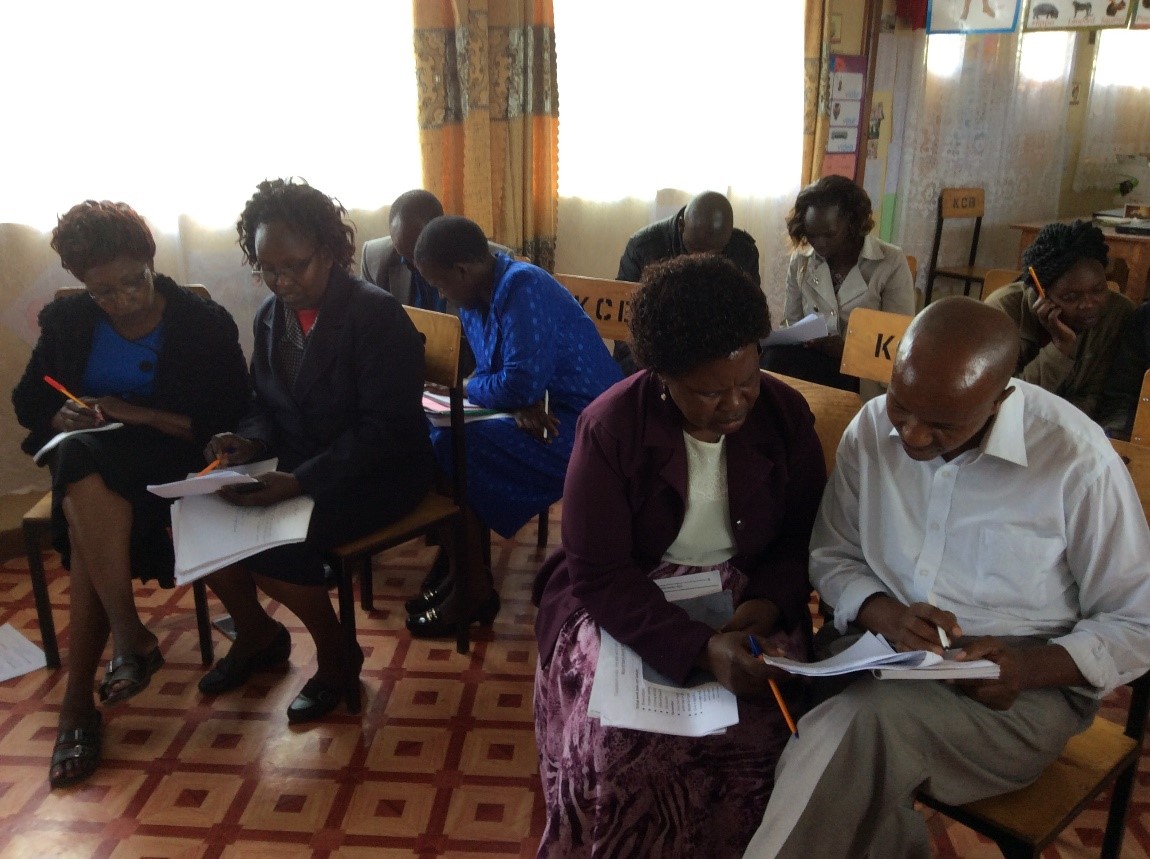
Teachers working in pairs during a school-based teacher development session
There are several reasons why attending a course, away from school is not particularly effective in the context of developing as an inclusive practitioner.
- The sorts of changes being asked for are demanding and take time. Without the sort of follow-up and support that Daniel suggests, it is easy to become discouraged, especially if you are busy with other pressures on your time.
- The pedagogy of the training often does not model the pedagogy being asked for. For example, the most effective way to learn how to organise group work is to take part in group work and then reflect on the experience, picking out what helped you to learn, so that you can re-produce this in your classroom. Listening to a lecture on group work is not very helpful, especially as there are no rules to follow – just a range of possibilities that you as a teacher need to adapt for your context. The teachers in the picture above are working in pairs. This will help their learning but will also help them understand what it is like to work in pairs and they will be better able to implement this strategy in their classrooms.
- Teachers are very busy, so without the follow-up it is difficult for them to prioritise professional development activities.
In the next activity, the case study describes some research that was carried out in Tanzania, which contributes to the debate about what form effective teacher professional development for inclusive teaching might take. The study used ‘learning study’ which contains some of the elements that Daniel mentioned in the audio clip in Week 1.
Activity 3.5: Example from practiceYou are advised to spend 40mins on this activity Read the case study provided. It is about professional development for learner-centred education in Tanzania. As you read, respond to the following questions in your study notebook:
Think about your own professional working environment. What would need to be in place to enable teachers to work in this way? What resources would they need? Make a short post on the Week 3 forum in answer to the question: what needs to be in place to enable teachers to take part in ‘learning study’? How could Learning study be used to develop inclusive teachers. |
3. A Case Study of School-based teacher development
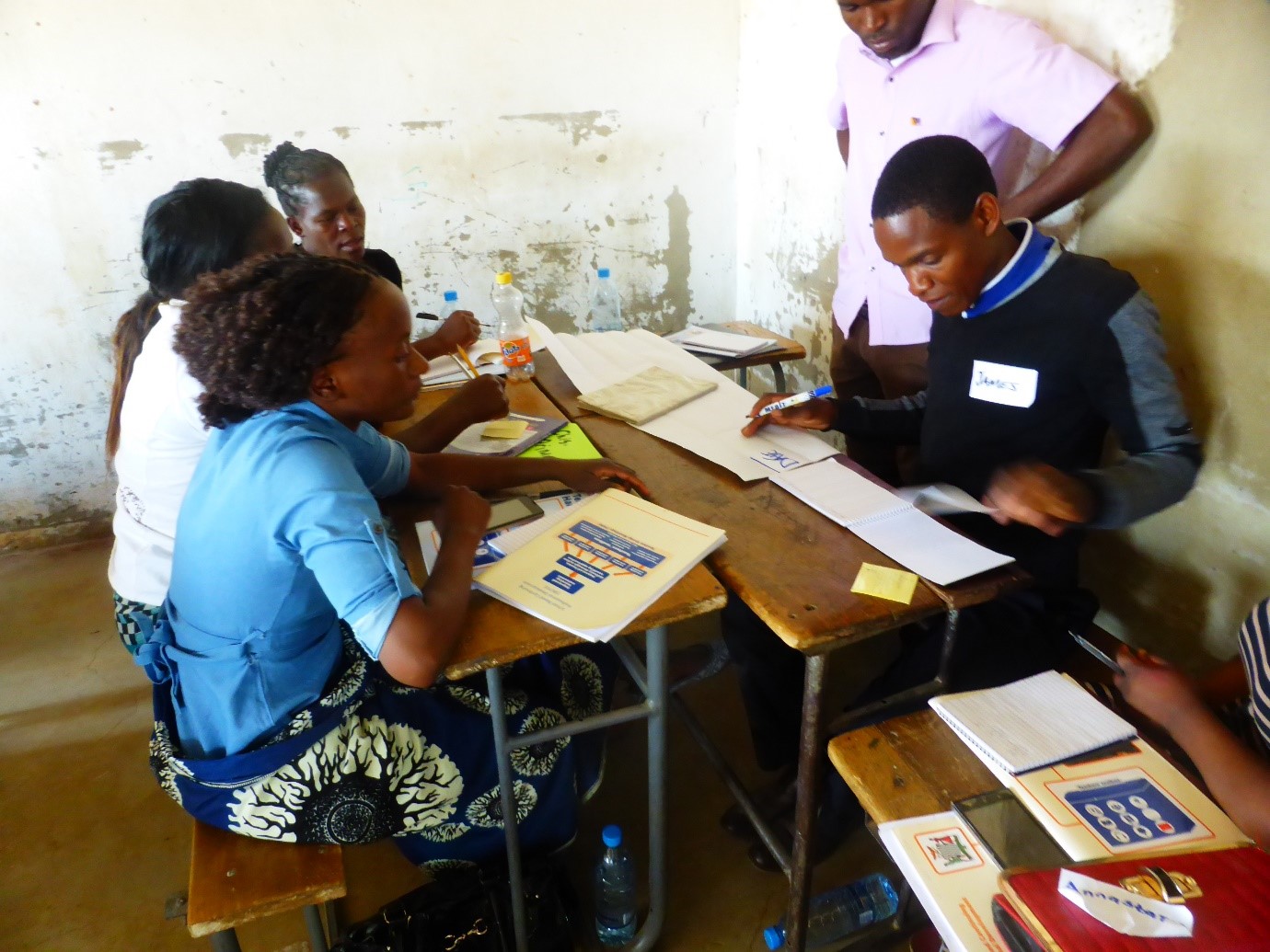
Teachers in Zambia working together in a Teacher Group Meeting to plan lessons
There are many possible models for School based teacher development. An inclusive school will need to develop a model that works for that school, depending on the timetable, the roles, school priorities and resources. This case study describes a model that has been developed in Zambia.
In Zambia, school-based continuing professional development (SBCPD) is part of national policy and is known as SPRINT (School Programme for Inservice Training for the Term). It is based on research which suggests that continuing professional development is more effective when it is on-going, takes place in school and is linked to practice. However, the system in place, based on ‘lesson study’ has not delivered the improvements expected. An ‘enhanced SPRINT’ programme has been developed in Central Province, by a team from The Open University, UK and World Vision Zambia, working with the Ministry of General Education. This is described in the case study
|
Case Study: School-based CPD in Zambia In Zambia, each school has a designated ‘school in-service co-ordinator’ (SIC) who works with the head teachers to plan regular teacher group meetings (TGMs). In the enhanced system teachers use TGMs to work through resources which explain active teaching approaches such as effective questioning, pair work, group work, role-play, storytelling, and games, before planning activities to try in their own classroom. Having tried the activities with their class, they come back together and discuss how it went. The provision of resources to support teacher group meetings has enabled teachers to plan more engaging classroom activities. As a result of working in this way, teachers are collaborating more, and learners are actively participating in lessons. The resources are available as OER. Also, teachers are learning more about their learners. Many commented that during pair work and group work for example, they have noticed that learners who they had previously thought of as ‘slow’ or ‘shy’ are able to do more than they expected. They have also commented that attendance at school as improved as lessons are more interesting and learners feel more included. Head teachers report that TGMs are more purposeful and better attended. |
Activity 3.6 School-based Teacher Development (SBTD)You are advised to spend 20mins on this activity Listen to the District Educational Standards Officer (DESO) form Chisamba in Zambia, talking about the impact of the enhanced SPRINT system. In Zambia, the system has:
……..that is:
Thinking about your own context, note down in your study notebook, aspects of the Zambian system which would work (or already exist) and aspects which might present a challenge. Make a contribution to the Week 3 Forum, highlighting one challenge that SBTD might present in your context, and one opportunity. |
3.1. Resources to support School-based teacher development (SBTD)
In the example from Zambia, national roles and structures are in place which were enhanced through the provision of resources. Evidence (ref), shows that resources for teachers to use as a basis for discussion made a difference.
Resources will bring in new ideas and examples of practice that help teachers develop inclusive classroom practices. In Week 4 of Inclusive Teaching and Learning, you were introduced to the concept of Open Educational Resources (OER) and had the opportunity to access some examples that support inclusive teaching. In the next activity, you will look in more detail at some resources designed to support SBTD and think about how they might be adapted for your context.
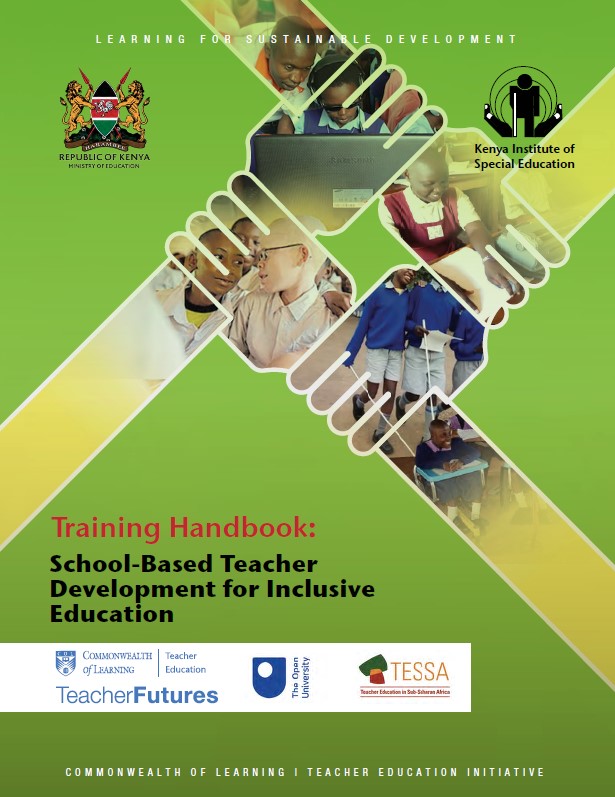
Working with the Kenya Institute of Special Education (KISE), in 2019, the Commonwealth of Learning and the Open University UK developed a SBTD course to support inclusive education. It was based on the system in Zambia and the experiences in Central Province. The resources are available here
Activity 3.7: Resources for School-based CPDYou are advised to spend 40 mins on this activity Spend about 30 minutes reviewing the resources to support school-based teacher development for inclusive education. Consider the following questions and write the answers in your notebook.
Write a brief post in the Week 3 forum highlighting one aspect of these materials that you like and one that might present a challenge in your context. |
3.2. Supporting school-based teacher development
The head teacher has a key role in communicating the purpose of this activity to teachers and convincing them of the benefits. They have a responsibility to ensure that the meetings are helpful and productive – and if possible, save teachers time because they will have opportunity to so some of their planning.
Policy makers can support this sort of activity through structures and clear expectations. For example, by allowing teachers time during the school day to meet and work together, by creating roles with clear responsibilities for supporting SBTD and through providing access to resources.
The opportunities are considerable. Teachers will have chance to develop their skills, to work collaboratively and to learn from each other. Learners will experience more inclusive teaching. The main challenge is helping teachers to make a mental shift from the idea that there is a ‘magic bullet’ – a right way to do things that always works – to the realisation that teaching is complicated and contextual. They need to work out what works for them in their context with their learners, drawing on expertise from others and reflecting on their own experience.
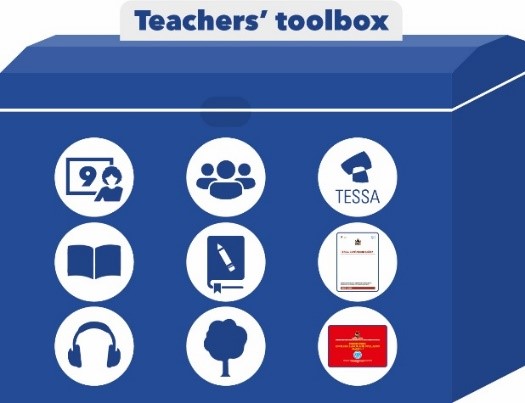
SBTD is part of the toolkit because it supports teachers in developing as inclusive practitioners. It provides opportunity for peer support, and reflection.
|
Reflection Point How could a programme of School-based teacher Development contribute to creating an inclusive ethos and culture in a school? What role might you be able to play to encourage and support such a process? |
4. Monitoring progress towards creating an inclusive school
How does a school know that it is ‘inclusive’? In the next activity, you will consider how school can continually check that they are developing as an inclusive school. Are the systems and processes in place, working as they should? It is perhaps worth reflecting that committing to the on-going monitoring of the effectiveness of the school in addressing the needs of all learners, and teachers, is part of creating an inclusive ethos.
Activity 3.8: Monitoring inclusivity: How do we know if we’ve done it?You are advised to spend 20 mins on this activity Based on your role within the education sector, select one of the groups of stakeholders associated with the schools in your context. This might include:
From this perspective of this group, in your study notebook, make a list of the features of an inclusive school. Try to make your list as practical as possible. For example, if you are writing from the perspective of a parent avoid statements like ‘a positive attitude to my disabled child’ and try and think of what that might actually look like in practice. ‘Frequent communications between myself and the teachers’, ‘ramps for my son’s wheelchair’, or ‘a dedicated buddy, who regularly lets me know what homework has been set for the class’. For the stakeholder that you have chosen, think about how the school would know whether or not this has been achieved. What processes could be in place in order to monitor inclusiveness? |
4.1. Monitoring inclusiveness

There are many different ways in which a school can monitor inclusivity.
What form the monitoring actually takes will depend on the context, but every school will need structures and processes in place to ensure that it takes place. This could include:
- A senior member of staff with overall responsibility for inclusivity
- Termly questionnaires for parents about aspects of school life
- Teachers being encouraged to talk to learners about their experiences in school, and what helps or constrains their learning. This could be through a tutor group system, or through subject departments, or through the sort of activities in the picture above.
- A school management committee, in which members take responsibility for looking at one aspect of school life. They could visit the school and become a ‘critical friend’ to a member of staff with responsibility in that area.
- Visits from specialist teachers who focus on particular children with profound needs and the feedback they provide to teachers
- Visits from Community leaders, which focus on an aspect of school life of particular interest within the local community.
Activity 3.9: Monitoring toolsYou are advised to spend 30 mins on this activity Monitoring a school is a continuous process. Download the 2 examples of monitoring tools that are provided. Think about a school with which you are familiar – it could be where you work or have worked in the past. It could be a school your children attend, or one that you work with in your role as an education officer. Use the downloadable resources to think about how inclusive that school is and how you know? What other information would you need to gather and how would you gather it? Is there anything else that you would want to include in the tool, to be confident that the school is working towards being an inclusive school? Add your suggestion to the Week 3 forum, and comment on two other posts. Which of the tools do you find the most helpful, or would you prefer to adapt them to create one for your context? |
Optional Reading: If you would like to know more about monitoring Inclusive Education, download and read this booklet from UNICEF called 'Planning, Monitoring and Evaluation'
Activity 3.10: End of Week QuizYou are advised to spend 20 mins on this activity |
4.2. Summary
This week you have thought about how a school can learn: how the teachers can best develop the skills that they need to be effective inclusive teachers, and how a school can monitor itself for inclusivity. In the last week of this course. The focus shifts to the wider community and stakeholders. What is the contribution of community organisations, families and children in creating an inclusive school?
References
Abonyi, U.K., Yeboah, R., Luguterah, A.W., 2020. Exploring work environment factors influencing the application of teacher professional development in Ghanaian basic schools. Cogent Social Sciences 6. https://doi.org/10.1080/23311886.2020.1778915
Grimes, P. (2010) A quality education for all. A History of the Lao PDR Inclusive Education project 1993-2009 Norway: Save the Children A_Quality_Education_For_All_LaoPDR.pdf (eenet.org.uk) Accessed 01/03/21
Msonde, S.E., Msonde, C.E., 2019. Re-Innovation of Learner-Centered Pedagogy in Tanzania’s Secondary Schools. Journal of Education 199, 142–154. https://doi.org/10.1177/0022057419854343
Wambugu, P.W., Stutchbury, K. & Dickie, J. (2019). Challenges and Opportunities in the Implementation of School-Based Teacher Professional Development: A Case from Kenya. Journal of Learning for Development, 6(1), 76-82.