Part 4: Water and assimilate movement
| Site: | OpenLearn Create |
| Course: | Plant biology |
| Book: | Part 4: Water and assimilate movement |
| Printed by: | Guest user |
| Date: | Friday, 9 October 2026, 4:22 PM |
1. Introduction
Assimilate = a substance that the plant takes up or accumulates
Translocation = the movement of assimilates around a plant
Xylem = tissues which transfer water and minerals throughout the plant from the roots
Phloem = tubes within stems, leaves and roots that translocate the assimilates
Assimilates, produced or taken up by a plant, are moved around the plant in a process called translocation.
Assimilate are moved from source (where they are made or taken into the plant) to sink (where they are needed, for example a developing flower).
Assimilates can be used to make substances that the plant requires immediately, or they can be stored.
Nutrients are translocated from source (where they are taken into the plant or made in the plant) to sink (where they are used by the plant).

The vascular bundles (made up of xylem and phloem tissues) reach throughout the plant and so are used by the plant to send signals. You can imagine them as bundles of straws winding their way through the roots, stems and leaves. The signals sent through these tubes can be in the form of plant hormones or they can be turgor (water pressure) or electrical signals.
Example: Roots signal drought stress to leaves by releasing abscisic acid into the vascular bundles so that stomata can be closed, and water loss reduced.
2. Assimilates
The assimilates produced by plants in the leaves, through photosynthesis (sugars), are called photoassimilates. These sugars must be moved around the plant to where the energy is required for growth. Growth occurs in the leaves, stems, roots, flowers and fruits and so the phloem carries the sugars to all of these areas.
Other assimilates are taken up through the roots in the form of minerals. They come into the root with the water that is taken up from the soil through osmosis.
Photoassimilates are stored in the form of sucrose or starch. Sucrose is stored in the vacuoles of cells and starch is stored over a longer period in stems and roots. Some plants have specially adapted storage structures such as thickened stems, crowns or tubers.
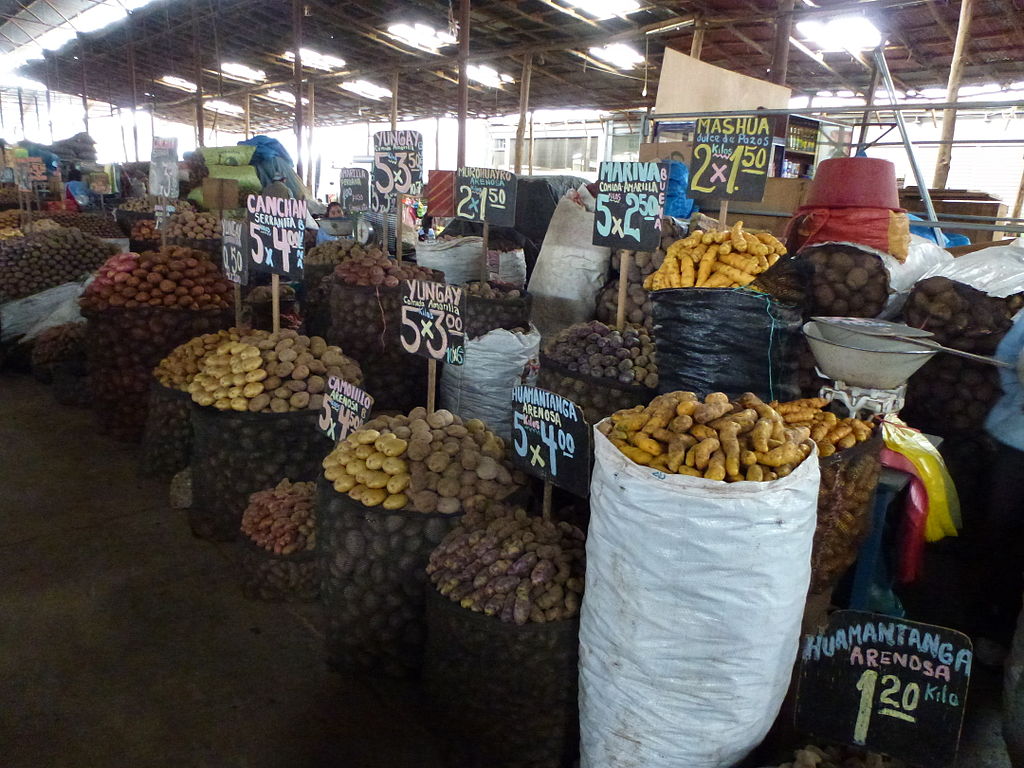
Randal Sheppard / CC BY-SA 2.0
Starch-rich potatoes are the plant’s storage structure.
3. Sources and sinks
Each organ in a plant is defined as either as a source or sink.
Source = a plant organ that produces more assimilates than it uses
Sink = a plant organ that uses more assimilates than it produces
An example of a source is a healthy, fully expanded, sunlit leaf.

Examples of sinks are roots, shoot apical meristems (growth tips), new expanding leaves and developing flowers, seeds and fruits.
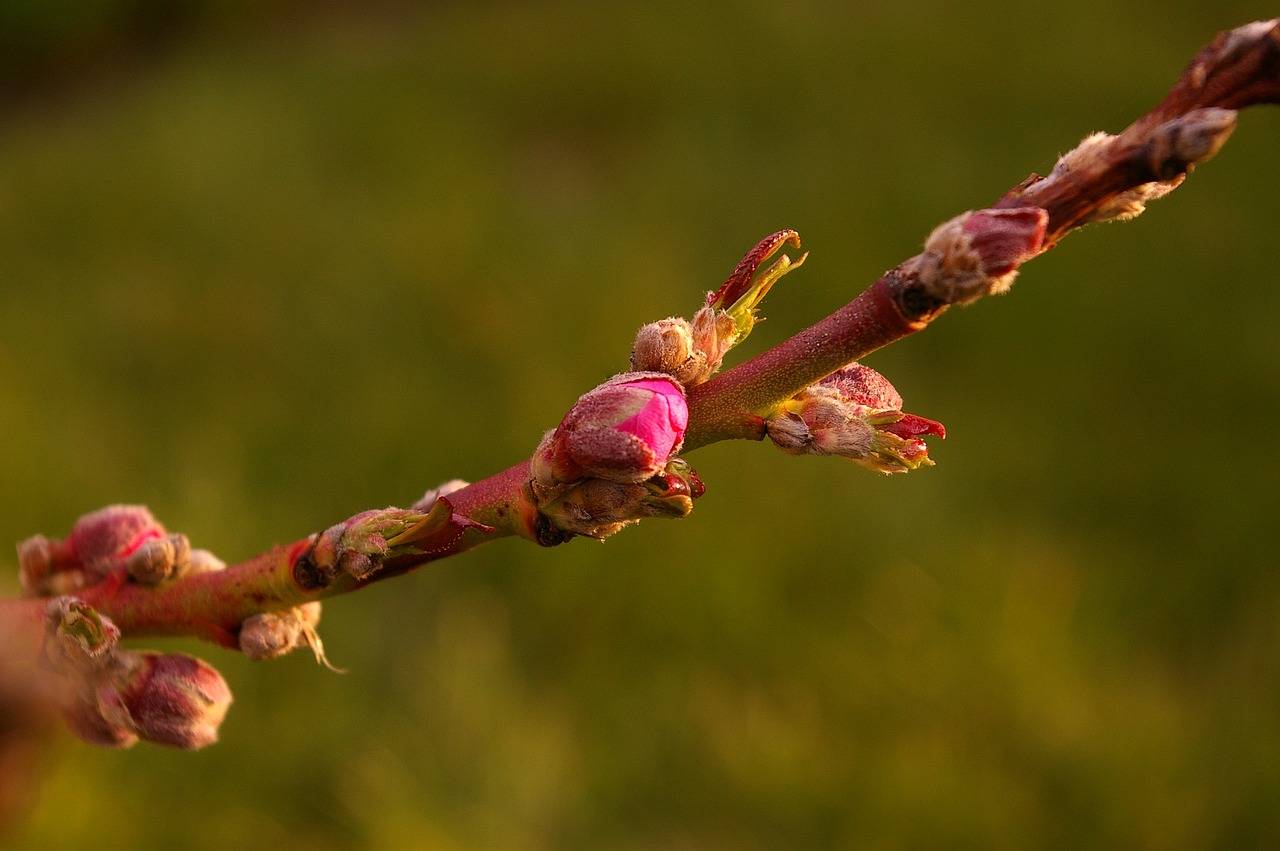
Some organs can act as a sink at some stages and as sources at others, for example a young developing leaf is a sink as it uses large amount of energy to develop but once it is fully grown and photosynthesising it becomes a source.
The way that the plant shares out the assimilates between the different organs, depending on the sink strength, is called assimilate partitioning.
The method of assimilates moving from sources to sinks is called pressure flow.
4. Pressure flow
Translocation (moving assimilates moving from sources to sinks) is facilitated by pressure flow.
The following example is for photoassimilates – sugars made in photosynthesis.
Stage 1
At the sources, sugar molecules are moved into the phloem cells which increases the solute concentration of those cells.
Stage 2
Water then follows the sugars into the cells by osmosis. The increase in amount of water in the cells creates turgor pressure.
Stage 3
This pressure forces the water and sugars along the phloem tubes towards the sinks.
Stage 4
At the sinks the sugars are actively removed from the phloem cells.
Stage 5
The water follows the sugars by osmosis as the solute concentration outside the phloem cells becomes higher than inside.
Stage 6
As the water leaves, an area of lower pressure is created which ‘sucks’ more sugars and water along the phloem.
Watch this video for an overview of sugar sources, sinks, and pressure flow.
Sugar Transport: Pressure Flow Hypothesis (YouTube, 3:58)
Draw your own diagram of pressure flow in your notes – don’t just copy the example below, think of a way of representing the information in your own way.
Example:

5. Sink strength
Each organ which acts as a sink in a plant has a different sink strength. Organs can have different strengths at different points in their lives depending on how active they are, or how quickly they are growing.
An organ has a high sink strength when it is very active (e.g. growing) or if it is large (e.g. a large root system).
The high investment of a plant putting its resources into a sink pays back when that sink then provides an important function for the plant such as becoming a source (a leaf photosynthesising), or carrying out reproduction (producing flowers, seeds and fruit), providing stability and structure (roots and stems) or storing energy for the following year (tuber).
Sinks compete for assimilates. When a young plant is developing, the sinks which are the growing shoot and growing root compete for sugars for growth. The development of both of these is important, as the shoot will photosynthesise to produce more assimilates, and the root will uptake water and nutrients, which is essential for the photosynthesis. It is important that neither of the organs takes too large a proportion of the assimilates, otherwise the other organs will suffer and the plant will not be successful.
6. Water relations of plant cells
Water moves around in a plant predominantly through the xylem tubes, but it also needs to move from one plant cell to another, it does this by a process called osmosis.
Osmosis =
the movement of water across a semi-permeable membrane from an area of low solute concentration to an area of high solute concentration.
or
the movement of water across a semi-permeable membrane from an area of high water concentration to an area of low water concentration.

Plants are able to force osmosis in a particular direction by actively pumping solutes across membranes to make the water follow. In this way than can control where the water goes inside the plant.
In each of the situations below, which way would the water move by osmosis? Right to left, or left to right?
7. Transpiration
Transpiration is the movement of water, against gravity, from the roots to the leaves of a plant, where any water that has not been used in photosynthesis evaporates through the stomata.
- Water enters the plant’s roots by osmosis.
- The water travels through the xylem tubes from higher water potential in the roots to lower water potential in the leaves.
- Water evaporates through the stomata in the leaves.
There are many factors that can affect transpiration:
| Temperature increases | Transpiration increases |
| Temperature decreases | Transpiration decreases |
| Water in soil increases | Transpiration increases |
| Water in soil decreases | Transpiration decreases |
| Light levels increase | Transpiration increases |
| Light levels decrease | Transpiration decreases |
| Wind speed increases | Transpiration increases |
| Wind speed decreases | Transpiration decreases |
| Humidity increases | Transpiration decreases |
| Humidity decreases | Transpiration increases |
Draw a diagram of transpiration in your notebook, showing water entering a plant through its roots, travelling up through the stem and exiting the plant by evaporating through the stomata in the leaf surfaces.