Part 5: Plant reproduction
| Site: | OpenLearn Create |
| Course: | Plant biology |
| Book: | Part 5: Plant reproduction |
| Printed by: | Guest user |
| Date: | Monday, 28 September 2026, 3:45 PM |
1. Structure of seeds
"The greatest Oaks have been little Acorns."
Thomas Fuller's Gnomologia, 1732
Seeds are found in a staggering array of shapes and sizes, but the process by which seeds germinate is similar in all species.
Dicotyledon seeds

Amber Crowley UHI / Public domain
Monocotyledon seeds

Amber Crowley UHI / Public domain
Testa
The seed coat, a protective layer which is tough and hard and protects the seed from attack by insects, fungi and bacteria.
Cotyledon
A cotyledon is an embryonic leaf. It is the first leaf to appear when a seedling grows. They often contain reserves of food which the developing seedling can use to grow.
Monocotyledons have 1 cotyledon, Dicotyledons have 2 cotyledons
Endosperm
The food store made up of protein and starch which feeds the developing seedling before it is able to uptake water and nutrients through its own roots.
Epicotyl
The section of stem between the cotyledon(s) and the plumule. In a seedling it becomes the section of stem between the cotyledons nd the first true leaves.
Hypocotyl
The section of stem below the cotyledon(s) and above the radicle, or root, in a seedling.
Radicle
The first part of the embryo to emerge when a seed germinates and becomes the root.
Plumule
The embryonic growing shoot and first leaves of a plant. This is the part of the plant that grows away above the cotyledon(s) when the seedling develops.
Hilum
The scar where the seed was attached to the parent plant.
Micropyle
This is a tiny pore in the testa, located just opposite the radicle, which lets water into the seed.
2. Activity - seed parts
Select the names of the numbered seed parts in this diagram from the dropdown menu next to the corresponding numbers below.

Water moves around in a plant predominantly through the xylem tubes, but it also needs to move from one plant cell to another, it does this by a process called osmosis.
3. Seed dormancy
Normally when environmental conditions are favourable, a seed will begin to germinate, but in some cases a seed remains dormant even though the conditions are perfect for germination.
Why? To delay germination.
Why? To cause germination to be staggered, which allows seeds to travel different distances before they germinate, ensuring a wide geographical spread and so that seeds germinate at different times, protecting some of the seedlings against short periods of inclement weather or passing herbivores.
Some seeds can germinate after more than 2000 years of dormancy!
Primary dormancy: Seeds are released from the plant in a dormant state.
Secondary dormancy: Seeds are not dormant when they are released from the plant but become dormant if environmental conditions are unfavourable.
There are two types of seed dormancy
Coat imposed dormancy
- Prevention of water uptake
- Mechanical constraint
- Interference with gas exchange
- Retention of inhibitors
- Inhibitor production.
Embryo dormancy
- Embryo inhibits germination through the presence of growth inhibitors and the lack of growth promoters
4. Stimuli that break dormancy
The seeds from different species of plant are brought out of dormancy by different stimuli. Most seed respond to more than one stimuli, so mimicking one condition when breaking seed dormancy may not be enough.
Some seeds germinate once they have dried out to a certain extent. For the majority of seeds if they dry out so that they contain less than 5% water they can be damaged. Pine trees are included in this group
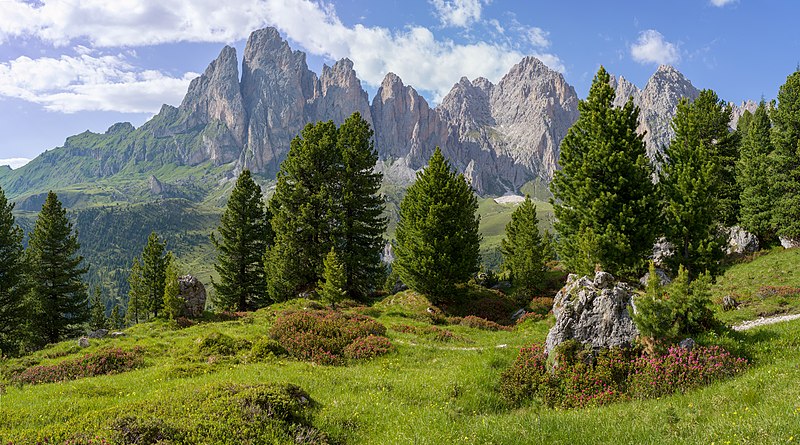
Swiss pine trees (pinus cembra)
Wolfgang Moroder / CC BY-SA 3.0
Some seeds require extreme high temperatures for the seed coat to be broken to allow germination to take place.
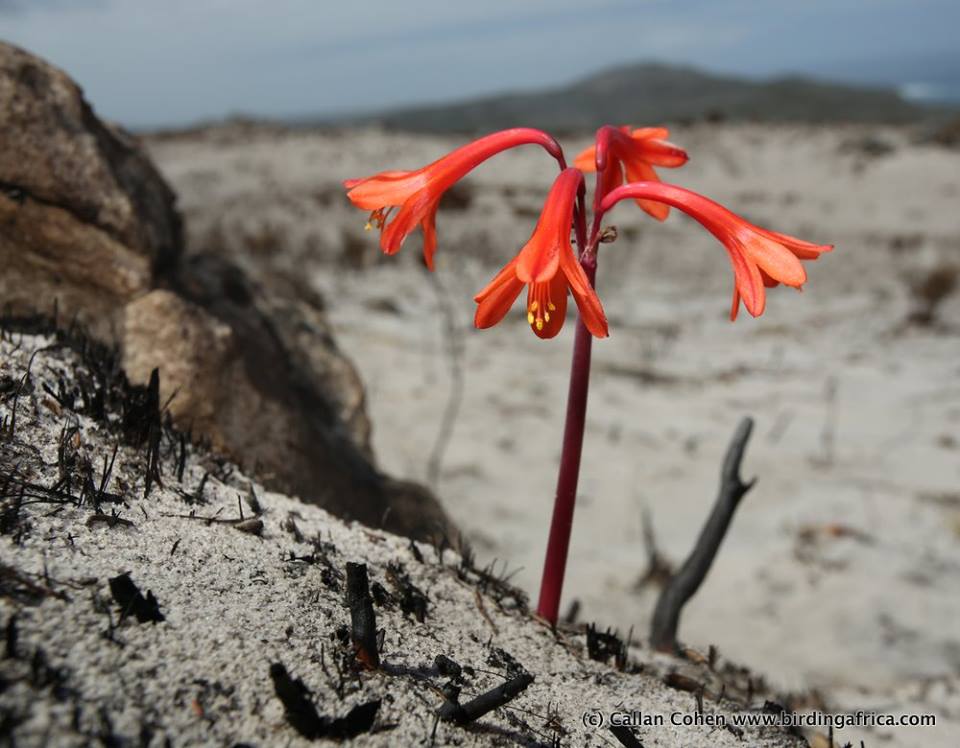
The fire lily (Cyrtanthus ventricosus)
Callan Cohen / CC BY-SA 3.0
Some seeds will not germinate unless they have been eaten and excreted.
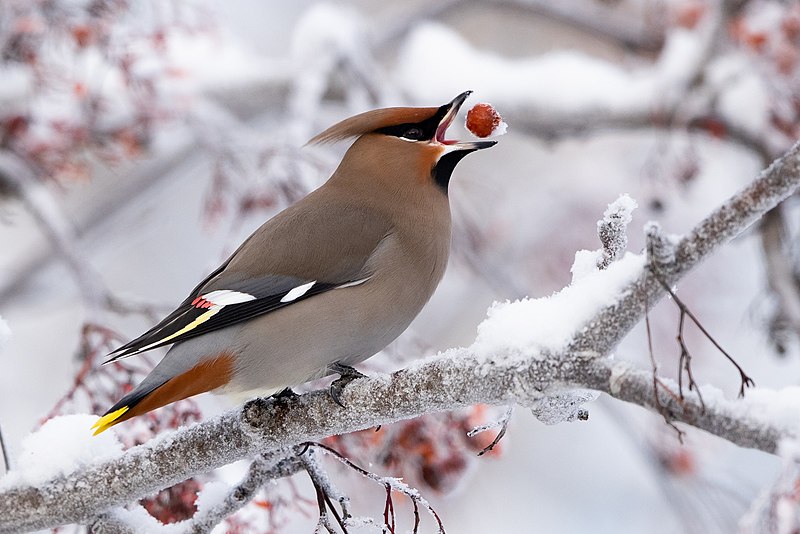
Bohemian Waxwing eating a berry, Kenai National Wildlife Refuge, Alaska
Lisa Hupp/USFWS / Public domain
Some seeds need a cold treatment to germinate which mimics the seeds going through winter. Once the cold spell is over,they germinate in the spring. The process of chilling seeds is often referred to as stratification.
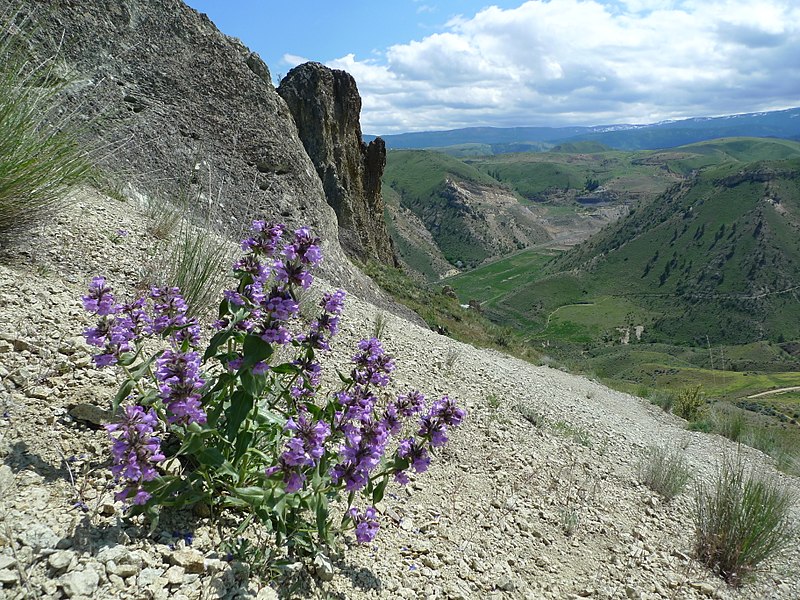
Penstemon eriantherus var. whitedii requires stratification
Thayne Tuason/ CC BY-SA 4.0
5. Imbibition
When a seed comes into contact with water it absorbs it and swells up. The seed imbibes water. Imbibe means ‘to drink’. Do not get this process mixed up with osmosis, it is not the same thing!
This is possible because of the presence of colloidal particles in the testa which attract water and cause the seed to swell.
Watch this video, paying particular attention to the seeds imbibing before they start to germinate.
Factors limiting imbibition
Temperature: The rate of imbibition increases with temperature increase.
Solute concentration: The purer the water is the higher the rate of imbibition, if the water is high in solutes (dissolved compounds) then the rate of imbibition will be low.
Why is imbibition so important?
- It plays a key role in the initial stage of water absorption by roots when seedlings are young.
- It initiates seed germination.
- It plays a role in adhering water to xylem tissues.
- It helps fruits to retain water.
- It plays a major role in young and actively growing tissues.
6. Storage tissues
The endosperm in the seed is a store for energy that allows the seed to grow and the seedling to develop to the point that it can feed itself from its roots.
Endo = ‘within’
Sperm = ‘seed’
Endosperm = ‘within seed’
What is in the endosperm?
- Starch
- Protein
- Sometimes oils and fats.
Some tiny, dust-like seeds have no endosperm.
Substrate breakdown in the endosperm
Enzymes in the seed, which become active when the seed imbibes water, break down the large storage molecules of starch in the endosperm and cotyledons into smaller molecules of glucose which can be used for respiration to produce energy for growth. Specific enzymes which loosen the cell wall are also produced during this phase of germination to prepare for the radicle to emerge from the seed.
7. Seed to seedling
Search on YouTube for ‘seed germination timelapse’ and watch a range of videos which show seeds germinating, concentrate on the order in which the germination happens.
1. Radicle emergence
When you have sown seeds, the first indication you will get that they are germinating is the appearance of the radicle which protrudes from the seed and starts to grow down.
To start with, the radicle growth is caused by cell elongation, but as the radicle continues to grow the cells start to divide at the growing tip.
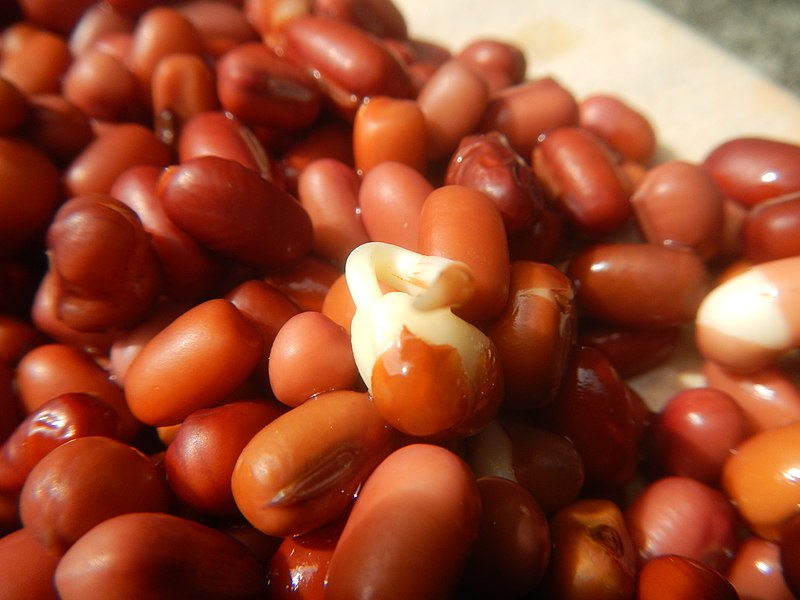
Germination of Adzuki bean
Judgefloro / CC0
2. Shoot emergence
Once the radicle has emerged and started to grow down into the soil, the shoot begins to emerge.
The emerging seedling uses food reserves from the endosperm and cotyledons to grow the hypocotyl region which lengthens the seedling stem and pushes it out of the seed and towards the light.
The cotyledons (single cotyledon if it is a monocotyledonous plant) then unfold and you can see your seedling.
The epicotyl then starts to develop, and you see the first true leaves begin to develop and the seedling can then start feeding itself through uptake of nutrients and water from the soil through its roots and photosynthesis in its leaves.

Amber Crowley UHI / Public domain
Heterotrophic growth
This is when the germinating and developing seed is feeding from organic material, i.e. using the stored food in the endosperm and cotyledons.
Autotrophic growth
This is when the seedling is old enough and can feed itself from water and nutrients taken up through its roots and photosynthesis.
8. Environmental factors
Temperature
Three temperature points: Minimum · Optimum · Maximum.
Germination occurs most rapidly at the optimum (perfect) temperature. Below the minimum, and above the maximum temperature germination will not occur.
Each species of plant has a different minimum, optimum and maximum.
Water
Seeds need moist conditions to germinate, but not too wet, and seedlings are very sensitive to drying out.
Both seeds and seedlings can be killed by waterlogging; if the germinating seed, or the root of the young seedling, becomes completely surrounded by water then they cannot uptake gases for respiration..
Gases
Oxygen uptake is essential for germination but becomes impossible for the seeds if the soil is too compacted or become waterlogged.
If a hard crust forms on the soil surface, then oxygen diffusion into the soil is limited, and this reduces germination rate.
Some water plant seeds can only germinate in water and are inhibited by exposure to air.
Light
Many plant species which produce small seeds need light to trigger germination.
For some it is the correct wavelength of the light, and for some it is the correct photoperiod (day length) that triggers germination.
Small seeds do not have big food reserves and so the epicotyl needs to reach the soil surface quickly so that the first leaves can start to photosynthesis to feed the seedling.