People and rewilding
| Site: | OpenLearn Create |
| Course: | Introduction to Rewilding |
| Book: | People and rewilding |
| Printed by: | Guest user |
| Date: | Sunday, 4 October 2026, 3:22 AM |
Introduction
In Module 1, you learned about what rewilding is and what it means in a European context. You also learned about the principles of rewilding, and that people are a fundamental part of the rewilding process.
This message was carried into Module 2, where you learned about the return of wilder nature in Europe and how we are learning to learn to live alongside it again. Engaging people is a key component of rewilding. We are starting to see a fundamental change in how nature is understood and appreciated in Europe. As rewilders, we can accelerate this shift. To do that we need to build support for rewilding and the recovery of nature, but who should we engage with and what are the most effective ways of communicating?
In this module you will dive deeper into these questions and learn what it means to build engagement, communicate rewilding's positive message, and provide new perspectives, all with the aim of scaling up nature recovery and amplifying its beneficial impact.
 Learning outcomes
After completing this module, you should be able to:
- Explain the numerous benefits that nature provides to people and describe how fostering a connection with the natural world inspires efforts to protect and enhance it.
- Analyse the impact of urbanisation and rural depopulation on land abandonment and evaluate how rewilding can revitalise rural areas and create economic opportunities through nature-based tourism.
- Identify key local stakeholders in rewilding efforts and different contexts, including land managers, residents, and businesses, and assess their roles in the success of rewilding initiatives.
- Develop inclusive communication strategies that build trust and partnerships with local communities, ensuring their needs and perspectives are respected in rewilding projects.
- Communicate the importance of hopeful messaging in rewilding, highlighting its role in addressing misinformation, inspiring positive engagement and fostering long-term commitment to conservation efforts.
1 The benefits of nature for people
|
‘To restore stability to our planet, therefore, we must restore its biodiversity, the very thing we have removed. It is the only way out of this crisis that we ourselves have created. We must rewild the world!’ – David Attenborough: A Life on our Planet, 2020 |
The natural world is an incredible wonder that inspires and takes care of us. It underpins our economy, our society, our very existence. Our forests, rivers, oceans, and soils provide us with the food we eat, the air we breathe and the water we irrigate our crops with. We also rely on them for numerous other goods and services related to our health, happiness and prosperity.
The physical health benefits of spending time in nature are proven – from improving blood pressure and enhancing brain activity, to promoting a better quality of sleep, reducing anxiety and lowering the risk of cardiovascular disease.
People who feel a strong personal connection with nature also tend to have a strong sense of personal wellbeing and good mental health. Researchers use the concept of ‘nature connectedness’ – or the personal sense of feeling emotionally connected with the natural world – to help understand the connections between nature and wellbeing.
1.1 Building engagement with nature
Feeling connected with and passionate about nature motivates people to want to protect and enhance the natural world, so an essential part of rewilding is to increase people's connection with wilder nature so that it becomes truly welcome in Europe. We need a paradigm shift in how nature is understood and connected with, by people of all backgrounds across the continent.
Many parts of Europe are characterised by rural depopulation as people move from the countryside to the city. Today, 39% of Europeans live in cities and 36% in suburbs and towns, while only 25% live in rural areas. If urbanisation trends continue half of the total EU population will live in a city by 2050 (European Union, n.d.).
Rural depopulation frequently leads to agricultural land abandonment, particularly in areas that were already struggling to compete with intensive agriculture. The negative impacts of rural depopulation and land abandonment on people are both numerous and extensive:
- Local economies decline and jobs become scarcer.
- Schools, shops and hospitals are forced to close.
- Cultural heritage is eroded.
- The overall socio-economic outlook for rural areas can begin to look hopeless.
On the flip side, the growth of urban populations means more and more city dwellers are seeking opportunities to reconnect with nature. Europe's nature-based tourism sector is growing rapidly, with people seeking to escape urban life, immerse themselves in nature and enjoy memorable wildlife encounters. Opportunities for the development of nature-based tourism with its multiplier effects have never been so abundant, but living harmoniously with wild nature requires a shift in behaviours and practices as well as attitude.
2 Who do we work with?
Rewilding embraces the role of people and their profound cultural and economic connections to the land and sea. Rewilding inherently includes finding ways to work and live within flourishing and healthy natural ecosystems.
This is captured in the rewilding principle ‘Acting in context’.

2.1 The roles of people in rewilding areas
People living in and around rewilding areas are critical to the success of rewilding efforts. A significant part of rewilding involves working with local stakeholders, including everyday citizens, to understand their perspectives and priorities. Many will have important roles to play in the rewilding process.
Use the Next and Prev buttons below to view the many forms this can take and use the full-screen icon to enlarge the images.
People from all of these groups can become advocates for policies and practices that support rewilding efforts, both at local and national levels. Their voices and votes can influence decisions related to land use and nature recovery.
Countries across Europe have committed to the Kunming-Montreal Global Biodiversity Framework, adopted in 2022 (CBD Convention on Biological Diversity), which means they must restore 30% of their terrestrial, inland water, and coastal and marine habitats by 2030. With each country developing plans to restore nature, local people and organisations can be part of a movement to support and encourage political leaders to prioritise these commitments.
2.2 Deciding who to work with
Rewilding is inclusive and embraces the role of people in the rewilding process. But how do those managing a rewilding initiative identify the relevant people? Who should be engaged first? And with whom should they establish more formal partnerships and for what purpose?
There are different approaches that can be taken to identify stakeholders – people who can influence or who are influenced by rewilding.
Early adopters
Rewilding takes an opportunity-driven approach. In terms of engaging stakeholders, this means finding those who are inspired by the concept, or who already understand the benefits of rewilding and want to collaborate.
The ‘diffusion of innovations theory’ – developed by American communication theorist and sociologist Everett M. Rogers (1962) – describes how ideas spread through society. In his well-known model, Rogers identified five key groups in this process: innovators, early adopters, early majority, late majority, and laggards.
Innovators are those who are doing something they believe to be new. This could be a new approach, idea or technology. They are willing to take the highest risks because they know that a new idea may fail but can also yield beneficial results. They often have an entrepreneurial mindset.
Early adopters are the people or organisations that look at what innovators are doing and act on their pioneering idea first. They see the potential benefits and are willing to take the risks that come with that idea.
The early majority wait until the benefits of those ideas are more proven and really become relevant in society, then join the new movement. Often these are governments, authorities, and larger institutions. The late majority follow after this, while laggards may never embrace the idea at all.
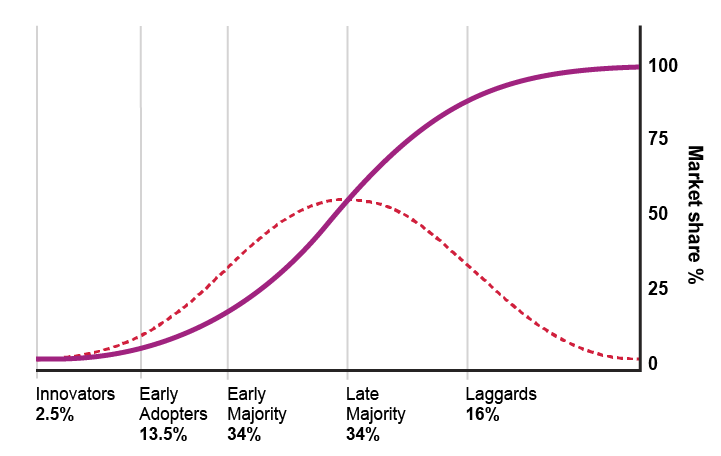
Graph illustrating the diffusion of innovations model, based on EM Rogers’ model.
Applying the terms of this model, rewilding can be seen as an innovation, and those who are quick to join the movement are early adopters. Working with early adopters can be a strategic way to move forwards quickly and focus resources on those that can help start bringing about real change for nature in Europe.
Mapping stakeholders
Another approach to identifying stakeholders is through a stakeholder analysis: a systematic mapping of the different people relevant to a rewilding initiative. Individuals and groups are plotted on a chart according to their interest in the work, and their influence on it (or how much it influences them) (Mendelow, 1991).
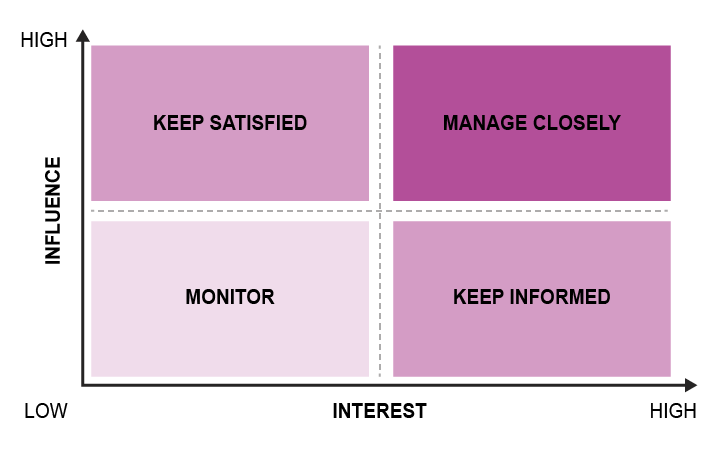
A simple stakeholder analysis, ranking each stakeholder depending on their influence in the subject and their interest in the subject.
The position of each person or organisation on the chart indicates how they should be engaged. Those with high interest and high influence should be the main focus of attention – they could even become strategic partners. Those who are less interested and less affected or influential may receive less attention.
Visual
The position of stakeholders in this kind of analytical chart will vary according to context and the rewilding actions or approaches that are set to be carried out.
|

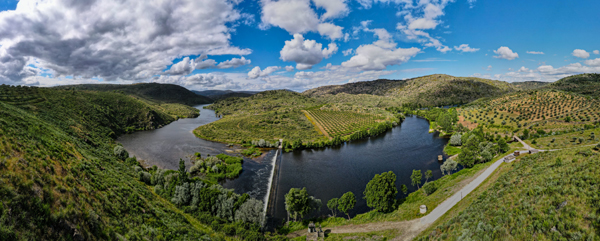
Now consider which of these groups of people or organisations might be innovators, early adopters, or fall into a later category.
Which of the groups you identified would you work with first? Choose two or three we will come back to them later.
2.3 How do rewilders build engagement?
The methods for building engagement vary, from community to continental level. In-person meetings, formal events, festivals, exhibitions, press releases, annual reviews, and social media all have a part to play.
Engaging people inside rewilding areas
Within a rewilding area, face-to-face communications, personal dialogue, and genuine engagement are important to build trust and relationships. People should be able to access relevant information, be given a platform to share their ideas and opinions, and have an opportunity to become part of local rewilding efforts and the greater rewilding movement.
This can mean taking steps to ensure some people aren't accidentally excluded. For example:
- Meetings during the day may exclude people who are at work.
- Consultations in the evening could exclude people who work at night, or single parents who can't leave children alone at home.
- Events held upstairs may exclude wheelchair users.
- Meetings at some times of year could exclude people who are in the area on a seasonal basis, such as pastoralists, or people who work in tourism.
Going to where people are rather than asking them to come to you, can ensure that engagement efforts are truly inclusive.
Dialogue and information-sharing are only the first steps in the engagement process in areas that are being rewilded. Rewilding is a long-term process, and the success of rewilding efforts depends on establishing trust and real buy-in to the rewilding philosophy.
This can be achieved by inspiring people, generating pride in the new natural values of the landscape, and ensuring businesses and communities benefit from nature recovery by:
- developing nature-based economies
- organising events such as festivals, exhibitions, documentary screenings, and educational camps
- giving people the opportunity to really connect with the wild nature on their doorstep on a regular basis.
|

Engaging people outside of rewilding areas
Films, podcasts, imagery, social media, festivals, and music all demonstrate the beauty of wild nature and build engagement across wider society which creates a more enabling social environment for rewilding.
A wide range of inspirational events and media are already leading a change in how people understand wilder nature across Europe. Here are just a few examples:
James Shooter travelled across much of Europe, visiting 16 high-profile rewilding landscapes and initiatives. For each of these he created a dedicated podcast, The Rewild Podcast, bringing the sounds and stories of these remarkable places to a global audience.
The Rewild Podcast takes listeners on an immersive audio journey across Europe.
In his series ‘Rewilding the World’, Ben Goldsmith speaks to the people leading the most dynamic rewilding initiatives taking place today.
From Mexico to Mauritius, from the sea to the urban environment of London, these podcasts show the huge transformation that can take place when we let nature lead its own recovery.
Emmanuel Rondeau is a director, producer, and photojournalist who creates inspiring and educational films with the aim of changing attitudes and behaviours.
Some of his recent ‘The rewilding documentary series’ features rewilding landscapes in the Iberian Highlands of Spain, the Velebit Mountains of Croatia, and the Rhodope Mountains of Bulgaria. Meet the people who live there and see what rewilding means to them through his intimate and powerful documentaries.
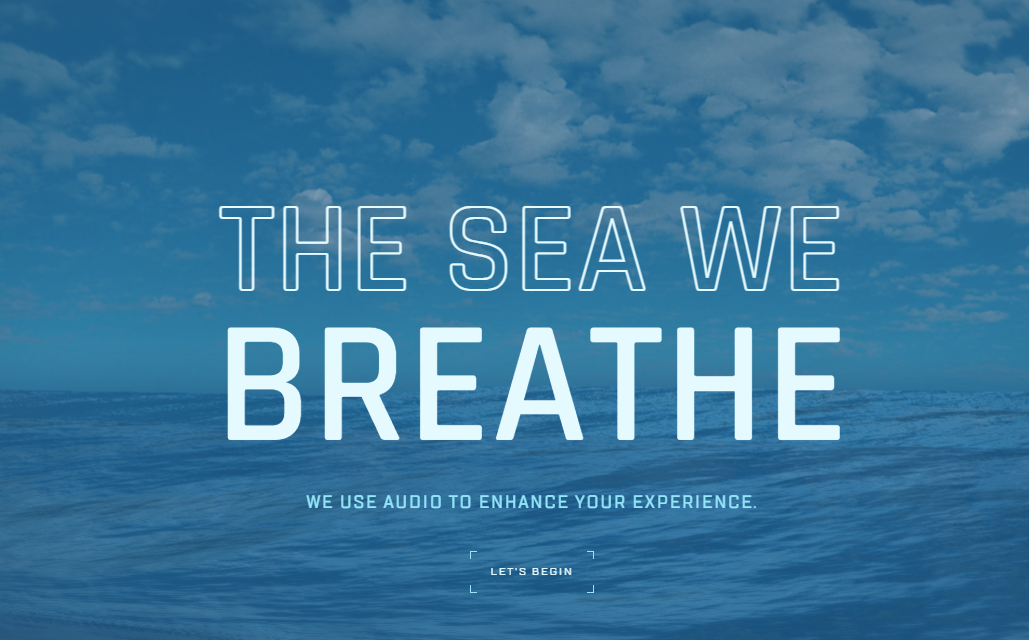
The Blue Marine Foundation have created an online immersive experience. Dive below the waves and learn about majestic marine wildlife and what we need to do to rewild the seas.
2.4 Case study: how to build engagement in practice
I'm not afraid of the wolf
In 2016 a wide range of stakeholders came together, united by a shared passion. Residents of small mountain villages in the Apennines and the Alps, shepherds and farmers, urban dwellers, and nature professionals began collaborative efforts to scale up and enhance human–wolf coexistence.
Italian NGO Io Non Ho Paura del Lupo (‘I'm not afraid of the wolf’) has an overarching aim: to ensure the conservation of the wolf in Italy and in Europe by inspiring people to live alongside wolves. It works towards this goal by promoting factual and positive information to a diverse European audience.
Effective, scientifically grounded communication on wolf-related issues helps remove myths and misconceptions around this often misunderstood animal. In areas where wolf populations are present, Io Non Ho Paura del Lupo reaches out to local stakeholders to raise awareness and understanding. The organisation also works to inform people about the behaviours and practices to adopt to promote coexistence, particularly in areas where wolves have just returned or are about to return.
To achieve its objectives, Io Non Ho Paura del Lupo uses a range of communications tools and approaches:
- Educational and informative materials.
- Wolf-related video, infographics, and multimedia.
- Events such as conferences, in-depth workshops, public meetings and projects for schools.
In 2023, Io Non Ho Paura del Lupo achieved the following results:
- 52 events held during 2023.
- 2500+ participants attended offline events.
- 8 regions influenced by these events (Abruzzo, Emilia Romagna, Friuli Venezia-Giulia, Lazio, Liguria. Lombardia, Veneto, Trentino-Alto Adige).
- 2300+ hard copies of the ‘Getting to know the wolf’ handbook distributed for free.
- 332 children involved in the ‘Getting to know the wolf’ school project.
- 4.2 million+ people connected with online.
- 123,000 followers on social networks by the year-end.
- 5 million+ video views on social networks.
- 278 members and supporters by the year-end.
- 1 coexistence festival held, with 35 different events attracting more than 700 people over the course of three days.
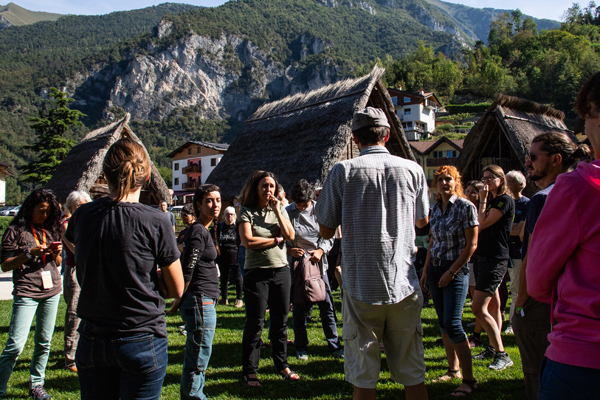
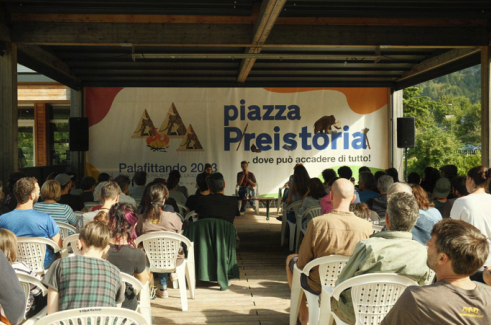
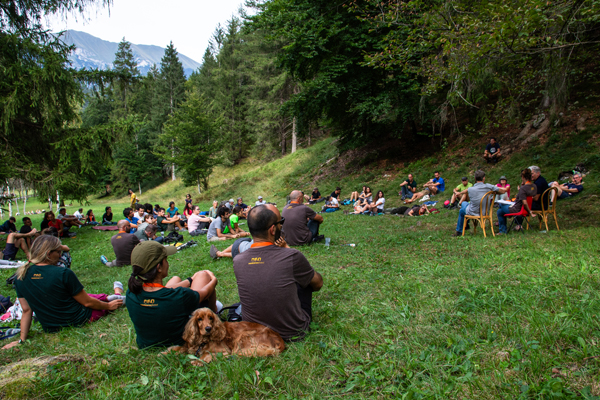
Photos from several events during coexistence festival in Italy. Credit: Io Non Ho Paura Del Lupo
3 Communicating hope
Now you have considered who to engage and how, it's important to reflect on how you convey your messages and information.
As you saw in the case study focusing on Io Non Ho Paura del Lupo, positive, hopeful communications can help to address misinformation and fear. But they also have a wider, deeper purpose.
In a world without people, nature would flourish without human restraint. This fundamental truth underscores the role of people as the ones who define the boundaries of nature. Our choices determine whether we welcome the presence of predators, the existence of fallen trees, the course of untamed rivers, and all other natural processes that shape our landscapes.
People have controlled Europe's natural environment for centuries. From managing predatory animals that may pose a risk to people and their assets, to draining wetlands for agriculture, to straightening rivers to aid transport and industry, most of Europe is now heavily modified and ecologically degraded.
With 18 of the world's 50 least biodiverse countries found in Europe, it can be a challenge to visualise a continent where wilder, healthier nature is far more abundant.
3.1 The need for positive messages
|
‘Rewilding is not about wolves, trees or wetlands. It is about people and their values, what they believe to be right or wrong, who they are and what they stand for. Those seeking to drive change should be speaking to the heart.’ – Webster (2022) Hearts & Minds |
The complexity and long-term nature of environmental issues can present a communications challenge. In the past, the conservation narrative has been characterised by doom and gloom messaging, effectively blaming people for the sorry state of the natural world. This caused people to feel hopeless, which in turn meant many disengaged from conservation and nature-related issues completely.

With its positive, inspirational messaging that focuses on the wonder of nature and the practical steps we can all take to protect and enhance it, rewilding is different. Today, rewilding landscapes and initiatives across Europe are demonstrating how rewilding can help to fix our climate and boost biodiversity. How rewilding can provide recreational and educational opportunities for communities, enhance human health and wellbeing, contribute to the economic revitalisation of rural areas through the creation of new jobs and businesses, and support the preservation of cultural heritage.
In short, rewilding offers hope of a future where people can thrive alongside healthy, resilient nature. By communicating that hope to people of all backgrounds, those involved in rewilding can trigger positive emotions that inspire long-term engagement and action, rather than short-term reactions.

Providing hope and purpose is one of the fundamental principles of rewilding. And we need to turn hope into action.
3.2 Case study: how do you communicate hope?
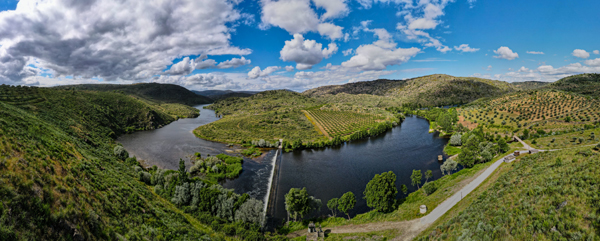
Watch Emmanuel Rondeau’s video about The Circle of Life in the Rhodope Mountains, mentioned in Section 1.5 (12 minutes).
Next, watch Lauren Holtjer reporting from a rewilding landscape.
|

3.3 Working together
As you have seen in this module, rewilding needs a wealth of resources, expertise, and support to succeed. Artists, teachers, policymakers, photographers and shepherds all have important roles to play, as well as biologists, ecologists, hydrologists, agronomists and many others.
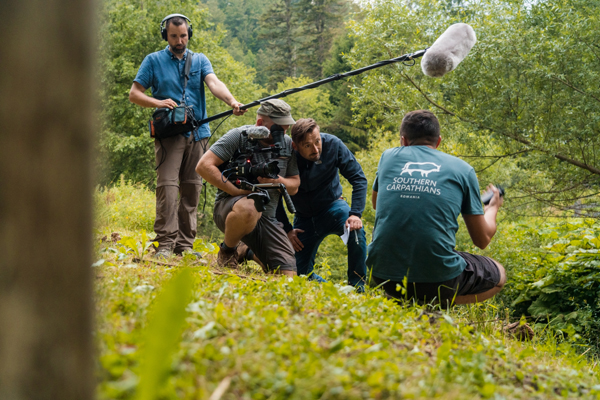
Ranger Matei having an interview for German television about the bison transport. Credit: Daniel Mirlea
Cooperation with government agencies, NGOs, businesses, research institutes and local residents can bring these valuable skills together. Collaborating across sectors and creating long-term partnerships based on a joint vision for a landscape or area, helps to ensure the sustainability of rewilding efforts, as many different people are supportive of and invested in rewilding. Working together nurtures mutual respect and understanding between different groups.

For this reason, working in partnership is another fundamental principle of rewilding. We need to work together to create a transformation in Europe: more wild nature, new ways to coexist with wild nature, and new mindsets that welcome and enable this change.
4 Module summary
In this module, you learned that nature can provide numerous benefits to people, and fostering a connection with the natural world inspires efforts to protect and enhance it.
Rewilding aims to increase this connection, fostering a paradigm shift in how nature is understood and valued across Europe. With urbanisation on the rise and rural depopulation leading to land abandonment, rewilding offers a way to revitalise rural areas and create economic opportunities through nature-based tourism. Engaging local stakeholders, including land managers, residents and businesses is crucial for the success of rewilding efforts.
Rewilding initiatives must build trust and partnerships with local communities, ensuring their needs and perspectives are respected. Effective engagement involves inclusive communication strategies, such as face-to-face meetings and community events, to inspire and involve people in rewilding efforts. By celebrating local culture and providing economic benefits, rewilding can generate pride and support for nature recovery. Additionally, engaging people outside rewilding areas through media and events helps create a broader social environment that supports rewilding initiatives.
You also learned how communicating with hope is crucial because it addresses misinformation and fear while inspiring positive engagement and action. Positive, hopeful messages can shift the narrative from one of blame and despair to one of possibility and empowerment.
By highlighting the benefits of rewilding, such as climate mitigation, biodiversity enhancement, and community well-being, hopeful communication fosters a vision of a future where people and nature thrive together. This approach not only motivates individuals to participate in rewilding efforts but also builds long-term commitment and collaboration, essential for long-term success.

Now that you have completed this module, you should be able to:
- Explain the numerous benefits that nature provides to people and describe how fostering a connection with the natural world inspires efforts to protect and enhance it.
- Analyse the impact of rural depopulation on land abandonment and evaluate how rewilding can revitalise rural areas and create economic opportunities through nature-based tourism.
- Identify key local stakeholders in rewilding efforts and different contexts, including land managers, residents, and businesses, and assess their roles in the success of rewilding initiatives.
- Develop inclusive communication strategies that build trust and partnerships with local communities, ensuring their needs and perspectives are respected in rewilding projects.
- Communicate the importance of hopeful messaging in rewilding, highlighting its role in addressing misinformation, inspiring positive engagement and fostering long-term commitment to conservation efforts.
4.1 Further reading
- Vidal, John. ‘Planting a Vision: Why the Secret to Rewilding Success Is about People, Not Trees.’ The Guardian, July 15, 2022. https://www.theguardian.com/environment/2022/jul/15/planting-a-vision-why-the-secret-to-rewilding-success-is-about-people-not-trees.
- Howell, Emily L., and Dominique Brossard. ‘Communicating the Biodiversity Crisis: From ‘Warnings’ to Positive Engagement.’ Science Communication 44, no. 1 (2023): 44–69. https://doi.org/10.1177/19400829221134893.
- Houlden, Victoria, Rosie Weichenthal, and Mathew P. White. ‘Associations between Nature Exposure and Health: A Review of the Evidence.’ International Journal of Environmental Research and Public Health 18, no. 9 (2021): 4780. https://www.ncbi.nlm.nih.gov/pmc/articles/PMC8125471/.
- Pritchard, Ann, et al. ‘The Relationship Between Nature Connectedness and Eudaimonic Well-Being: A Meta-analysis.’ Journal of Happiness Studies 21, no. 3 (2020): 1145–1167. https://link.springer.com/article/10.1007/s10902-019-00118-6.
- Whitburn, Julie, Matthew P. Linklater, and Niki Harré. ‘Do People Who Feel Connected to Nature Do More to Protect It? A Meta-Analysis.’ Journal of Environmental Psychology 65 (2019): 101323. https://www.sciencedirect.com/science/article/abs/pii/S0272494418308557.
- Rewilding Europe. ‘Archaeological Find in Greater Côa Valley Throws Spotlight on Human–Wildlife Coexistence.’ October 9, 2023. https://rewildingeurope.com/news/archaeological-find-in-greater-coa-valley-throws-spotlight-on-human-wildlife-coexistence/.
- Rewilding Europe. ‘Second Year of the Bison School Club Programme in the Southern Carpathians.’ March 25, 2024. https://rewildingeurope.com/news/second-year-of-the-bison-school-club-programme-in-the-southern-carpathians/.
- Natural History Museum. ‘Biodiversity Trends Explorer.’ Accessed April 16, 2025. https://www.nhm.ac.uk/our-science/data/biodiversity-indicators.html.
- Blue Marine Foundation (n.d.) The Sea We Breathe immersive experience. Available at https://www.bluemarinefoundation.com/the-sea-we-breathe/.
- Goldsmith, B. (2023-2025) Rewilding the World with Ben Goldsmith. Available at https://podcasts.apple.com/gb/podcast/rewilding-the-world-with-ben-goldsmith/id1685196752 (Accessed 16 April 2025).
- Shooter, J. (2023) The Rewilding Podcast series. Available at https://rewildpodcast.podbean.com/ (Accessed 16 April 2025).
- Rondeau, E. (n.d.) The Wilder Europe series by White Fox Pictures. Available at: https://rewildingeurope.com/series/ (Accessed 16 April 2025).
4.2 End-of-module quiz

Now it’s time to complete the Module 3 quiz – it’s a great way to check your understanding of the course content.
This quiz contains 5 questions and a pass mark of 60% and above is required if you'd like to be awarded your Module 3 – People and rewilding digital badge.
You can review the answers you gave, and which were correct/incorrect, after each attempt has been completed.
If you don’t pass the quiz at the first attempt, you are allowed as many attempts as you need to pass.