Unit 3: Inclusive action and legal responsibilities
| Site: | OpenLearn Create |
| Course: | Neurodiversity in policing: practical strategies for public-facing officers and staff |
| Book: | Unit 3: Inclusive action and legal responsibilities |
| Printed by: | Guest user |
| Date: | Tuesday, 13 October 2026, 10:52 AM |
Introduction
In this unit you will learn how to balance legal responsibilities with reasonable adjustments in your policing, and will explore what inclusive practice looks like.
You will end the unit by looking at how an action plan can improve your practice.
Unit 3 learning objectives
By the end of Unit 3 you will be able to:
- understand what your legal duty means for neurodiverse individuals
- make reasonable adjustments to how you communicate, behave or manage a situation
- incorporate inclusive practice into your team
- create an action plan for your own practice.
Session 1: Legal responsibilities and reasonable adjustments

As a public service, policing operates under both operational demands and legal duties. One of the most important is the duty to treat people fairly, lawfully and in a way that accounts for their individual needs.
This session will help you to understand:
- what your responsibilities are under the Equality Act
- what it means to make a reasonable adjustment
- how these responsibilities apply in real-life policing contexts
- how policing actions may unintentionally cause distress, and how to mitigate that.
What is the Equality Act and why does it matter?
The Equality Act 2010 protects people from discrimination in public services, including policing. It recognises that people with a neurodivergent diagnosis may need additional support or flexibility to be treated fairly.
Neurodiverse individuals (including those with autism, ADHD, dyslexia, etc.) are protected under this law as having a disability, even if their condition is not formally diagnosed or disclosed.
What does this mean for you?
You have a legal duty to:
- recognise when someone may need an adjustment to engage fairly or safely
- take reasonable steps to support them, based on what’s possible in the situation
- avoid discrimination or unfair treatment based on behaviour linked to their condition.
The duty is not just about formal processes like custody or interviews. It applies throughout the interaction: during stop checks, responding to incidents, contact centre calls, community engagements and use of restraint or control.
What is a reasonable adjustment?
A reasonable adjustment is a change to the way you communicate, behave or manage the situation to make the interaction fairer and less distressing for the individual.
This doesn't mean compromising officer safety – it means considering the impact of your actions, and explaining, adapting or mitigating where you can.
The following table includes examples of reasonable adjustments in policing. (Note: the list is not exhaustive.) Remember the best thing you can do is ask the person what helps them best.
| Context | What might help |
|---|---|
| Stop and search |
Speaking slowly and clearly Giving more time to respond before physical contact Describing each step of what you're doing in advance Avoiding crowding the person if safe to do so Adjusting search related physical contact |
| Use of handcuffs or restraints |
Explaining clearly why the restraint is being used Using calm, literal language, e.g. ‘I need to use handcuffs to keep everyone safe. Is there anything that might help you feel more comfortable while you wear them?’ Limiting noise and sensory input where possible Giving time and space to decompress once safe to do so |
| Custody processing |
Breaking instructions into smaller steps Explaining procedures clearly, giving advance warning of next steps Offering a quieter waiting area if available |
| Interviews |
Offering breaks and reducing time pressure Allowing support persons or advocates Avoiding leading or rapid-fire questions Using accessible language Checking understanding |
| Contact centre |
Speaking at a steady pace, avoiding complex or indirect language Allowing the caller to finish their thought before moving on Checking understanding before moving on |
| Community visits |
Allowing time to prepare for the visit Using written materials, visual aids or prompts, if helpful Avoiding making last-minute changes |
Video activity 5
Now watch the following video, in which police officer Katie Russell discusses considerations when dealing with a neurodivergent person. When you’ve watched the video, consider which of the actions in the table above apply to taking a witness statement from a neurodivergent person.
Remember that a reasonable adjustment is anything that:
- makes the interaction safer and fairer
- reduces unnecessary distress
- doesn't compromise operational safety.
What if you’re not sure?
You are not expected to diagnose someone, but you are expected to:
- notice behaviours that may indicate someone is struggling in the current environment
- ask or offer support in a respectful way, e.g. ‘Is there anything I can do to make this easier for you?’
- be willing to adapt your usual approach even briefly to reduce distress.
Key takeaways
- You have a legal duty under the Equality Act to make reasonable adjustments for neurodiverse individuals.
- Adjustments are often small, practical steps that make a big difference.
- You don’t need a diagnosis or label – just to exercise awareness, observation and flexibility.
Next you’ll explore what inclusive practice looks like in real-life settings – and how small adjustments, used consistently, create a more effective and respectful policing culture.
Session 2: Inclusive practice in action
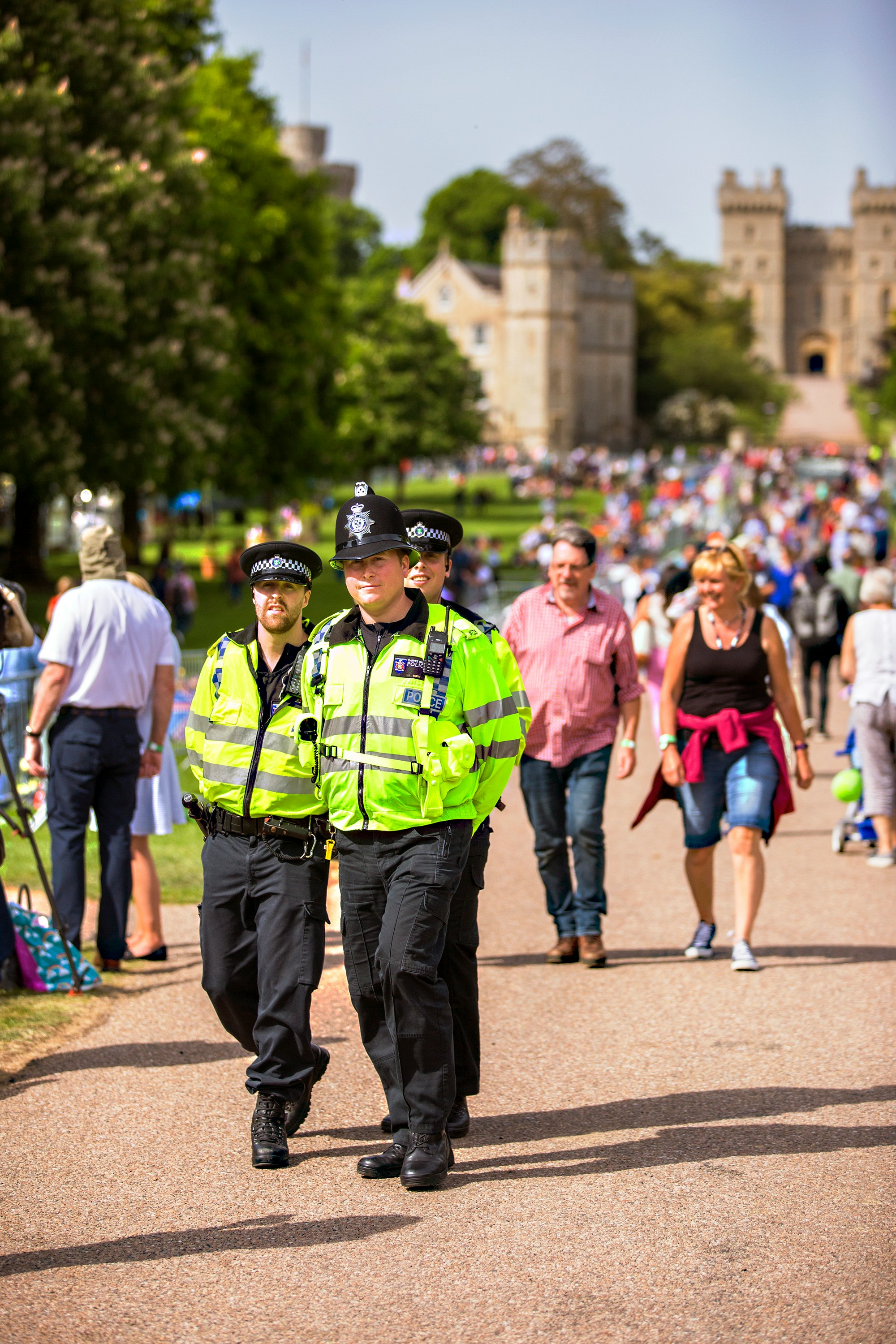
Inclusive policing isn't a one-off gesture. It’s a mindset, a habit and a team effort. In this session, we explore what inclusive practice looks like day-to-day, how to maintain it under pressure and how teams can support each other to make these adjustments part of routine, not exception.
You’ll also walk through a realistic scenario to see inclusive behaviours in action and reflect on how this could apply to your own role and team.
What does inclusive practice look like?
Inclusive practice in policing means doing the small things consistently to help neurodiverse individuals feel safe, understood and treated fairly.
Examples of inclusive behaviours in everyday policing include:
- slowing down when you notice that someone is overwhelmed
- repeating questions using the same language, not rephrasing each time
- stepping back to reduce physical or sensory pressure
- explaining what you're doing before you do it
- using a calm and clear tone, even when under pressure
- being open to routine, repetition or scripting rather than challenging it.
These adjustments might not feel noticeable to you but they can completely change the experience of the person you’re speaking to.
It’s a team effort
Inclusion works best when it’s modelled and reinforced by a team, meaning that:
- supervisors give space for discussion about good practice
- colleagues back each other up when adjustments are made
- assumptions are called out when someone labels a person in a discriminatory way
- inclusive language is part of your culture, not just policy.
Team culture matters. People are more likely to maintain inclusive behaviours when it’s seen as ‘how we do things’, not just ‘what that one officer does’.
Now move on to the next session.
Session 3: Action planning

This final session gives you time to reflect on your learning and build a short, meaningful action plan that helps you take what you’ve learned forward into your next shift, your team conversations and your wider practice.
Inclusion isn’t a fixed outcome. It’s an ongoing commitment.
Now it’s time to ask yourself: ‘What will I do differently as a result of this learning?’
Personal action planning
Use the prompts below to create a short, practical action plan. You don’t need to overhaul your entire approach – you just need to commit to small, specific steps that feel realistic and relevant.
Step 1: Choose one thing that you’ll start doing straight away
What simple behaviour, phrase or habit can you start using now that supports inclusive policing? Examples include:
- ‘I will pause before repeating instructions to allow time for processing.’
- ‘I will switch from saying “Bear with me” to “Give me a moment” to be more literal.’
Step 2: Identify one situation where you’re likely to apply this
Where in your role do you most often engage with members of the public who may be neurodiverse? For example, it could be during custody bookings when the person seems unusually anxious or repetitive, or on the phone when someone is talking quickly or going off track.
Step 3: Think about what support you might need
Do you need reminders, resources or team support to embed this change? Examples of what you could note here include:
- ‘I’ll share what I’ve learned at my next team briefing.’
- ‘I’ll keep a printed copy of the communication tips in my pocket notebook.’
Step 4: Set a goal for the next four to six weeks
What would success look like for you? Examples include:
- ‘I want to use inclusive strategies in at least three interactions and reflect on the outcomes.’
- ‘I’ll introduce a short inclusion prompt at the end of our team debriefs.’
Long-term ideas
Once you’ve embedded a few small changes, you can build on your practice by:
- encouraging peer reflection or ‘inclusion wins’ in team meetings
- suggesting inclusive prompts or scenarios in training or briefings
- sharing articles, videos or resources about neurodiversity with colleagues a
- asking a supervisor to support inclusive practice goals in team planning.
Inclusion spreads through small conversations and everyday behaviours.
You’ve now completed three units of learning about neurodiversity and inclusive policing.
But training is only the start. Now it’s up to you to put what you’ve learned into action.
What you’ve learnt
On this course you’ve explored:
- what neurodiversity means and how traits may show up in policing contexts
- why some individuals may struggle with standard procedures, environments or communication styles
- how to recognise early signs of stress, shutdown or sensory overload
- simple, practical strategies to improve communication and prevent escalation
- your legal duties under the Equality Act and what reasonable adjustments look like in practice
- the importance of team culture, consistency and shared learning.
We hope that you enjoyed this short course and that you found it useful. Understanding neurodiversity and applying that understanding to your daily practice really will make a difference to neurodiverse people who you come into contact with. It will also help portray a positive image of modern policing and the individuals who work within it.
Acknowledgements
Grateful acknowledgement is made to the following sources:
Course image: police light, Scott Rodgerson/Unsplash.
Session 1: police light, Scott Rodgerson/Unsplash; cap and headphones, Mark Rohan/Unsplash; hands on head, Owen Vangioni/Unsplash.
Session 2: police on street, Phil Hearing/Unsplash; messaging apps, Adem AY/Unsplash; speech bubble, Volodymyr Hryshchenko/Unsplash.
Session 3: Post-its, Kelly Sikkema/Unsplash; patrolling, King's Church International/Unsplash; pencil case, Nikon/Unsplash.
Every effort has been made to contact copyright holders. If any have been inadvertently overlooked the publishers will be pleased to make the necessary arrangements at the first opportunity.