Competencies in the curriculum - Words of Wisdom
| Site: | OpenLearn Create |
| Course: | Sustainability Words of Wisdom: Examples from Higher Education |
| Book: | Competencies in the curriculum - Words of Wisdom |
| Printed by: | Guest user |
| Date: | Tuesday, 28 July 2026, 3:31 AM |
Table of contents
- About
- Threading Educating for Sustainable Development through thinking about educating the next generation.
- Connecting with sustainability competencies in a level 3 religious studies module.
- Diagramming for sustainability
- Embedding key sustainability competencies into core physics curriculum
- Environmental humanities in MA Classical Studies
- Using Chemistry home experiments to connect with sustainability
- The value of reflection as an Environmental Manager
About
Sustainability competencies can empower individuals to ‘reflect on their own actions’ and provide cross-cutting skills necessary for both addressing sustainability challenges and working towards the UN’s 17 Sustainability Development Goals (SDGs) (UNESCO, 2017).
A point of significant debate in the literature is around which combination of competencies are key for supporting individuals to ‘transform their own lifestyles and contribute to societal transformation towards sustainability (Rieckmann, 2012; Wiek et al., 2011; Bianchi, 2020; Redman & Wiek, 2021). Lwin (2024) and Wilhem et al. (2019) argue that competencies are ‘fundamentally context bound’ and that focus should be on ensuring relevent competencies are successfully integrated and implemented (Wiek & Redman, 2022).
Integrating sustainability competencies within courses can help to create authentic opportunities for learners to build the ‘knowledge, skills, attitudes and values that enable effective, embodied action in the world with respect to real world sustainability problems, challenges, and opportunities, according to the context’ (Bianchi, 2020).
Examples of competency frameworks:
- UNESCO cross-cutting and specialized SDG competencies.
- Inner Development Goals.
- GreenComp: the European sustainability competence framework.
Explanation of sustainability competencies adapted from:
Astles, P., Matthews, C. (2025). Communicating Sustainability Competencies: A Case Study of Sustainability and Learning Design. In: Leal Filho, Walter; Veira Trevisan, Lais; Pace, Paul J. and Mifsud, Mark eds. Education for Sustainable Development: The Contribution of Universities. World Sustainability Series. Cham, CH: Springer, pp. 85–100. DOI: https://doi.org/10.1007/978-3-031-86985-3_6
References:
Bianchi, G. (2020). Sustainability competences: A systematic literature review. Joint Research Centre (European Commission). https://doi.org/10.2760/200956.
Lwin, B. (2024). Exploring Education for Sustainable Development in Myanmar: Concepts and Models to Influence the Integration in, and the Transformation of, Higher Education Institutions [Doctoral dissertation, The Open University]. Open Research Online. https://oro.open.ac.uk/98089/.
Redman, A., & Wiek, A. (2021). Competencies for Advancing Transformations Towards Sustainability. Frontiers in Education, 6. https://doi.org/10.3389/feduc.2021.785163.
Rieckmann, M. (2012). Future-oriented higher education: Which key competencies should be fostered through university teaching and learning? Futures. 44(2), 127–135. https://doi.org/10.1016/j.futures.2011.09.005.
UNESCO (2017), Education for Sustainable Development Goals: Learning Objectives, UNESCO, Paris.
Wiek, A., Withycombe, L., & Redman, C. L. (2011). Key Competencies in sustainability: a Reference Framework for Academic Program Development. Sustainability Science, 6(2), 203–218. https://doi.org/10.1007/s11625-011-0132-6.
Wilhelm S, Förster R, Zimmermann AB. (2019). Implementing Competence Orientation: Towards Constructively Aligned Education for Sustainable Development in University-Level Teaching-And-Learning. Sustainability, 11(7), 1891.
Threading Educating for Sustainable Development through thinking about educating the next generation.
The MA level 1 module EE830 – Learning and teaching – educating the next generation problematises education, asking how can today’s learners be prepared for an increasingly uncertain world? Education for sustainable development (ESD) was a natural part of the module, seeing ESD as the responsibility of everyone who works to facilitate learning, not just Geography and Science teachers. We introduced ESD ideas of care and compassion for all actors in the world, human and non-human, through videoed interviews with authors including Paul Warwick, allowing students to visualise the people advocating radical change. We asked the students to consider Warwick’s butterfly model, setting out six necessary dimensions in Education for Sustainability, and within module activities to apply these dimensions to their own contexts and professional practice. Other activities which ask for reflection and for plans for action and sustainable change are positioned throughout the module, as the students consider how to educate the next generation to act sustainably. ESD is seen as part of learning not a one-off event. Beyond the module, student engagement with the ideas included a social media campaign capturing students' changes in practice, and a student-staff research project exploring these changes, leading to a joint publication.
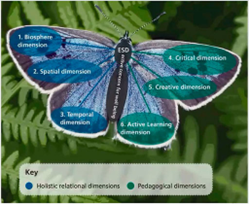
Figure 1: Visualisation of Warwick's butterfly model.
Author: Clare Lee, Open University, Senior Lecturer Education, WELS school of ECYS.
Connecting with sustainability competencies in a level 3 religious studies module.
DA332 is a level 3 module worth 60 credits. It uses historical and modern examples to explore how religion influences knowledge, experience of environment, and sustainability. The module looks at how religion may empower or hinder active participation in environmental or sustainability issues. It connects with the UN Sustainable Development Goals and UNESCO sustainability competencies. Students regularly reflect on their development of these competencies during the module. For example: in one task students learn how to explain complex issues to non-experts and add reflections about their skills development in reflective journal they are supported to update throughout the module. The journal can be kept in a format of their choice e.g. podcast, vlog, or blog. Students can also choose between these formats to present their assignments. They can use Open University tools or their own devices to record MP3 or MP4 files.
Author: The Open University's Responsible Futures Audit 2024Diagramming for sustainability
T220 Environmental Management: Systems and Sustainability is a level 2 module worth 30 credits. The module consolidates, challenges and extends students’ understanding and practices relating to management and sustainability of human-environment systems with a critical view of the SDGs and sustainability concepts and practices in a range of contexts. One of the module’s core innovations is linking environmental management and sustainability ideas and approaches with systems concepts and practical techniques including diagramming. For example, in ‘Block 4: Environmental management in communities’, students engage with several case studies that relate to communities in Guyana and the UK. Students are supported to consider the complexities of each case study through diagramming (e.g. using a spray diagram). This structured approach supports students to build their knowledge, skills and competencies which they then apply in a collaborative teamwork task. The process of collaborating to investigate and propose responses and outcomes for a contemporary environmental situation enables students to explore and learn from a range of perspectives. The diagramming aspects are facilitated using the Moodle VLE tool ‘Open Studio’ where students build a portfolio of material for use in assessments. This is also used as a resource for students to reflect on their skills development as their learning progresses.
Author: Kevin Collins, Open University, Senior Lecturer Engineering and Innovation.
Embedding key sustainability competencies into core physics curriculum
A team of academic and non-academic staff collaborated on a scholarship project which explored how to embed key sustainability competencies in the core physics curriculum. Module content was audited by paid student interns and associate lecturers who identified connections between the content and sustainability competencies.
A cross functional team met regularly to design assessment tasks to embed across three core physics modules. These tasks focused on encouraging students to reflect on the sustainability competencies that they experienced in their learning. Students were supported to visualise the overlap between institutional employability frameworks and sustainability competencies to help them recognise their relevance.
Physics is a subject that could be deemed challenging to embed sustainability in due to the mathematical and theoretical focus of much of the curriculum, particularly at higher levels. The hope is that if the pilot is successful within physics, then other subject areas could replicate the approach, particularly the reflective assessment questions.
Project outcomes and practical recommendations are available in this blog.
Author: Martin Braun, Open University, Staff Tutor in Physical Sciences
Environmental humanities in MA Classical Studies
Block 4 of A868 MA Classical Studies Part 1 is titled ‘People in the World’ and focuses on the world around ancient people and their relationships with it. The Block is designed to get students working with theoretical approaches to the study of antiquity, as well as to consider how Classical Studies changes as the modern world changes. Units explore various facets of the environmental humanities, including environmental archaeology, ecocriticism, posthumanism, and new animism; students consider the historical context in which these approaches arose. Students learn that environmental perspectives do not apply solely in modern contexts: for example, they consider how attitudes towards the environment such as a division between ‘nature’ and ‘culture’ emerge in early Greek sources, and study how Roman settlements affected and were affected by their local environments. The scholarship with which students engage goes beyond the traditional bounds of Classical Studies to consider ideas from Religious Studies and indigenous thought. As a whole, the Block encourages students to view Classical Studies in a wider context and as directly engaged with modern issues of sustainability and environmentalism. As a result, a notable number of students have chosen to focus on environmental approaches in their MA research.
Author: Christine Plastow, Open University, Senior Lecturer in Classical Studies.
Using Chemistry home experiments to connect with sustainability
S248 is a level 2 Chemistry module. Sustainability is embedded within the module's learning outcomes. Relevant UN sustainable Development goals are discussed and signposted to within module content. Students are supported to consider sustainability from a practical perspective through home experiments.
One experiment is linked to producing more sustainable polymers (plastics) from renewable sources (UNSDG 12 Responsible consumption & production) and a second explores using adsorbents to remove pollutants from water (SDG 6 Clean water and sanitation). Students compare their results with their peers using an online forum and discuss the relevancy of criteria for chemists developing new materials.
Author: The Open University's Responsible Futures Audit 2024
The value of reflection as an Environmental Manager
T330 is a level 3 Engineering module that first ran in Autumn 2025. It explores complex and often emotive environmental challenges such as climate change, biodiversity, and disaster risk reduction.
Environmental managers need to understand different viewpoints and evidence when making decisions. They also need to recognise their own connection to the people and places they work with and how it may impact their decisions.
The module’s first assessment is a short reflective piece which draws on activities students have completed in the module’s 2nd block. The block content and activities guide students to consider how Environmental managers might think and feel as a human, citizen and manager.
Students are introduced to the UNESCO sustainability competencies framework and as part of the assessment asked to share which competency areas they are most interested in developing and why. Students explore concepts of global citizenship, behaviour change, immunity to change, systems thinking and eco-anxiety. Regular reflective activities and discussions with peers and tutors help build student confidence and skills for the assessment. They are guided to capture reflections e.g. about how their personal environmental values shape their career choices and actions, in an e-journal. The reflective journal entries contribute to the assessment.
Author: The Open University's Responsible Futures Audit 2024