3. Energy Use and Smart Devices
| Site: | OpenLearn Create |
| Course: | Get Set for Success: Digital Energy Basics |
| Book: | 3. Energy Use and Smart Devices |
| Printed by: | Guest user |
| Date: | Tuesday, 22 September 2026, 1:41 PM |
1. Welcome
Welcome to Week Three! Now that you’ve had the opportunity to take a closer look at the types of skills that are needed for different roles in the digital energy transition, we take a closer look at:
- Energy production and consumption.
- What smart devices are and how they support our understanding of how and when we consume energy.
- How a better understanding of our energy can help save money and reduce our environmental impact.
Learning Outcomes
After studying this week of the course, you should be able to:
- Demonstrate understanding of energy production and consumption.
- Name the main features of a smart device.
- Better understand your own energy consumption at home and how different smart devices and digital energy technologies can help you make more informed choices about your energy use.
- Appreciate the role smart meters play in the digital energy transition.
- Understand the differences between digitisation and digitalisation.
2. Introduction
Do you know where the energy you use comes from? Understanding which sources of energy are used to produce the things we need and provide energy in the home or at work can help us to better understand the impact of the choices we make. Digital technologies support our understanding through providing detailed real-time insights into how and when we use energy.
This week we take a broader look at how we use energy: at the European level, country or regional level, and within our own households. Europe’s energy sector has undergone profound changes following the Russia’s invasion of Ukraine. Since the war triggered an energy crisis that sent prices to record highs, European countries have put energy security at the top of their political agendas, dramatically reducing fuel imports from Russia on which they had previously relied.
European countries have substantially raised their clean energy ambitions, aiming to further diversify their energy mixes while making progress towards climate targets. Energy security, which ensures that we have a diverse range of energy sources, whilst reducing our reliance on oil, gas and coal, is therefore a critical part of the digital energy transition.
The second half of this week takes a deeper look at what the digitalisation of energy means for you, what digital technologies are available to help you better understand your energy consumption, make efficiencies and potentially save money. We focus particularly on the difference between digital and smart meters and explore some of the benefits and challenges. To conclude, we look at the role smart devices and appliances, and in particular smart meters, play within the digital energy transition in Europe.
3. Energy Creation and Consumption
We use energy in different ways. We use energy to heat or cool buildings and to run lights, devices, and appliances. We use energy to power vehicles such as cars, buses, boats or planes. Machines and factories also use energy. However, have you ever thought about where your energy comes from and what types of energy were used to produce the energy or objects that you use? Let’s look at the journey from energy creation to consumption in more depth.
Fossil fuels such as coal, oil and natural gas can be burned to generate electricity and heat. Renewable sources such as sunlight and wind can also be used to produce electricity. These energy sources are called primary energy, as they don’t need to be modified or processed before they are used in energy production.
Electricity is called secondary energy as it has been produced from primary energy sources. Primary energy sources, such as fossil fuels, are often transformed into more useful or practical forms before being used. For example, crude oil is refined into many different types of fuels and products.
Final energy is how energy is made available to us, as consumers, so that we can make use of it. For example, electricity is provided directly to our home from a power plant via a grid system.
Useful energy is the term used to describe the intended outcome of our energy use. For example, using energy sources such as electricity to power appliances or produce heat for cooking or warmth.
To help illustrate the journey from primary energy to useful energy, let’s take a closer look at some examples of how we produce and consume energy in the following diagram.
Diagram One: The four ways of measuring energy.
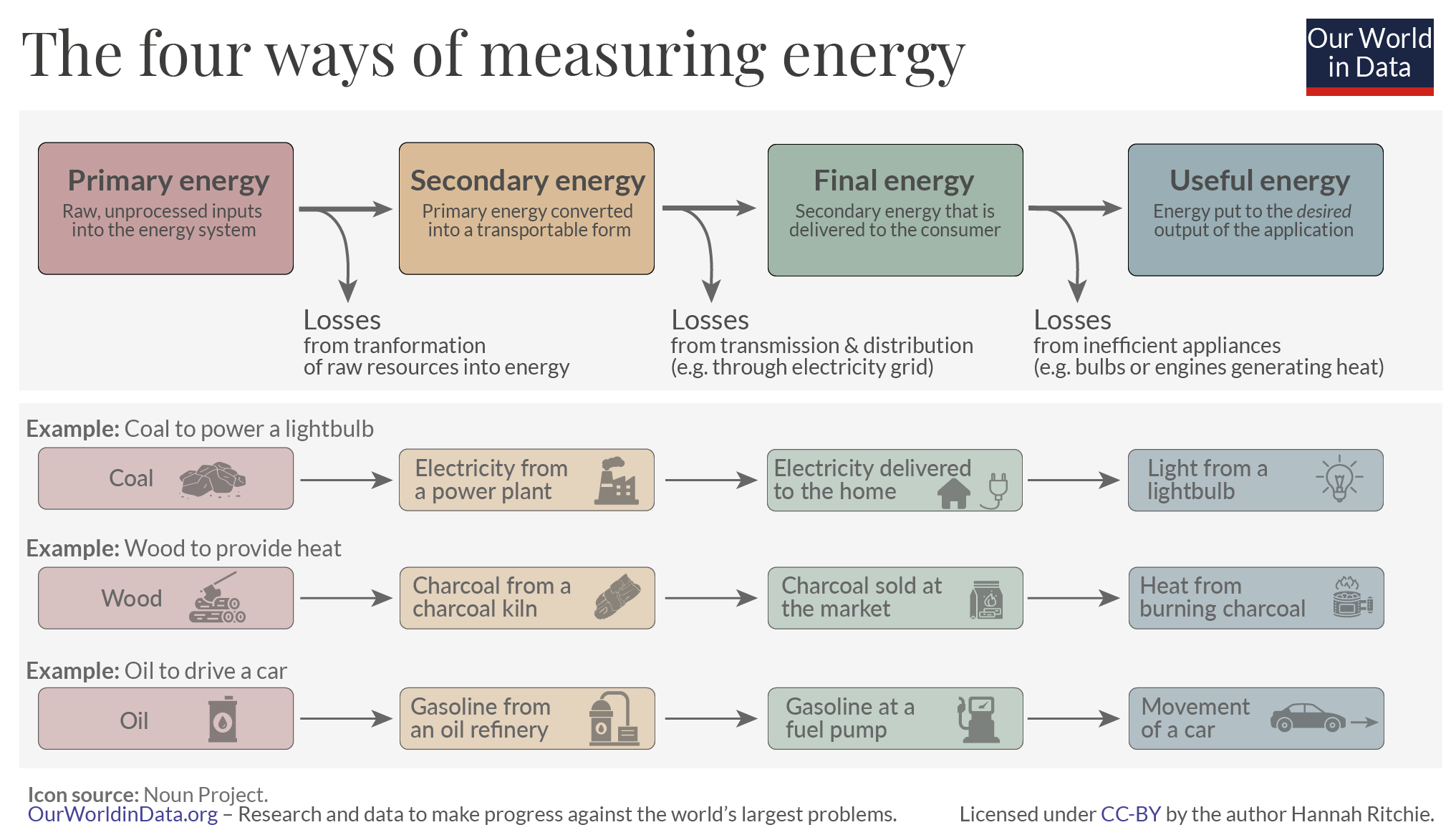
As the above diagram shows, at each stage energy is lost as it is transformed, transported or used. We can not only make decisions about where our final energy comes from (e.g. choose clean energy sources, where possible) but also prevent energy being wasted through how we consume it.
For example, we might be able to use energy efficient lightbulbs, or energy saving devices to reduce our energy consumption at home or work. If we use a car, we can reduce our fuel consumption through changing the way we drive or decluttering our car boot, so we are not carrying so much weight.
4. A closer look at how we use energy at home
Look at this Eurostat graphic.
Figure One: Energy consumption in EU households, 2023.
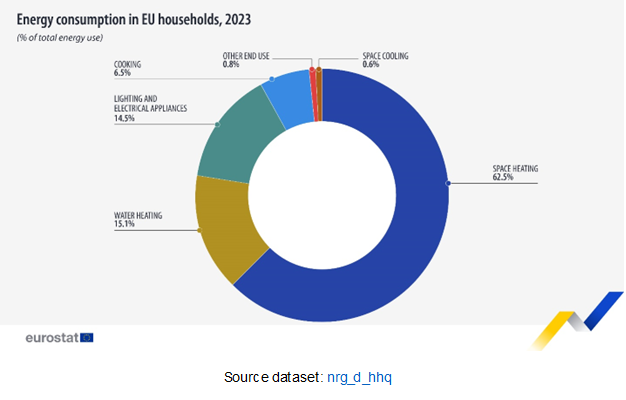
It outlines which activities used energy in homes across the European Union during 2023. Does anything about these figures surprise you? How do you think this compares with your individual or household energy consumption?
Across Europe we also have different energy demands and needs, depending on where we live. Factors such as economy, geography and history can greatly impact a country’s energy needs and which energy sources it relies on to meet those needs – such as fuelling automobiles, heating or cooling homes or running factories.
If you live in Northern Europe where the weather is colder you may consume more energy for space heating, for example, compared with homes in Southern European countries where the weather is often warmer. Whilst space cooling represented only 0.6% of household energy consumption in 2023, keeping homes cool is a growing challenge as average summer temperatures rise. Keeping homes cool creates new peaks in electricity consumption, making flexibility, efficient appliances and smart control systems key.
Looking at individual country energy consumption can give us a very different picture of energy use.
If you are interested in exploring different country’s energy patterns, and understanding more about where you live, you can use IEA tools to compare where you live with other countries across Europe.
5. How to save energy
When we consider how to reduce our energy consumption, we also need to consider how we can use energy more efficiently.
Some ideas for how to save energy are shown in this International Energy Agency (IEA) graphic. It also has an accompanying article Things you can do to use less energy and cut your bills.
Figure Two: 7 ways to save energy.
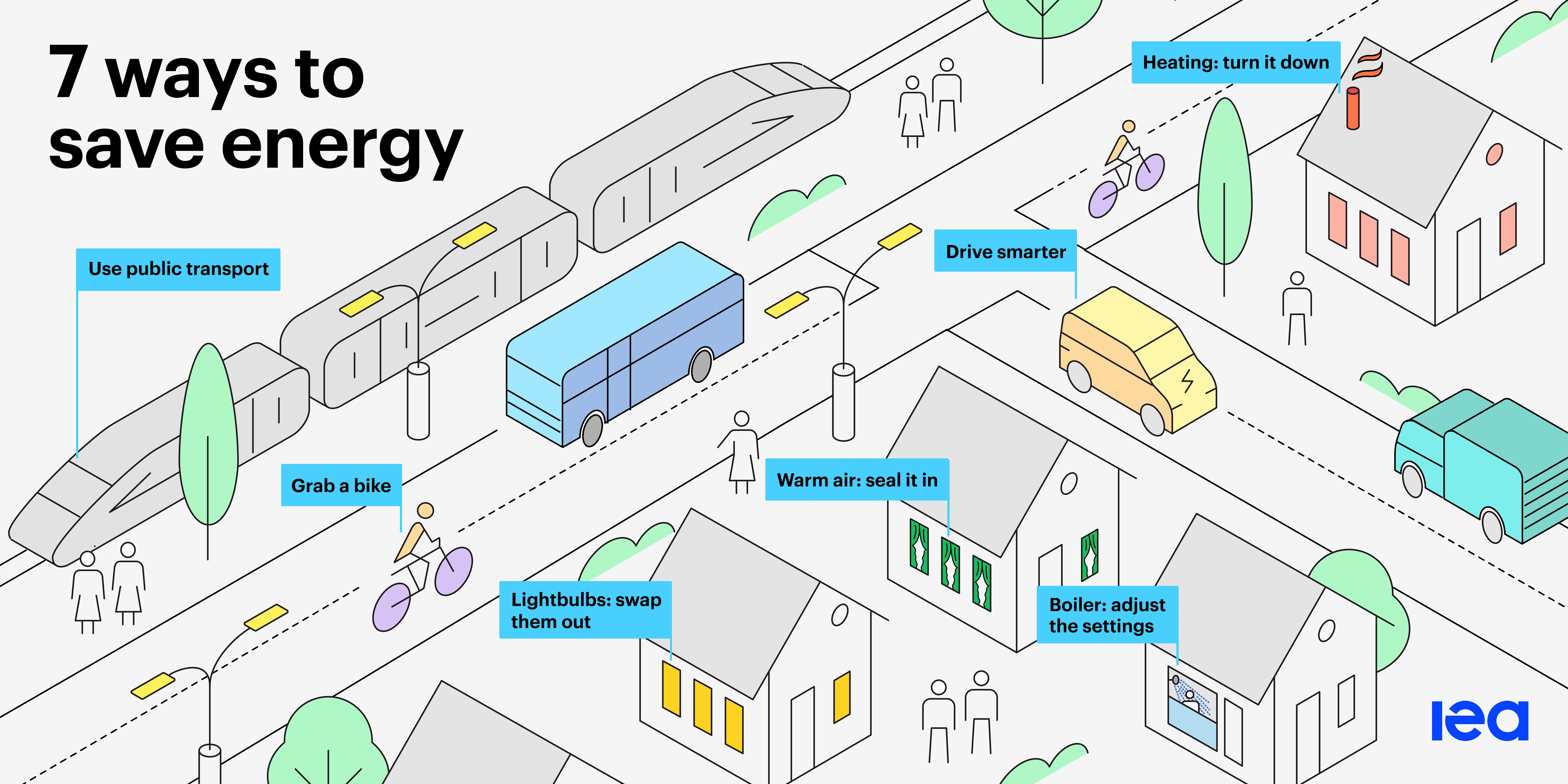
We could save energy by:
Reducing waste
We can reduce our energy consumption in a variety of ways including insulating roofs or switching off appliances when not in use.
We can also reduce our consumption of energy from fossil fuels by choosing energy from clean technologies. For more advice on how to save energy, you might want to explore the Energy Saving Trust (UK) article Quick Tips to Save Energy. Although produced for the UK context there are useful tips that can make a real difference to your energy consumption, wherever you’re based. If we all chose to make small changes, these could have a big impact!
Changing our behaviour
When we understand how we use energy around the home, we can choose to use it more efficiently. For example, by only boiling the amount of water you need for a hot drink or deciding to walk or cycle to work rather than drive a car. A better understanding of how and when we use energy enables us to make changes and save energy and money, without reducing our comfort.
Making our appliances more efficient
For example, we may be able to install a heat pump, install energy saving lightbulbs or devices, update our heating system or use low-temperature heating such as underfloor heating systems.
In whatever way we choose to save energy, we should also be aware of the wider impact of our behaviour. Using less energy means the grid’s capacity is increased. If we’re a prosumer, energy we don’t need is sent to the grid for others to use. If more of us choose active forms of travel (e.g. walking or cycling) or public transport, we reduce emissions overall and make our cities and towns more pleasant to be in. Little changes can really add up to make significant overall impacts.
Finally, whilst we may choose to use energy more efficiently, switch to energy from clean technologies or make use of energy saving devices, it’s important that we don’t unintentionally change our behaviour to negate any benefits and therefore increase our overall energy consumption!
We need to remain vigilant for what is described as the rebound effect. For example, you may save money through reducing your use of electricity by using energy efficient devices and lightbulbs. However, your overall energy consumption may remain the same or increase as you now no longer routinely switch off lights or appliances when they are not needed. Although you may still be saving money, any actual energy saving is effectively cancelled out.
Activity: The Rebound Effect (10 minutes)
You’ve just installed energy efficient LED lightbulbs throughout your home. Describe a scenario where the “rebound effect” might occur, potentially offsetting your energy savings. What actions could you take to avoid this, without reducing your comfort?
Write down your thoughts. If you are working through the course with others you may like to discuss your scenario and possible actions together.
6. Digital Meter or Smart Meter?
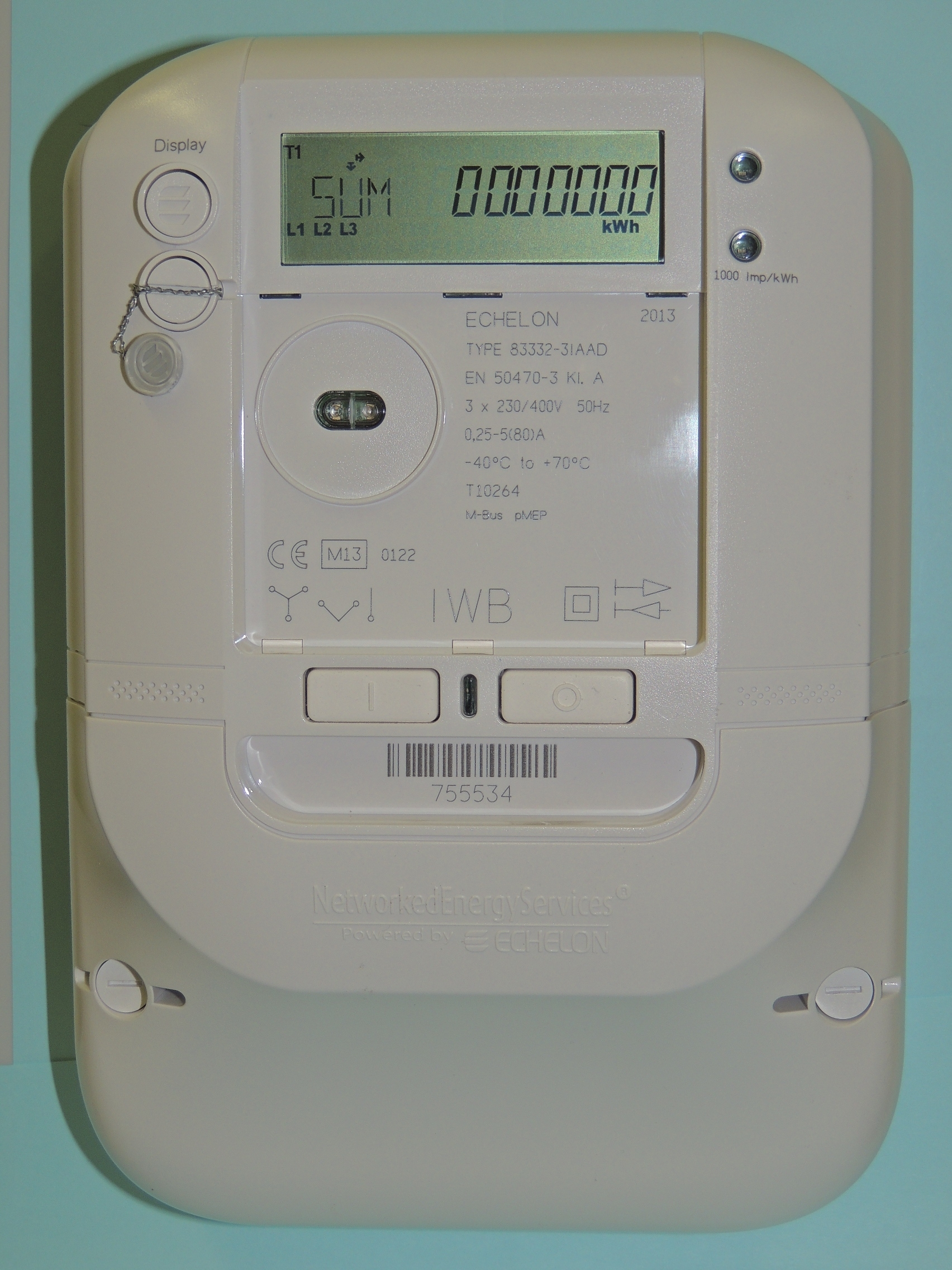
Now that we’ve considered different ways we can save energy, let’s take a closer look at how we monitor and record our energy consumption at home by comparing how a digital meter and smart meter work. Digital meters and smart meters have different purposes and functionality.
You might have a digital meter installed, which measures and displays your use of utilities such as electricity, water or gas. A digital meter is an example of digitisation. Some digital meters can store and transmit data for monitoring purposes, for example to transmit data to utility companies or a central display within the home.
Alternatively, you might have – or be considering installing - a smart meter which also records and displays your use of utilities, but also includes advanced features such as remote control, automation and connectivity features.
What makes this type of meter smart?
- A smart meter can receive and send data to the utility provider, via wireless networks or power line communication. This means that a smart meter can provide remote readings, conduct software updates etc. without needing someone from the utility company to visit your home.
- Smart meters have cyber security measures in place to protect the data they transmit and receive, ensuring your privacy and system integrity.
- You can see real-time information about your energy consumption and detailed reports on how you are using energy. A better understanding of your own energy consumption enables you to make more informed decisions about where efficiency savings could be made.
- A smart meter can also enable you to utilise multiple tariffs, so you can be charged different rates at different times of the day or year. This can help support the use of off-peak energy, when there is less demand.
- Smart meters also have further benefits for utility providers as each smart meter is connected to what is called a smart distribution grid. The information supplied by smart meters from homes and businesses enables a better understanding of how utilities are being used and supports demand response. Power outages can also be easily identified and fixed through constant monitoring of the electricity grid.
Smart appliances such as smart meters are an example of the digitalisation of energy.
7. Features of smart appliances or smart devices
In addition to smart meters, there are many other different types of smart appliances that you could use in your home or at work. Let’s take a closer look at four examples. These four examples have been selected as they relate to activities in the home where we often use the most energy and therefore could potentially make the most savings.
- Smart Hot Water Cylinders: Heating water and storing it in hot water cylinders uses a lot of energy. Smart hot water cylinders adjust to only heat the amount of water you need. Read more about Smart Hot Water Cylinders.
- Smart Electric Vehicle (EV) Charging: Charging your smart electric vehicle at times when energy is cheaper can mean substantial savings than compared with charging your car at other times. Read more in the Energy Saving Trust’s article Smart charging for electric vehicles.
- Smart Thermostats: These devices can learn about your heating and cooling preferences and adjust the temperature automatically. Smart thermostats can be controlled remotely and may help save on energy bills. Find out more about heating in this article Heating Controls by the Energy Saving Trust.
- Smart Lighting: LED bulbs and lighting systems that can be controlled via smartphone apps or voice commands, allowing you to change the colour and intensity of the light, and schedule when lights turn on and off.
As highlighted in these examples, smart appliances offer advanced features, typically enabled by internet connectivity and sometimes artificial intelligence (AI). In comparison with digital appliances, smart appliances can be controlled remotely (for example by using your smartphone) and you can also automate tasks.
Smart appliances can also interact with you in a more intuitive way, for example by learning from how you use a particular device or by sending reminders or alerts directly to your smartphone.
Video: Energy Use and Smart Devices (6:40 minutes)
Download the video transcript.
This video highlights the role of digital meters in the energy transition. It shows how real-time consumption insights, powered by energy management systems, enable households and businesses reduce costs, spread peak power demand, and benefit from dynamic tariffs - especially with the new capacity tariff of Belgium. Smart control of devices like heat pumps and electric vehicles maintain comfort while preventing grid overload. It explores how the active consumer can be seen as the key to affordable renewable energy integration and optimal grid utilisation.
8. Smart meters in Europe
To support the use of smart meters, as one smart appliance can also be connected and integrated with other smart devices, we can also connect multiple smart appliances to create what is known as a smart home. Smart meters have an important role in the digital energy transition and potentially provide a range of benefits to both energy providers and consumers. To support the use of smart meters, increase efficiencies and enable the seamless integration of energy from clean technologies such as solar panels or wind turbines, we also need the appropriate infrastructure or a smart grid or distribution system in place.
This requires commitment, policy and funding at the national and regional levels. As part of its commitment to the digital energy transition, the European Commission aimed to have 80% of electricity consumers using smart meters by 2020. European countries such as Sweden and Spain have already achieved 100% smart meter installation, although uptake varies widely across the bloc.
You can find out more about progress to date, and the approach of different countries, in this Power Technology article EU smart meter optimism dampened by slow uptake. As this article notes, aside from the appetite of individual countries to champion their installation and despite Europe-wide legislation to address concerns, challenges around data privacy, the potential of digital appliances to be hacked and digital appliance installation and longevity remain.
You can find out more about the importance of infrastructure, and the work required across the bloc, in this article from The European Commission Smart grids and meters. You can also find out more about policies which are part of the European Green Deal and also support the move away from fossil fuels in this European Council article on Fit for 55.
Further Reflection (5 minutes)
Week Three of the course shared some ideas to save energy and money both with and without the use of digital technologies. Take a moment to reflect on what action you might like to take next. Did any of the examples or suggested actions particularly resonate with you? What do you plan to do today, next week and in the next six months on your energy journey? Are there any other energy saving ideas that you can think of?
Write down your ideas. You might want to timeline, prioritise and plan potential actions you can take. If you are working through the course with others you may like to discuss your ideas, plans and potential actions together.
9. Conclusion
Energy production and consumption is a complex picture. It is impacted by a variety of factors including geography, history and economy. The decisions we make about how we use energy in our own homes also have a key role to play in the digital energy transition and the increased use of clean technologies.
We can be more conscious of our energy use by reducing our use of energy, making different choices (for example by switching to clean technologies) and better manging our energy use. Digital technologies support these activities whilst increasing energy security, comfort, protecting the environment and potentially saving money. Although challenges remain, smart devices and appliances, such as smart meters, have a key role to play in the digital energy transition.
Whilst smart meter roll-out in Europe continues, and different countries take different approaches to supporting households, a better understanding of our own energy consumption enables us to make changes and potentially save energy and money. Smart technologies also support the integration of clean technologies and our move away from fossil fuels.
10. Further Resources
- The short video Energy Slaves explains how much energy is needed for different activities in the home and introduces the openly licensed course from TU Delft in the Netherlands Zero Energy Design: An approach to make your building sustainable.
- For a more in-depth look at energy use in the European Union, try this Eurostat course Shedding light on energy in the EU: A guided tour of energy statistics.
- If you would like to, you can experiment with this IEA Energy Mix tool to see how much energy we use for different purposes.
- Further develop your skills to better understand information about energy consumption and production in this Every1 course Energy Information and Critical Literacy.
- Read more about the European Commission’s plans for energy digitalisation in Digitalisation of the energy system.
- Look at different countries smart meter take-up in Statista’s Share of household consumers equipped with a smart meter in Europe in 2023
- Read the EU Science Hub’s Saving the environment and shifting to renewables drives new energy technologies development.
Go to 4) A Deeper Look at Electricity Markets.