Applicable Legislation
| Site: | OpenLearn Create |
| Course: | Clearing the Air: A PHI’s Guide to Ice Arena Air Quality Inspections |
| Book: | Applicable Legislation |
| Printed by: | Guest user |
| Date: | Tuesday, 6 October 2026, 1:06 PM |
Description
Ice arena inspections are guided by a combination of regulations, and local policies that support public health protection. Unlike some settings, there is no single, ice arena–specific regulation governing air quality; instead, Public Health Inspectors must apply a range of legislative tools depending on the situation and level of risk.
The following section outlines the key pieces of legislation that provide authority for assessment, compliance, and enforcement actions when air quality concerns are identified in ice arenas.
1. HEALTH PROTECTION AND PROMOTION ACT
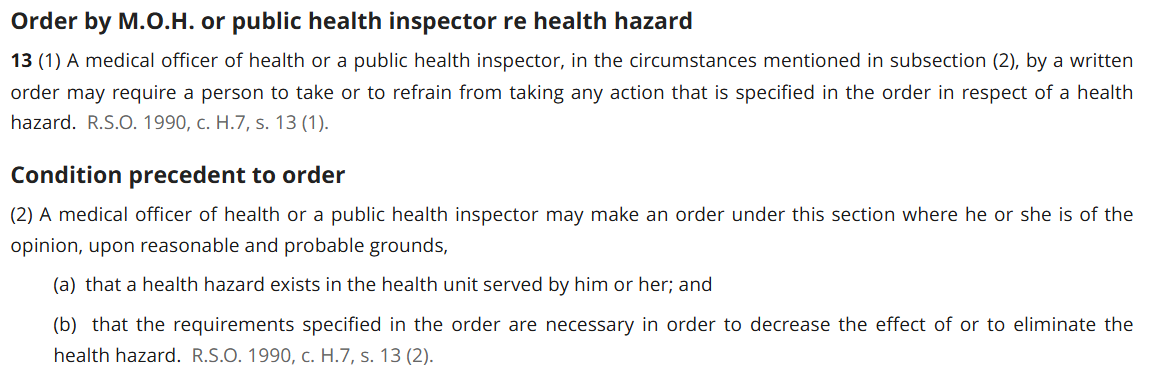
Public health units must rely on the Health Protection and Promotion Act for enforcement. Under section 13, a medical officer of health or public health inspector may issue a closure order if air pollution levels pose an immediate health hazard.
Additionally, section 11 mandates public health units to notify relevant ministries, such as the Ministry of Labour, Immigration, Training and Skills Development, in cases involving occupational or environmental health risks.

2. OCCUPIERS' LIABILITY ACT
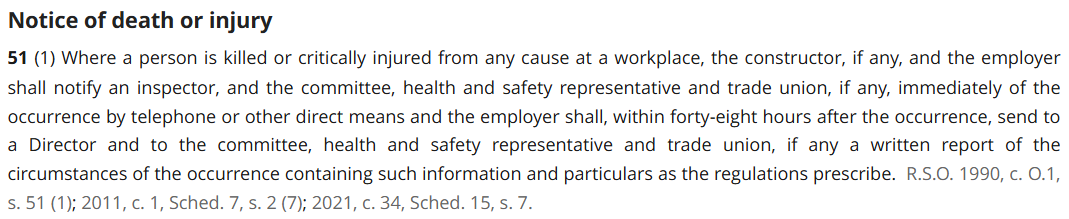
Under the Occupiers' Liability Act, ice arena staff are responsible for ensuring a safe environment for patrons. Failing to maintain acceptable indoor air quality levels could lead to legal action. This act also overlaps with the Occupational Health and Safety Act, which mandates reporting serious incidents to the Ministry of Labour, Immigration, Training, and Skills Development.

3. TECHNICAL STANDARDS AND SAFETY AUTHORITY
Many ice arenas use industrial refrigeration plants registered with the Technical Standards and Safety Authority. Facilities using refrigeration equipment exceeding 200 horsepower must employ TSSA-certified operators. However, TSSA regulations focus on refrigeration rooms and do not cover overall facility air quality.
Ice arena refrigeration mechanical rooms are considered sealed areas that should not allow toxic chemicals to leach outside the room. Ice arena operators who use ammonia as the primary refrigerant are required to have and maintain ammonia sensors with audible and visible alarms.
Public health inspectors should not enter refrigeration mechanical rooms, but should notify supervisors if they suspect a hazard.
4. OCCUPATIONAL HEALTH AND SAFETY ACT
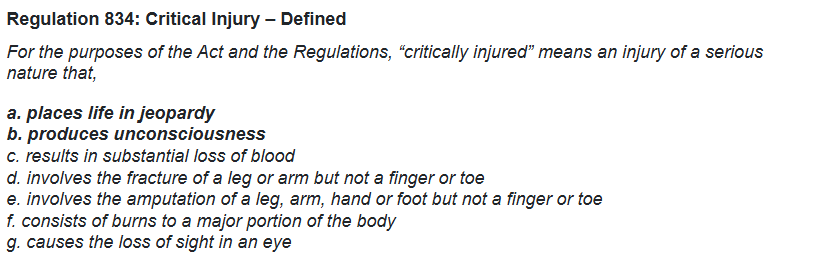
The Occupational Health and Safety Act sets workplace safety standards for ice arena employees. While the Act does not mandate facility staffing, it ensures that any hired workers are protected. The right to know, the right to participate, and the right to refuse unsafe work are fundamental under the OSHA. If an indoor air quality incident affects workers or patrons, facility supervisors must report it to the Ministry of Labour, Immigration, Training, and Skills Development.
5. PUBLIC HEALTH INSPECTOR SAFETY
As guests in ice arenas, public health inspectors must comply with the facility's internal health and safety policies and procedures.
This may include wearing CSA-approved safety shoes while conducting an inspection or wearing a CSA-approved helmet if walking onto the ice.
If at any point a public health inspector experiences symptoms of carbon monoxide or nitrogen dioxide exposure, such as dizziness, headaches, or difficulty breathing, they must exit immediately and inform their supervisor.
Staying up to date with WHMIS training is essential for ensuring safety during inspections.
6. CONCLUSION
Understanding the applicable legislation governing indoor air quality in ice arenas is crucial for effective public health intervention. By leveraging existing laws and safety protocols, public health inspectors can help ensure a safer environment for athletes, spectators, and staff.
Let's move forward to the next module to explore the contributing factors associated with indoor air quality in ice arenas.