Lesson 1.3: Who Drives ‘Anti-Gender’ Politics?
| Site: | OpenLearn Create |
| Course: | Solidarity and Struggle: Resisting Anti-Gender Politics |
| Book: | Lesson 1.3: Who Drives ‘Anti-Gender’ Politics? |
| Printed by: | Guest user |
| Date: | Tuesday, 6 October 2026, 12:24 AM |
Description
When imagining 'anti-gender' politics, it is easy to picture only populist leaders or powerful churches. But the RESIST Project demonstrates that anti-gender mobilisation is neither uniform nor contained within the far right. It is a flexible, opportunistic coalition that crosses ideological, institutional, and national boundaries. These alliances adapt their framing – children, women’s safety, secularism, parental rights, national heritage – to local political opportunities.
1. Intro
 When imagining ‘anti-gender’ politics, it is easy to picture only populist leaders or powerful churches. But the RESIST Project demonstrates that ‘anti-gender’ mobilisation is neither uniform nor contained within the far right. It is a flexible, opportunistic coalition that crosses ideological, institutional, and national boundaries. These alliances adapt their framing ― children, women’s safety, secularism, parental rights, national heritage ― to local political opportunities ― to NGOs ― form ‘anti-gender’ coalitions.
2. Actors, Strategies, Impacts

A coalition of uneasy allies
Findings from RESIST reveal how ‘anti-gender’ coalitions function as strategic, shifting alliances. While actors may disagree on other political questions, they converge around opposition to gender equality, sexual and reproductive rights, and gender and sexual diversity, including abortion and trans rights.
| Examples include: | |
| ● Far-right parties and movements that link gender, sexuality, and reproductive rights to nationalist, anti-immigration, and anti-globalist agendas, framing ‘gender ideology’ as a civilisational threat and portraying abortion and gender equality policies as demographic or moral dangers. | ● Conservative religious institutions, including transnational Catholic, Orthodox, and Evangelical networks, that mobilise against feminism, LGBTIQ+ rights, and abortion in the name of the ‘natural family’ and moral order. |
| ● State-funded institutions and civic platforms that reframe anti-feminist, anti-abortion, and anti-trans positions as concerns about child protection, family policy, or cultural preservation. | ● Centrist and liberal politicians who adopt selective anti-gender or anti-abortion rhetoric to promote pronatalist, family-centred, or assimilationist goals, often appealing to conservative constituencies while distancing themselves from overt extremism. |
| ● So-called ‘gender-critical’ or trans-exclusionary radical feminists (TERFs) who claim to defend ‘women’s rights’ while aligning with anti-trans legislation and rhetoric, and at times indirectly reinforcing broader anti-gender equality agendas. | ● Sex-work-exclusionary feminists (SWERFs) who oppose sex work as, in their view (that is not supported in research), inherently exploitative, often overlapping with moral-conservative frames. |
| ● Homonationalist LGBTQ+ figures –for example, right-wing gay politicians or organisations –who use selective inclusion of cis, white, gay, lesbian, identities to legitimise nationalist ideas and/or Islamophobia. | |
Across Europe, these actors borrow from each other’s scripts: moral panic around ‘protecting children,’ ‘defending free speech,’ or ‘saving the family’ travels easily across languages and borders.

National variations
Anti-gender alliances adapt to local opportunity structures. Here are some examples:
- ● Hungary, Belarus: State-led anti-gender regimes institutionalise hostility toward feminism and LGBTQ+ rights through media control, education policy, and NGO repression.
- ● France: Right- and centre-right politicians weaponise laïcité (secularism) and ‘Republican universalism’ to attack intersectional and trans-inclusive feminism as divisive.
- ● United Kingdom: ’Gender-critical’ think tanks, commentators, and lobbyists have turned trans rights into a national culture war centred on ‘protecting women’ and ‘free speech.’
- ● Switzerland: Populist parties and civic groups frame Drag Story Hours and inclusive education as moral threats to children, linking them to ‘anti-woke’ discourse.
- ● Ireland: Small but vocal anti-gender actors use social-media echo chambers and US-linked networks to amplify fears about migration, sexuality, and gender identity.
- ● Greece: ‘Anti-gender’ cuts broadly across Orthodox Christian hegemony, elected representatives, governments instituting law and policy, far right political parties and associations, socially empowered men’s rights groups, the male-dominated Left, and trans- and lesbian-exclusionary reactionary feminism.
Despite differences, they draw on shared affective frames: innocence (children), purity (nation), nature (‘sex,’ family), divine order, and common sense (neutrality).
3. Feminism as a Trojan Horse
 Despite differences, 'anti-gender' mobilisations draw on shared affective frames: innocence (children), purity (nation), nature (‘sex,’ family), divine order, and common sense (neutrality).
Trans-exclusionary & Sex work-exclusionary Networks
One of the most striking findings of the RESIST and other research is how some actors weaponise feminist vocabulary:
- claiming to defend ‘women’s safety’ while opposing trans rights
- appealing to liberal values to justify exclusion
- erasing the intersectional experiences of racialised, disabled, or migrant women
As Ahmed (2021) notes, anti-trans feminism extends the reach of the right by giving moral credibility to exclusionary agendas.
How this works:
- Through feminist vocabulary – giving moral legitimacy to anti-trans or anti-sex-work policies.
- By bridging ideological divides – their narratives circulate in centrist and liberal media , blurring lines between left and right.
- By undermining intersectionality – for example, by defining womanhood in cis, white, able-bodied, heteronormative, and middle-class terms, while reframing opposition to gender and sexual equality as matters of ‘free speech,’ ‘biological reality,’ or ‘men’s rights’.
In doing so, it allows anti-gender politics to penetrate liberal spaces under the guise of protectionism and ‘common sense.’ Structural foundations 'anti-gender' discourse draws power from wider structural forces. Understanding these helps you recognise how anti-gender discourse draws legitimacy from broader crises.

Structural Manifestations
'Anti-gender' discourse draws power from wider structural forces. Understanding these helps you recognise how anti-gender discourse draws legitimacy from broader crises.
|
Structural factor |
Manifestation |
|
Nationalism & sovereignty |
framing gender equality as foreign interference |
|
Colonial legacies & racism |
narratives of laïcité policing Muslim communities, that is, the use of secularism as a framework to regulate, restrict, or discipline the public expression of Muslim religious, cultural, and gendered practices. |
|
Post-socialist transitions |
suspicion of ‘Western’ agendas in CEE states |
|
Demography & migration |
linking family values to anti-migrant policy |
|
Neoliberal austerity |
using moral panic to distract from economic decline |
These structures shape why certain actors and narratives gain momentum.

Attacking rights, knowledge, and justice
The impacts documented by RESIST include systematic attacks on:
-
Reproductive rights – abortion and contraception restricted under ‘pro-life’ or ‘demographic crisis’ frames.
-
Trans rights and healthcare – especially targeting minors and gender-affirming care, justified as child protection.
-
Feminist and queer knowledge – gender studies and intersectional theory dismissed as ideology; universities defunded or censored.
-
Academic freedom – scholars face harassment, legal threats, and funding cuts.
-
Inclusive education – school curricula including reliable information about sexual and gender diversity are reframed as indoctrination.
-
LGBTIQ+ organisations and spaces – community centres and reproductive health services attacked as threats to morality.
4. Country Snapshots & Intersectional Impacts

Country Snapshots
|
Hungary: Silencing Knowledge and Civil Society |
 |
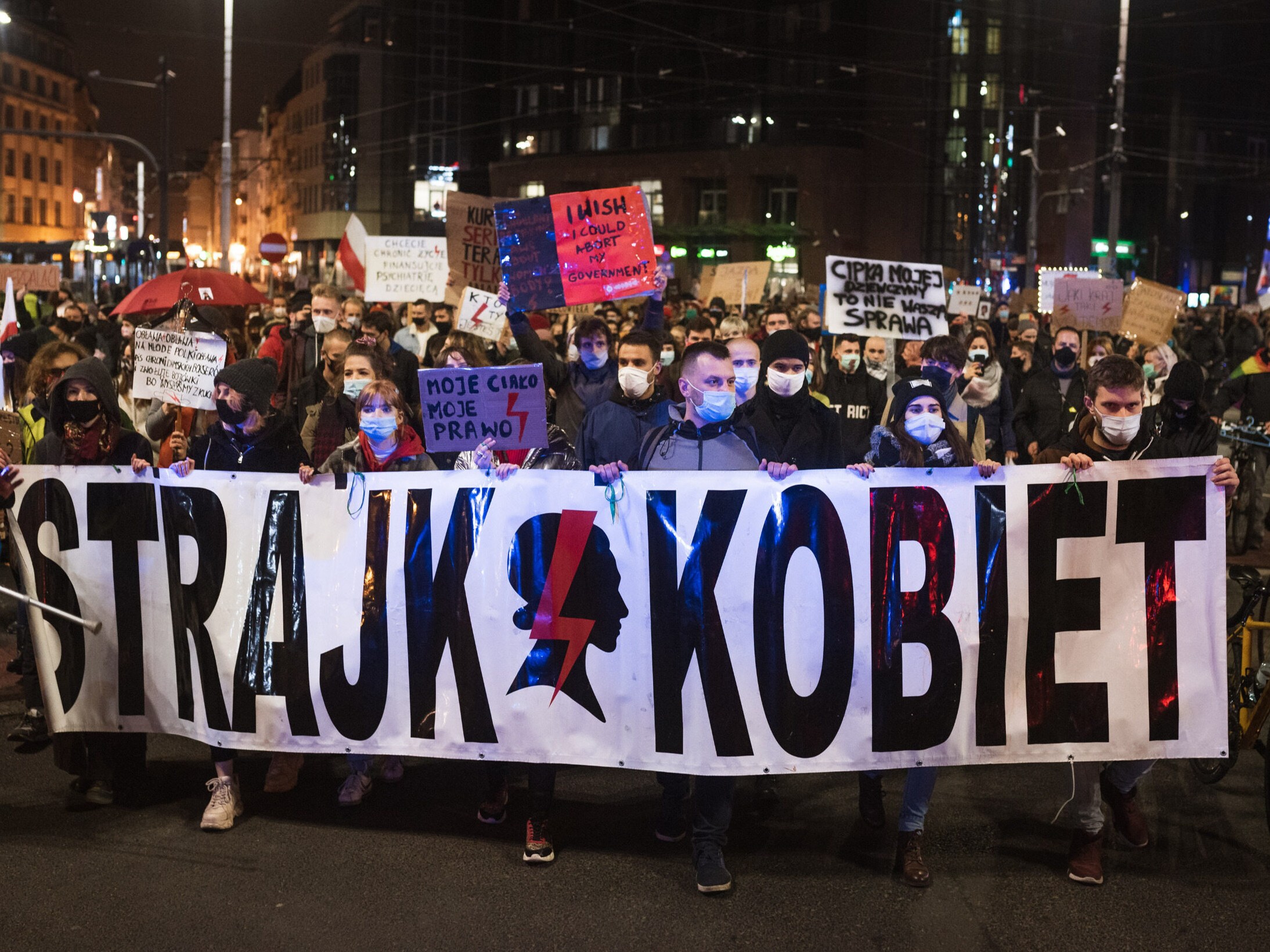 |
Poland: Rights Under Siege Under the Law and Justice (PiS) government, Poland saw abortion restrictions, ‘LGBT-free zones,’ and public vilification of feminists. Yet grassroots protests such as the Black Marches and Women’s Strikes built new solidarities, even as anti-trans tensions surfaced within feminism. |
| United Kingdom: Media Warfare and Culture Wars Gender-critical actors shape national culture wars, with disproportionate impacts on racialised and migrant trans people. |
 |
 |
Switzerland: ‘Child Protection’ as a Trojan Horse Far-right youth groups, politicians and mainstream media target queer events and sex education at schools, linking queer visibility to moral panic. |
| France: Laïcité and ‘Islamo-gauchisme’. Attacks on intersectional and decolonial scholarship are framed as defences of academic neutrality – reproducing anti-gender logics through civic universalism. |  |

Intersectional impacts
‘Anti-gender’ campaigns do not affect everyone equally. They compound existing hierarchies of race, class, citizenship, and ability. A trans migrant woman, a Black feminist scholar, or a disabled queer activist experience not a single attack but an overlapping structure of vulnerability. Intersectionality helps us see how anti-gender politics seeks to divide communities –pitting cis women against trans people or using selective LGBTQ+ inclusion to promote Islamophobia and racism (homonationalism).
Final reflection
‘Anti-gender’ politics is not a single ideology but a coalition of convenience –a dynamic network that thrives by linking fears about gender and sexuality to nationalism, racism, and control. These campaigns attack not only rights but also knowledge and imagination, seeking to determine whose realities count as legitimate. Resisting them demands clarity: clarity about who the actors are, how they operate, and why intersectional solidarity – across feminist, queer, migrant, and anti-racist struggles – remains their greatest threat.
5. EXTRA: Additional Podcast Resources
 The Right Kind of Family is a reportage podcast series by Europod and WePod Project that reveals the rise of the Political Network for Values, a global coalition of conservative and far-right organisations that are restricting sexual and reproductive health rights in Europe under the guise of promoting the ‘natural family.’ The series examines how these political entities implement strategies at various levels, institutionalising harmful policies that threaten women’s autonomy, restrict abortion access, attack transgender rights, and marginalise migrants.
The podcast is available in seven languages: English, French, German, Hungarian, Italian, Polish and Spanish. Some interesting episodes include those focused on ‘gender ideology’ and the Political Network for Values, a global network for political leaders who claim to defend ‘the values of life, family, and freedom’.
Episode 5: ’The Great Replacement Conspiracy’
When listening, please consider:
- What is the ‘Great Replacement’ theory?
- How do migration and ‘family’ discourses reinforce each other?
Episode 2: ’A Family-Friendly Country’
When listening, please consider:
- How do pronatalist policies advance anti-gender goals?
-
How are gender studies and queer visibility defunded or erased?