Lesson 3.1: Institutional and Everyday Impacts of ‘Anti-Gender’ Politics
| Site: | OpenLearn Create |
| Course: | Solidarity and Struggle: Resisting Anti-Gender Politics |
| Book: | Lesson 3.1: Institutional and Everyday Impacts of ‘Anti-Gender’ Politics |
| Printed by: | Guest user |
| Date: | Tuesday, 6 October 2026, 12:24 AM |
Description
This lesson traces how ‘anti-gender’ mobilisations move from rhetoric to structure. It examines how governments, media actors, and local institutions translate ideological hostility into concrete actions: restrictive laws, censorship, defunding, surveillance of civil society, policing of public spaces, and subtle forms of bureaucratic exclusion. You will see how these mechanisms interact, forming an infrastructure of discrimination that affects everyday life.
1. Intro
2. Policy and legal rollbacks
 Legal restrictions are among the most visible expressions of ‘anti-gender’ politics. Governments often frame them as defending ‘children’, ‘the family’, or ‘national values’, while in practice they curtail bodily autonomy and freedom of expression.
Hungary
Since 2018, a series of laws has systematically eroded gender and sexual rights.
- Gender-studies programmes were banned in universities in 2018 and
- legal gender recognition for trans people was abolished in 2020.
- The 2021 ‘Child Protection Law’ prohibits the depiction of LGBTIQ+ people in schools, advertising, and children’s media.
The packaging of books with queer content in plastic foil continues in 2025 (in many bookstores, selling books with queer content has been prohibited), signalling that censorship has become a routinised administrative act rather than an exceptional measure.
These laws transform moral panic into a state-driven system of ideological control.
France
In France, ‘anti-gender’ rhetoric often manifests as debates over ‘parental rights’. Far-right networks mobilise against sex education, inclusive curricula, and what they call ‘gender ideology in schools’. As participants in the RESIST France case study noted (France Report, p. 17):
“Vigilant Parents—a conservative and ‘anti-gender’ collective—infiltrate parents’ representatives’ elections and actively lobby at the departmental level to disrupt gender education”
‘Anti-gender’ discourse also overlaps with accusations of ‘Islamo-gauchisme’ (‘Islamo-leftism’), which link gender equality to race and religion, portraying intersectional and postcolonial scholarship as threats to republican universalism. This illustrates how laïcité and colonial legacies can be mobilised to delegitimise feminist and anti-racist analysis.
|
Watch: France 24 France’s “parental rights” backlash: gender, education and the far right (2024) This example illustrates how ‘anti-gender’ moral panic becomes institutional through parental-rights discourse. |
Germany
In Germany, backlash increasingly manifests through
- education censorship and
- political infiltration.
Teachers and educators describe pressure to ‘avoid ideological content’ when discussing gender or migration. Far-right parties, especially the AfD, have pushed for bans on inclusive language and ‘gender ideology’ in curricula, framing equality as indoctrination. Several Länder (federal states) have debated ‘neutrality’ laws that could silence teachers addressing gender diversity.
Simultaneously, the AfD’s infiltration of school boards and education committees extends ‘anti-gender’ ideology into policymaking. This is a form of institutional capture that normalises exclusionary discourse within democratic institutions. Several participants from Germany reported how they are concerned that the AfD systematically uses parliamentary
According to those participants who work in this field, such parliamentary inquiries have the effect of debilitating the work of political and civil society education initiatives. GERFG1.4, (Germany Listen Report, pp. 13-14):
“(Th)is debilitation of work processes, the fact that we increasingly have to hide things that we used to be open about, just to avoid accusations and or potential consequences.”
2.1. Policy & legal rollbacks - more examples

Belarus
Under Alexander Lukashenko’s regime, ‘anti-gender’ repression is tightly bound to authoritarian governance. A draft law seeks to ban the ‘propaganda of non-normative sexualities and gender identities,’ and recent amendments to the Criminal Code redefine pornography to include depictions of homosexuality and transgender identity. This makes any public representation of queer life potentially criminal (see: Belarus report).
Switzerland
While legislative rollback has been slower, ‘anti-gender’ rhetoric shapes local governance and public debate. Activists report that inclusive education projects are quietly defunded and diversity workshops cancelled after online harassment campaigns. This gradual normalisation creates a chilling effect without formal legal change.
In Switzerland, these dynamics particularly affect communities whose rights are less visible in public debate — such as intersex people. The struggle for intersex bodily autonomy has been ongoing for decades, yet remains politically marginal, making the impact of ‘anti-gender’ rhetoric especially heavy. Swiss institutions have been slow to implement human-rights recommendations (including those from the UN Committee on the Rights of the Child) urging a ban on non-consensual ‘normalising’ surgeries. When political hostility increases, these already fragile reform efforts stall.
This context is essential for understanding the discouragement expressed by activists like Urs Vanessa, who explained (Switzerland Report, p.12):
The prolonged struggle against pervasive hostility is frustrating, with progress often feeling slow and insignificant.
They expressed their feeling of discouragement when learning about parliament’s decision last winter to turn down a bill to better protect intersex kids from unconsented operations.
And if you’re active in the community and fight for rights, it’s an enormously long battle against windmills. Enormously frustrating. With very, very, very, very small steps forward.
This testimony illustrates two key dynamics of ‘anti-gender’ mobilisations in Switzerland:
- Silencing by delay. Instead of explicit bans or aggressive rhetoric, political institutions often rely on procedural delays, endless consultations, or claims that ‘more research is needed.’ This administrative inertia functions as a quieter form of ‘anti-gender’ resistance.
- Marginalisation through invisibility. Intersex rights are often omitted from mainstream equality discussions. When ‘anti-gender’ mobilisations rise, these omissions deepen, pushing intersex issues even further outside the political agenda.
Together, these factors show that Switzerland’s ‘anti-gender’ dynamic is less about headline-grabbing restrictions and more about structural stalling, quiet defunding, and the erosion of political will — mechanisms that can be just as harmful as explicit legislative attacks.
3. Attacks on civil society and knowledge
 ‘Anti-gender’ movements also undermine the legitimacy of feminist and queer expertise. NGOs, journalists, academics, and educators are framed as ‘ideological extremists’ or ‘foreign agents’. Funding cuts, harassment campaigns, and soft censorship undermine their work.
|
|
|
|
|
Malina recalled a situation in which a Plenipotentiary for Equal rights was dismissed overnight for announcing plans for the university to launch a support system for transgender persons. On a brighter side, participants recognised how EU policies on equality and diversity in education, research, and innovation are making a difference. Although these policies weren’t specifically designed to tackle ‘anti-gender’ movements, they act as important resources in the fight against transphobia, anti-feminism, xenophobia, and homophobia within academia. |
|

Switzerland 
A gender studies scholar noted avoiding terms like ‘patriarchy’ in public lectures becausethese words “are likely to be picked up on” and used against such individuals (SWIINT06, RESIST Switzerland Report, p. 44).
This results in ‘defensive professionalism’, which drains creativity and limits what can be researched or taught.
 Ireland
In Ireland, participants of the RESIST research also spoke of coordinated public attacks, online harassment, and funding pressure on feminist and queer organisations. These campaigns drain resources, disrupt services, and threaten staff safety, producing a destructive form of institutional attrition.
Organisations described being pushed into constant crisis management. As one participant put it:
|
Service providers reported that harassment and online disinformation often lead to funding cuts, as donors and partners distance themselves from ‘controversial’ work. The result is a self-reinforcing cycle: fewer resources to support vulnerable people, and greater exposure to public hostility.
The target community that we’re working with are affected by the rise in populism and […] attitudes and behaviour that’s homophobic and biphobic and transphobic and racist and sexist and all that kind of thing. It’s had quite a big impact naturally on the people that we’re working with […It is] very upsetting to see how much they’re struggling and how much they’re suffering. (Moninne, Ireland Report, p. 38) |
Many organisations now operate under heightened security precautions, removing social media pages, ceasing to advertise events, and avoiding public venues to reduce visibility. As documented in the RESIST Report on Ireland, some queer organisations have
stopped using social media to announce meetings or support groups. These would once have been public, but now people have to contact the organizers directly. People even choose venues without visibility from the street. (Ireland Report, p. 39) |
These changes severely limit access for those who most need support, especially young or closeted people seeking help for the first time. The report on Ireland concludes that “support and services are harder to access for those who need them most” (p. 40).
Such defensive strategies reflect how ‘anti-gender’ mobilisations constrain not only what can be said, but also what can safely be done. People’s everyday experiences show that ‘anti-gender’ undermines not only rights but also epistemic authority, making feminist and queer knowledge and advocacy itself suspect.
3.1. Attacks on civil society and knowledge - more examples
 France
Intersectional journalists and public intellectuals face targeted online and media harassment. A key example is Rokhaya Diallo, who has been subjected to sustained defamatory and racist attacks, as documented by the Coalition for Women in Journalism (2024).
These attacks reflect the broader pattern identified in the RESIST report: discourses of ‘Islamo-gauchisme’ and ‘woke ideology’ are used to delegitimise intersectional knowledge and shrink democratic debate. By framing such voices as threats to republican universalism, ‘anti-gender’ actors in France succeed in pushing scholars, journalists, and activists into defensive positions. Through this, they succeed in shrinking democratic debate and reinforcing the very epistemic inequalities the RESIST report identifies.
 Germany
In Germany, equality trainers and public educators frequently face harassment and institutional neglect. Contracts were sometimes withdrawn after complaints from parents or local politicians, and universities often lacked procedures to protect staff from coordinated attacks. As one educator put it: “On a construction site we would all be wearing helmets”, but in their job, there is a lack of protection (Germany Report, p. 13).
| Participants described a wide range of pressures: parliamentary inquiries targeting their projects, hostile media and online campaigns, disruption of events, and occasional threats to organisational premises. The AfD has repeatedly used parliamentary questions to scrutinise publicly funded initiatives addressing LGBTIQ+ issues or anti-feminism, creating a chilling effect that forces educators to conceal activities they would otherwise conduct openly. | Educators also reported organised online harassment: GERINT08 described a ‘shitstorm’ after using the term ‘patriarchy’ in a press release, while Lena, who runs a youth-focused online project on gender and sexual diversity, was falsely accused by large anti-feminist accounts of performing medical interventions on trans children. |
Disruptions of workshops by anti-feminist actors were described as common, often involving denial of trans existence or harassment of participants. Some educators responded by limiting social media announcements or attending events discreetly. Solidarity among colleagues and community partners, however, provided important emotional and practical support.
|
Gender-studies scholars similarly reported targeted attacks that limited their academic outreach and undermined democratic culture. They faced litigation threats, online harassment, and media campaigns portraying their research as ‘unscientific’, with hostility coming from both outside and within academia. Public advocacy made scholars particularly vulnerable. Luise, for example, was targeted by right-wing media after co-authoring an open letter about a university event; the threats escalated to the point of police involvement, leaving her feeling helpless early in her career. |
Many academics subsequently reduced their public engagement despite seeing it as vital to counter anti-feminist and anti-queer narratives. Universities largely lacked formal policies to protect staff from these attacks. Participants stressed the need for institutional awareness, equity and anti-discrimination policies, and clear protocols to safeguard academic freedom. Some institutions did demonstrate solidarity – for instance, by inviting targeted scholars to give high-profile lectures – but participants noted that consistent protective measures are essential to ensure that scholarship and civic education on gender and sexual diversity cannot be weaponised against those advancing equality. |
4. Public space as a battleground
 Public space has become a symbolic battlefield. Schools, libraries, museums, and festivals are targeted as ‘sites of moral corruption.’ ‘Anti-gender’ attacks aim to reclaim public space for conservative values and to re-establish heteronormativity as the default of public culture.
- In France, far-right groups disrupted school events on gender equality, claiming to defend ‘parental rights.’
- In Switzerland, harassment campaigns forced the cancellation of drag story hour events and queer cultural activities.
- In Poland, Pride marches and feminist protests have faced counter-mobilisation alongside either police inaction or the use of direct coercive measures, such as during the ‘Rainbow Night’ protests of summer 2020 and the Women’s Strike protests of fall–winter 2020–2021.
- In Spain, counter-protests against Pride events and feminist mobilisations have in some cases been organised by trans-exclusionary feminist groups (TERFs), illustrating how opposition to gender and sexual equality can also emerge from within spaces that claim feminist legitimacy.

Exercise
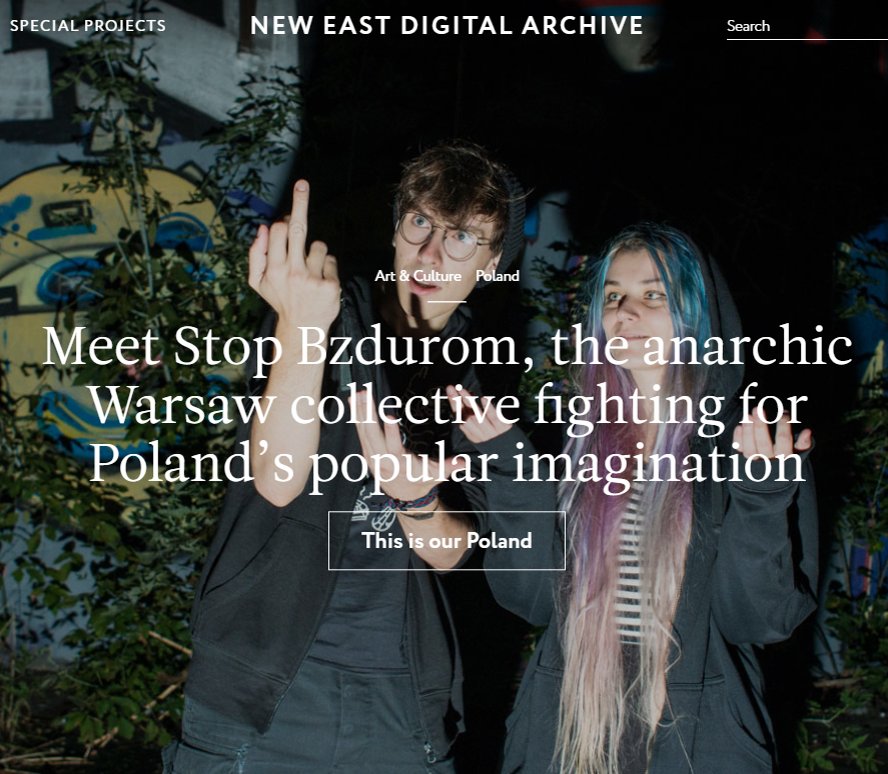
In August 2020, the attempted arrests of two queer activists, Margot and Łania from the Stop Bzdurom [Stop Bullshit] collective, sparked protests in Warsaw that resulted in the detention of 48 individuals by the police. The events of August 7 were later referred to as the ‘Rainbow Night’ or ‘Polish Stonewall.’ Read the following article from New East Digital Archive that features conversations with Margot, Łania, and other members of the Stop Bzdurom collective: https://www.new-east-archive.org/features/show/12906/stop-bzdurom-poland
Reflect on the following questions: Margot describes a violent encounter involving the police:
In the context of control over public spaces:
Thinking about strategies and tacktics:
|
5. Everyday policing of identities
 ‘Anti-gender’ politics create an atmosphere where visibility itself becomes risky. Queer, trans, and feminist people are portrayed as threats while being denied safety and legitimacy.
In Poland and Greece, participants described practising self-surveillance - the they avoid public affection or changing appearance to avoid harassment. In the words of Marachi:
You may have internalised a form of policing, ‘oh, I should wear this and not the other in case someone says something’, or ‘I should be careful in the street not to hold hands with my girlfriend’ (Greece Report, p. 9) |
This combination of exposure and erasure constitutes what scholars call ’dangerous hypervisibility’, a condition in which being seen becomes a form of vulnerability.

Normalizing inequality through neglect
Finally, ‘anti-gender’ politics achieve power through quiet institutionalisation. When discrimination is no longer seen as an exception, exclusion becomes ordinary.
Examples include:
- Healthcare: delays or refusal of treatment for trans and intersex people.
- Education: teachers told to ‘balance inclusion with family values’.
- Law enforcement: underreporting and downgrading of hate crimes.
In Switzerland, one participant observed that even "when no controversy is happening, hostility remains – it has just become more socially accepted” (SWIINT07, p. 7).
Spain – Catalonia and the Basque Country |
||
Participants described a sense of abandonment by institutions. Irantzu recalled:
My phone number, car’s licence and ID were on Twitter for three weeks […] not even my lawyer could get them to remove it. (Spain Report, p. 11) |
||
|
For many, distrust of police is rooted in historical and political context. As Irantzu put it:
|
||
Activists like Rosa, working in trans health services, stressed that community vigilance is essential because institutional guarantees are fragile.
6. Key takeaway

 Image by Lia Bekyan for Unsplash