Lesson 3.2: From Hostility to Harm: Violence and Intimidation
| Site: | OpenLearn Create |
| Course: | Solidarity and Struggle: Resisting Anti-Gender Politics |
| Book: | Lesson 3.2: From Hostility to Harm: Violence and Intimidation |
| Printed by: | Guest user |
| Date: | Tuesday, 6 October 2026, 12:24 AM |
Description
This lesson focuses on how structural hostility becomes personal, embodied harm. Through testimonies across all RESIST contexts, you will explore the continuum of violence, from online smear campaigns and doxxing to physical attacks, threats, and the resulting atmosphere of fear. This topic emphasises how digital and offline violence reinforce each other, cultivating hypervigilance and self-restriction.
1. Intro
2. Digital violence and organised attacks
 Watch Dr Ekaterina Filep's short introduction to the topic of digital violence
3. External Recommended Courses


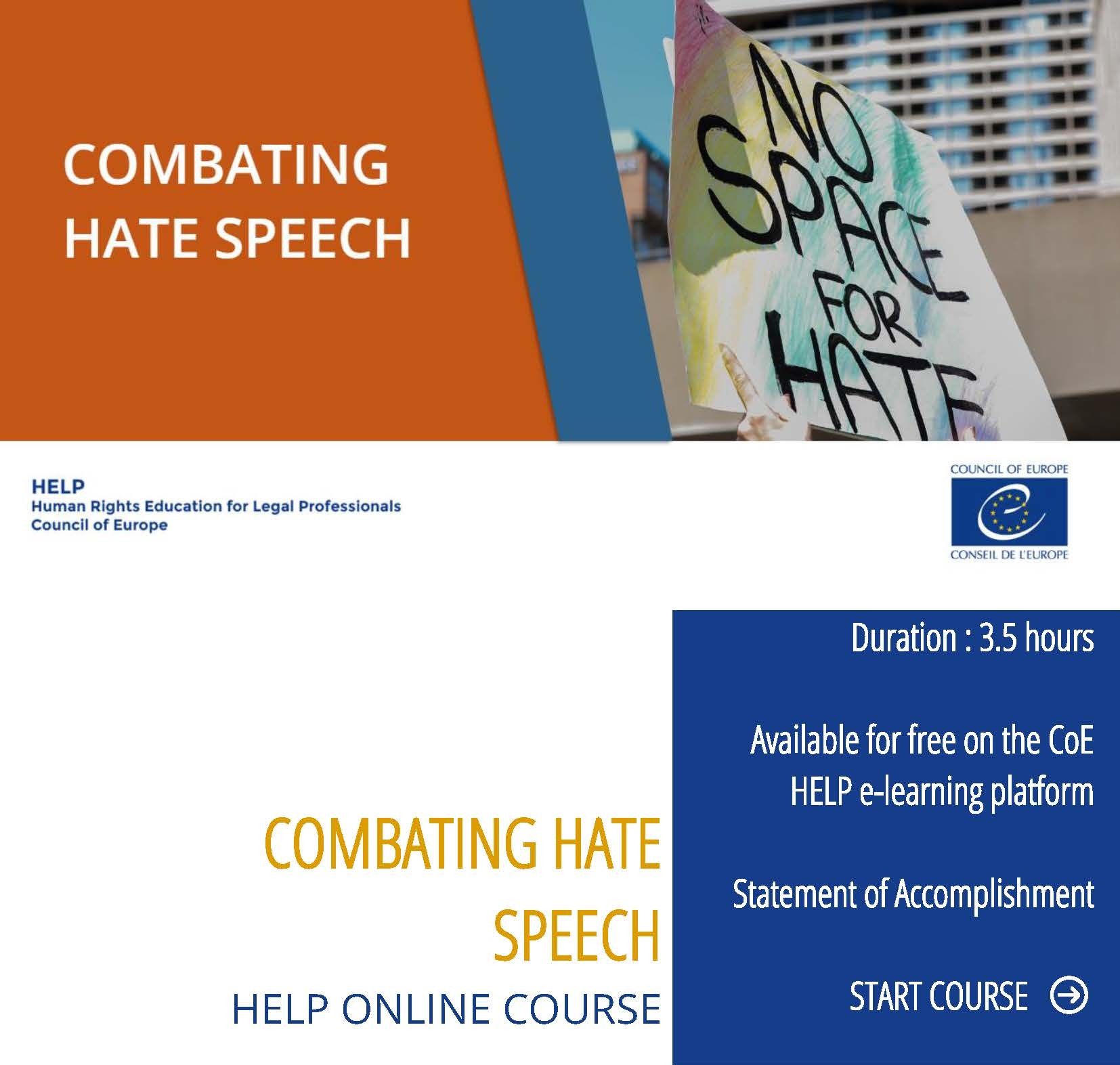
Combating Hate Speech
Explore this course on how to effectively address hate speech within a human rights framework, particularly in online environments. The course is based on the Council of Europe's Recommendation CM/Rec (2022)16, which provides guidance for member States on implementing legal and non-legal measures against hate speech.
Register for free here: https://help.elearning.ext.coe.int/enrol/index.php?id=6206
4. Offline violence and lack of protection
 France:
Escalating threats and normalisation of hostility
Hostility in France is amplified through discourses about Islamo-gauchisme and ‘woke’ threats, which legitimise suspicion toward feminist, queer, and anti-racist activism. This creates a feedback loop between political rhetoric and everyday aggression.
Jake: I’ve been physically attacked in the street once or twice…
Annie highlighted how each political breakthrough is followed by retaliatory harassment.
Annie C.: Every time there’s a political breakthrough on these issues, they’re there on our doorstep, tagging, pasting, staging situations to alert public opinion.
Participants linked this escalation to political discourse. Accusations of Islamo-gauchisme and attacks on ‘woke’ academics normalise everyday hostility. As Sylvie asked (France report, p.8):
And I don’t understand why there aren’t moderating machines. When there are slutty words, bitchy words…
The result is not just fear but internalised expectation — the sense that hate is routine, that one must learn to absorb it.
Ireland:
‘Residual events’ and chronic anxiety
Irish participants described a culture where public attacks are followed by quieter, lingering threats — ‘residual events’ (Ireland report):
The spectacle event scares me, but it’s always the residual event afterwards—the one that gets quieter, that festers there, waiting for its next time to pounce. (Kevin, p. 13)
Death threats were delivered to homes, partners being named in letters to their work to indicate knowledge of personal circumstances, organisations inundated with Freedom of Information requests. Media stories amplified fear, presenting trans people as ‘not what it means to be Irish.’ (IRLFG1.3, p. 9)
The consequences are both practical and emotional: meetings unadvertised, social media withdrawn, staff burned out.
Being under attack is physically very, very tiring” (Michelle) and “a challenge every day. (Martina, p. 14)
I need my life back. (Sara, p. 14)
This residual fear erodes organisational capacity, limiting access to services and shrinking civic space.
Switzerland:
The loss of ‘naive confidence’
In the Swiss report, participants described a shift from assuming safety to expecting hostility — an emotional recalibration shaped by increased right-wing mobilisation.
At events where I had no fear at all […] I now go with an uncomfortable feeling, e.g. at Drag Story Time. (Mo, p. 41)
It weighs on me to know that at any moment, I can experience it. (SWIINT03, p. 41)
With right-wing extremists attacking trans events and feminist marches people have ‘lost their naïve confidence’. Police presence brings ambivalence: protection against right wing extremists, yet repression of feminist protests (SWIINT05, p. 42).
5. Fear, exhaustion, and withdrawal
 Across contexts, people describe violence as cumulative, anticipatory, and relational. It affects not only individuals but also organisations, public institutions, and the collective life of communities. The fear of attack — and the expectation of attack — becomes a mechanism of governance in itself.
- Fear and hypervigilance: “an underlying feeling of being on edge.” (expression used by the participants in the RESIST Irish case-study, p.l4)
- Self-censorship: ”I silence myself.” (GERINT08, Germany Report, p. 13)
- Withdrawal from activism: ”I need my life back.” (IRLFG6.2, Ireland Report, p. 14)
- Loss of institutional trust: participants in Switzerland and France described police and universities as indifferent
Reflect
|