Lesson 2.3: Media Narratives Across Europe
| Site: | OpenLearn Create |
| Course: | Solidarity and Struggle: Resisting Anti-Gender Politics |
| Book: | Lesson 2.3: Media Narratives Across Europe |
| Printed by: | Guest user |
| Date: | Tuesday, 6 October 2026, 12:23 AM |
Description
In this lesson, we explore how ‘anti‑gender’ movements shape their messages to fit different political and cultural contexts. Rather than using one fixed story, they draw on familiar themes—such as protecting children, defending free speech, or resisting outside influence—and adjust them to match local fears, values, and debates. We look at why these messages can be so effective, focusing on how they appeal to emotions rather than consistency.
1. How 'anti-gender' narratives adapt across Europe
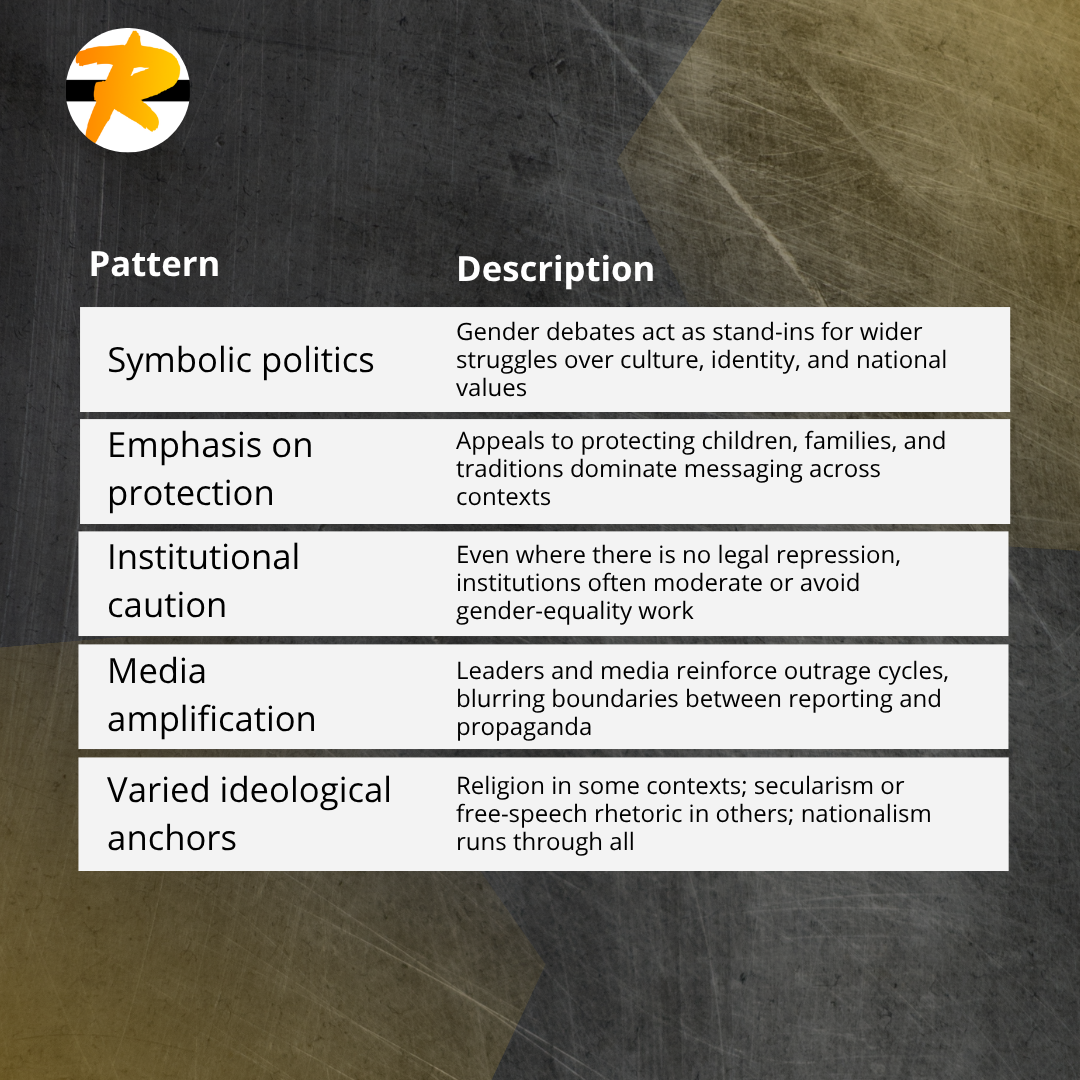
 Across Europe, similar tropes – such as ‘protecting children,’ ‘defending free speech,’ or ‘resisting foreign influence’ — recur, but they take on different meanings depending on each country’s historical legacies, media systems, and power structures.
| ‘Anti-gender’ actors do not rely on a single fixed narrative. Instead, they adapt their language, targets, and emotional appeals to local political cultures and moments of public anxiety. |
This opportunism is central to ‘anti-gender’ politics. Messages are selected not for their coherence but for their resonance. They are used to mobilise fears, moral values, or nationalist sentiment, depending on what feels most urgent to the audience. While the specific vocabulary varies, the emotional logic remains consistent: a call to defend family, nation, or truth against a perceived moral threat.
Having seen how media constructs antagonism at the level of public attitudes, we now look at how these narratives adapt across contexts and why some tropes resonate differently in different European countries.
2. Case Study: Hungary
 In Hungary, ‘anti-gender’ narratives are tightly interwoven with nationalist and sovereigntist politics. Government leaders, supported by state-aligned media, present the defence of “traditional families” as synonymous with defending the nation against foreign ideological interference. Since 2021, the Child Protection Law and its associated ‘books in foil’ regulation have been repeatedly cited as examples of how Hungary is ‘protecting its children’ from Western liberalism.
|
This rhetoric situates moral panic within a larger geopolitical frame: the EU, international NGOs, and ‘global elites’ are portrayed as external forces threatening Hungarian identity and autonomy. ‘Gender’ becomes a proxy battleground for struggles over sovereignty, culture, and post-socialist belonging. The ‘anti-gender’ message thus resonates not only as a moral defence but as a patriotic duty. |
Media narratives in Hungary exemplify how nationalism, religion, and media propaganda converge to sustain moral panic. Emotional appeals about child safety and family values are tied to sovereignty claims and hostility toward EU oversight. This fusion transforms ‘anti-gender’ politics from a cultural backlash into a pillar of national ideology. |
3. From national to European patterns
 Hungary offers one example of how ‘anti-gender’ politics can merge with nationalist ideology. Yet comparable narratives appear in diverse forms across Europe, each rooted in specific historical, political, and geopolitical contexts. Rather than circulating as a single script, ‘anti-gender’ discourse gains traction by attaching itself to existing anxieties and power struggles.
'Anti-Gender' Across Europe
The following, overlapping factors help explain why similar rhetoric resonates differently across contexts.
1. Nationalism and sovereignty |
|
| Across Europe, ‘anti-gender’ narratives frequently articulate struggles over national identity and political authority. In Central and Eastern Europe, particularly in Poland and Hungary, media frames gender equality and LGBTIQ+ rights as foreign impositions associated with the EU, international organisations, or liberal elites. These narratives mobilise sovereignty claims, presenting resistance to ‘gender ideology’ as a defence of the nation against external interference. | |
| At the same time, EU institutions, funding conditionality, and rule-of-law debates become symbolic resources in these narratives. EU criticism is reframed as cultural imperialism, while national governments position themselves as defenders of tradition and democracy. |
Similar dynamics appear beyond the region: in France, European human-rights norms are sometimes portrayed as clashing with republican universalism. Rather than signalling rejection of democracy, these narratives often claim to protect it — redefining sovereignty as the right to exclude gender and sexual equality from the political community. |
2. Colonial legacies and ‘Western values’ |
|
|
In countries shaped by colonial histories, such as France and the UK, ‘anti-gender’ narratives often intersect with racialised debates about migration, Islam, and national belonging. Media discourses linking feminism and LGBTIQ+ rights to Islamogauchisme portray intersectional activism as incompatible with republican or liberal values. |
At the same time, selective invocations of LGBTQ+ rights are sometimes used to reinforce Islamophobic or nationalist agendas, a dynamic described as homonationalism. These framings illustrate how gender politics become entangled with racialised hierarchies and postcolonial anxieties rather than standing alone. |
3. Post-socialist transitions and ideological reversal |
| In Central and Eastern Europe, ‘anti-gender’ discourses draw on post-1989 disillusionment with neoliberalism. Gender equality and queer rights are portrayed as forced ‘Westernisation,’ imposed by global elites at the expense of local traditions. Media often contrasts ‘ordinary people’ with cosmopolitan urban elites, deepening social divides. |
4. Culture-war dynamics and media representation
 In Western Europe, ‘anti-gender’ discourses frequently take on the form of a culture war over language, identity, and free speech. The UK, for example, has a highly commercialised media landscape where gender debates are framed as questions of fairness, safeguarding, or freedom of expression.
IN FRANCE |
Discussions of gender and sexuality are filtered through republican secularism and laïcité (state secularism). Gender studies and intersectional feminism are sometimes portrayed by officials as divisive imports threatening civic unity. |
|
The dynamics of culture war occurs both intra- and cross-nationally. ‘Anti-gender’ media discourses use both national(istic) tropes and references to foreign cultural contexts, often depicted as sites of moral decay that threaten ‘Christian values’, ‘tradition’, ‘the natural order’ and ‘common sense’. Meanwhile, ‘pro-gender’ actors and media narratives tend to reference the ‘West’ as an idealised arena of progress, showing the complexities and ambiguities of Polish geospatial cultural imaginary. |
IN POLAND |

Reflect
These examples reveal how ‘anti-gender’ narratives attach themselves to culturally specific notions of morality and public order. Whether invoking religion, secularism, or free speech, they all mobilise emotion and identity to delineate who belongs and who endangers society.
- Which narratives in your context draw most heavily on religion?
- Which rely on secularism, science, or free speech instead?
5. Demographic anxieties

Migration and Demography
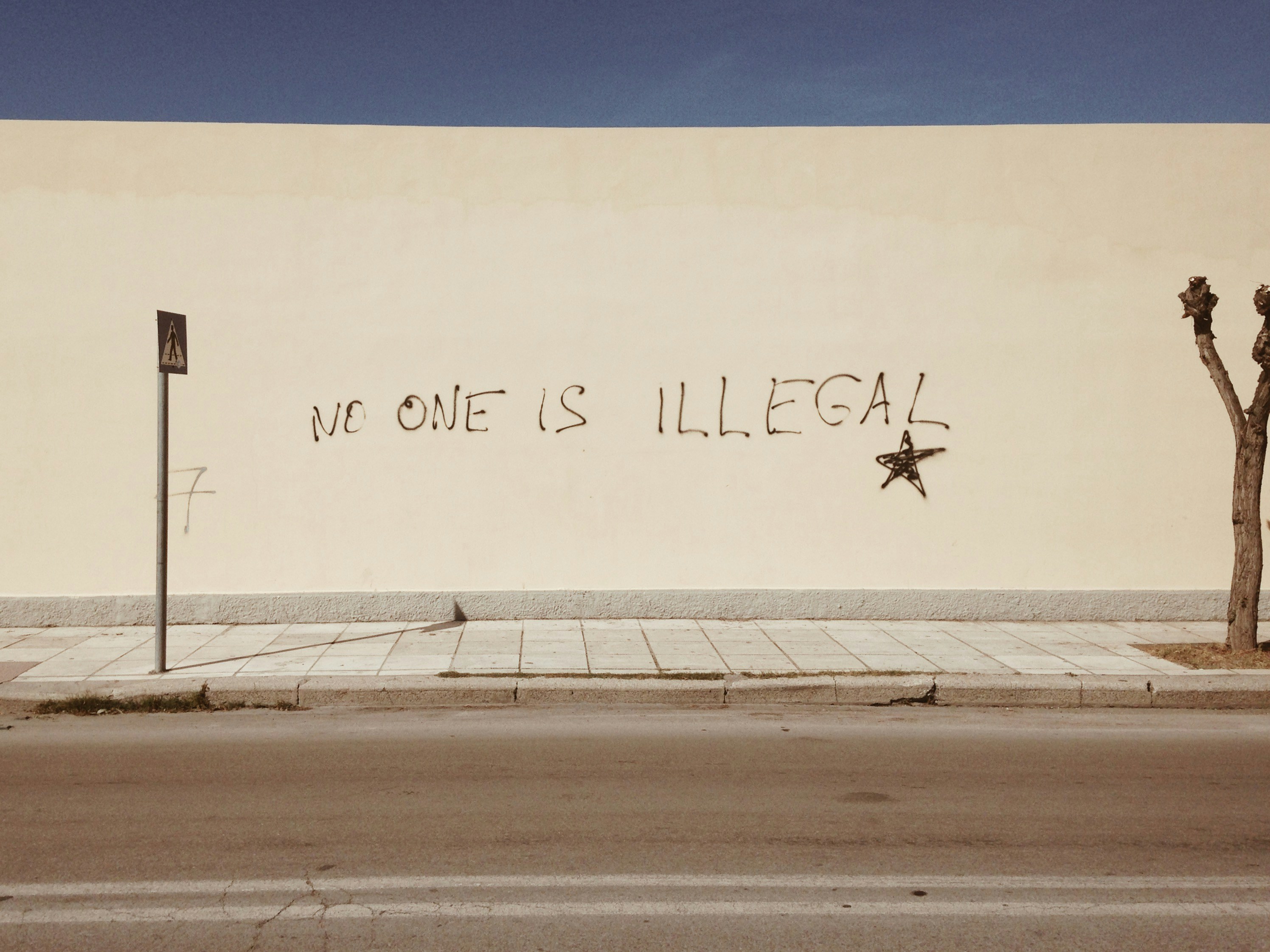
Photo by Miko Guziuk on Unsplash
 |
In Greece, ‘anti-gender’ narratives frequently intersect with debates about migration, national identity, and demographic decline. Feminism, gender education, and LGBTIQ+ rights are sometimes framed by conservative and far-right actors as threats to the Greek family and to national survival, particularly in the context of migration from the Middle East and North Africa. These discourses mobilise moral panic around children and reproduction while linking gender equality to broader fears of cultural and demographic erosion. |
| In Germany, demographic anxieties are often articulated through debates about migration, integration, and social cohesion. Far-right and populist actors link opposition to gender equality, trans rights, and inclusive education to concerns about declining birth rates among ‘native’ Germans and the perceived cultural impact of migration. ‘Anti-gender’ rhetoric here frequently converges with narratives about protecting children, preserving social order, and defending ‘neutrality’ in public institutions, embedding gender politics within broader struggles over national belonging. |  |
These factors show that ‘anti-gender’ narratives gain traction not in isolation but by tapping into deeper tensions around identity, sovereignty, and belonging. Gender becomes a symbolic battlefield through which broader anxieties – about migration, democracy, or cultural decline – are expressed.