Case study: Increasing sustainability in public places
| Site: | OpenLearn Create |
| Course: | Every1 case studies |
| Book: | Case study: Increasing sustainability in public places |
| Printed by: | Guest user |
| Date: | Tuesday, 28 July 2026, 12:55 PM |
1. Welcome
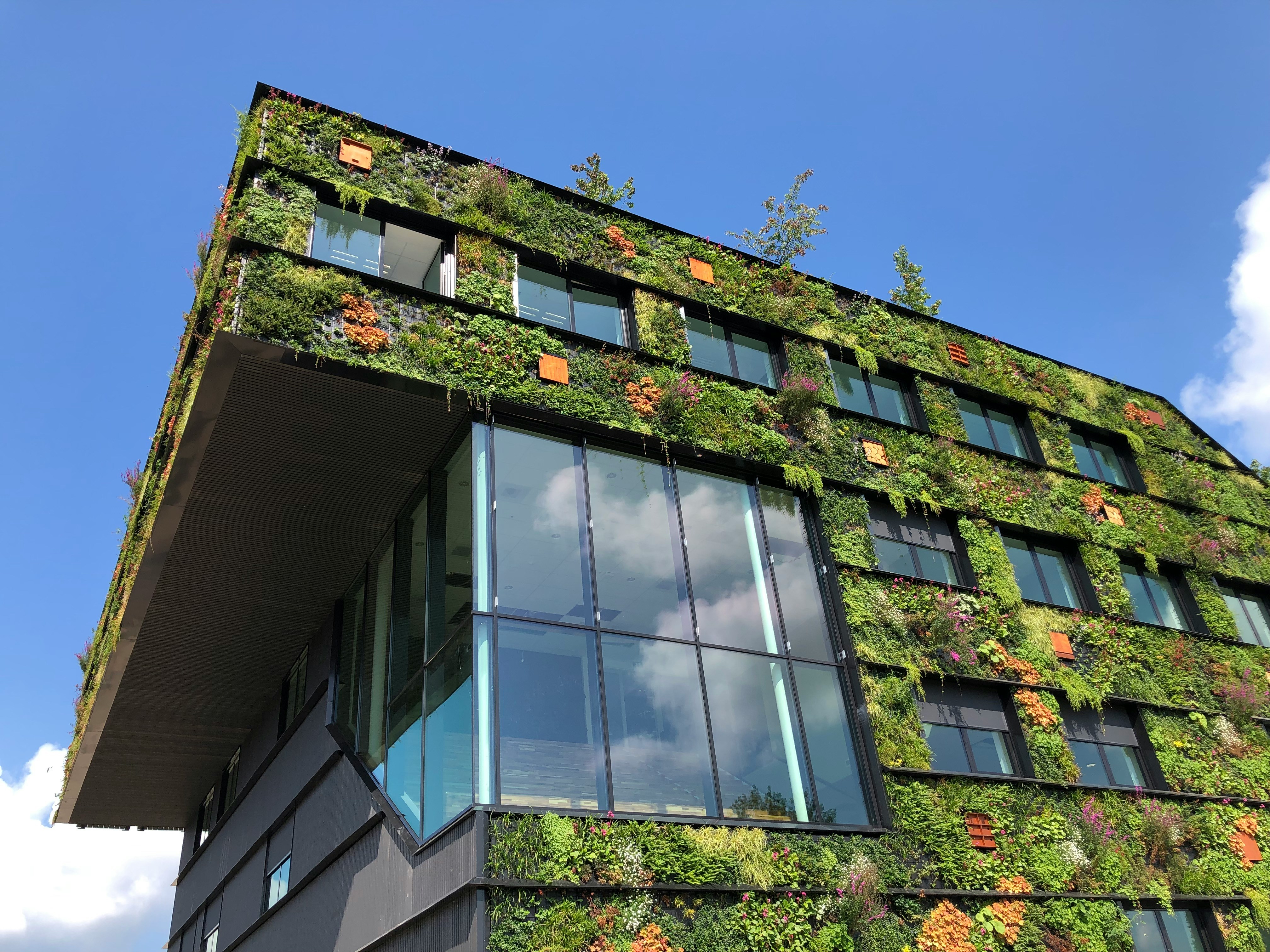
If you’re working in a local authority or municipality ensuring that public spaces meet the needs of citizens is crucial. You may be facing challenges such as the impact of reduced funding, rising energy costs, and climate change. Sustainability is also likely to be a central concern. How can you keep costs low, increase efficiency and ensure that public spaces are fit for the future? You may be considering:
- What kinds of tools and technologies could be used to transform public spaces.
- How the digital energy transition can support a sustainable future.
- What sustainable urban living looks like in your town or city.
- How to address increased challenges such as rising energy costs and climate change.
- Reducing dependency on fossil fuels.
- What the villages, towns and cities of the future might look like.
By reviewing this case study, you will:
- Understand the benefits of energy-efficient public spaces and infrastructure.
- Develop your understanding of different technologies and digital services that can support public spaces to become more efficient, user-friendly and sustainable.
- Be able to name some key technologies for energy efficient public spaces.
Every1 case studies aim to support conversation, reflection and action on a key topic. This case study provides key facts, examples, a short video, practical advice and reflective questions.
We would love to hear your thoughts on this case study! Please complete our short survey.
2. Factsheet
There are a range of digital and low-tech innovations and that can help increase energy efficiency in outdoor public spaces. In this fact sheet you will:
- Explore why public spaces are important when considering sustainable urban living.
- Read about the benefits of energy-efficient public infrastructure.
- Be introduced to some key technologies for energy efficient public spaces.
Get inspired! Explore some further examples and resources on sustainable public spaces:
- Find out more about Smart Waste Management: The Envac project in Sejong City, South Korea provides a future-facing underground waste system, boosting cleanliness and sustainability in the city.
- Explore the European Commission’s article on Energy and Smart Cities.
- Go deeper with this International Energy Agency (IEA) report Empowering Urban Energy Transitions: Smart cities, smart grids.
- Read A Cities’ Guide to Smart Lighting.
- Read the United Nations Development Programme (UNDP) article Four ways digital can power a just energy transition.
3. Video
This video explores some digital and low-tech ideas that can help increase energy efficiency in public spaces:
Time to reflect: Which public spaces in your city or municipality could benefit most from digital or nature-based energy solutions?
4. Reflective Questions
You may want to consider the following questions when thinking about sustainable public places in your context:
- What is the most important issue/challenge to address in our public spaces?
- How could a more sustainable approach be beneficial?
- What role could digital tools and technologies play?
- What technologies could increase efficiency in your town/city/municipality?
- What support and/or resource would we need?
- What could sustainable urban/rural living look like in our village/town/city?
- What examples of sustainable public places resonate with our own community situation?
5. Other Every1 Resources
You may find the following learning materials from Every1 useful:
- Explore the learning pathway Renewable energy and community solutions.
- Review the Energy efficiency and management learning pathway.
- Reflect on the learning materials in our Smart technologies for energy efficiency learning pathway.
You can also explore our Every1 Knowledge Hub, which has more than 80 different learning materials on digital energy topics, many available in a range of European languages.
6. Acknowledgements
This case study and its components were created by the Every1 project and are licensed CC BY-SA 4.0, unless otherwise stated.
Main case study image: brown and white concrete building by Jw. is on an Unsplash license.
Icons used (aside from the Every1 logo, funded by the EU logo and related images) are used according to Canva licensing terms.
Video
This video is part of the Increasing sustainability in public places case study produced by the Every1 project (https://every1.energy), funded by the European Union’s (EU) Horizon Programme for Research and Innovation (2021-2027) under grant agreement No 101075596. The sole responsibility for the content of this video lies with the Every1 project and does not necessarily reflect the opinion of the European Union. The video is licensed CC BY-SA 4.0 (https://creativecommons.org/licenses/by-sa/4.0/deed.en), unless otherwise stated.
This video includes theme music Aura by DayNigthMorning via Pixabay. The voiceover for this video was created using Freepik. The opening logo was inspired by a Canva Pro licensed image featured in the Every1 Guide to Energy Efficiency and Smart Technologies and redrawn and animated using Adobe After Effects with the inclusion of a redrawn leaf image from the Noun Project Pro Royalty-Free license. Noun project icons Butterfly and renewable energy were redrawn and used in accordance with a Noun Project Pro Royalty-Free license. The Wi-Fi and moon and star images were developed by Peter Devine for the Every1 project. All other images were created using Freepik under a Premium license (unlimited use without attribution). The Every1 and “Funded by the European Commission” logos are used with associated permissions.
 This project has received funding from the European Union’s Horizon Programme for Research and Innovation (2021-2027) under grant agreement No 101075596. The sole responsibility for the content of this course lies with the Every1 project and does not necessarily reflect the opinion of the European Union.