Case study: Smart meters: making a positive difference to our climate
| Site: | OpenLearn Create |
| Course: | Every1 case studies |
| Book: | Case study: Smart meters: making a positive difference to our climate |
| Printed by: | Guest user |
| Date: | Tuesday, 28 July 2026, 12:55 PM |
1. Welcome
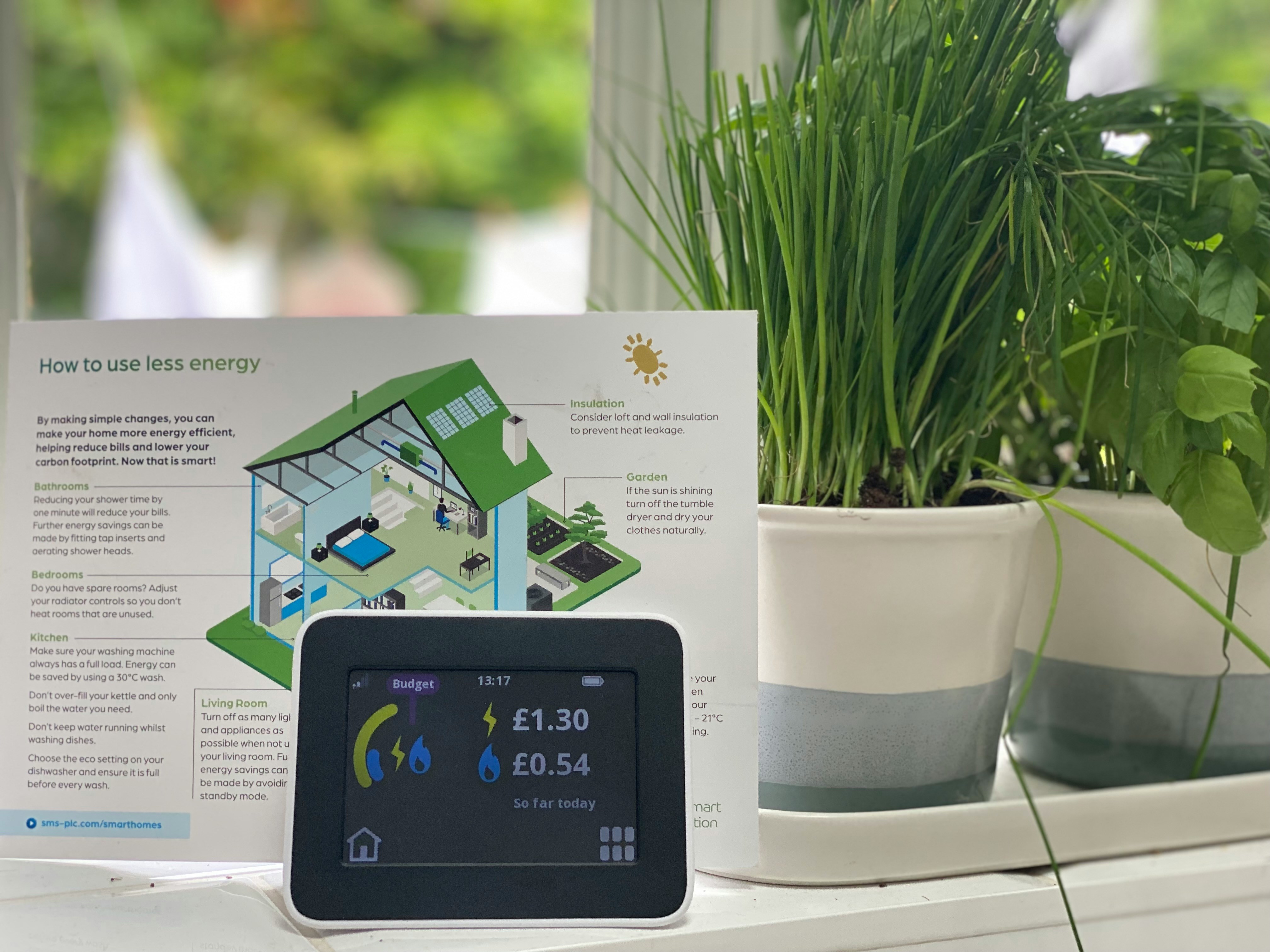
Smart meters provide real-time insights into your energy consumption. This information can help you understand when and how you use electricity. Through a better understanding of your energy use, you can make positive changes to reduce consumption and potentially save money whilst maintaining your comfort. The data from individual smart meters can also be used to support a better understanding of how communities are using energy. You may be:
- Considering smart meter installation in your home.
- Worried about privacy or other concerns.
- Interested in how smart meters can support community energy initiatives.
By reviewing this case study, you will:
- Understand what a smart meter is.
- Be able to describe the information smart meters can provide to individuals and communities.
Every1 case studies aim to support conversation, reflection and action on a key topic. Case studies provide key facts, examples, practical advice and reflective questions.
We would love to hear your thoughts on this case study! Please complete our short survey.
2. Factsheet
Let’s get started! In this fact sheet you will:
- Find out what role smart meters play in making positive change to our climate.
- Understand what information smart meters can provide to individuals and communities.
- Consider the public perception of smart meters.
- Develop an understanding of some challenges and considerations when using smart meters.
The benefits of individual smart meters can also be scaled up. Through the use of anonymised, aggregated data we can understand where energy is wasted, where buildings need renovation and how communities can work together to save money and cut emissions. With the right tools, smart meter data contribute to future planning.
Let’s look at some Belgium based community energy data tools and initiatives that are supporting governments and communities to take informed action:
- The EnergyID platform enables individuals and communities to log, visualise, and share building energy use. EnergyID offers dashboards and analytics to support collective energy reductions, solar production tracking, and community self-consumption.
- In Ghent WiseGRID provides digital platforms and simulation tools for local energy communities, enabling the modelling of energy consumption, infrastructure, and the impact of policy decisions at the district level. The project involved applications for local communities to visualise and optimise energy use, supporting local governments and citizens in decision-making.
3. Reflective Questions
If you’re considering community based energy tools or a smart meter for your household - or have a smart meter already installed - you may want to consider:
- If you don't currently have a smart meter installed: What are your main concerns or challenges regarding smart meter installation?
- If you have a smart meter: What information does your smart meter provide? How could you use this information to better understand your energy use? Have you used this information to make changes to how and when you use energy? If so, what was the result? If not, what actions could you take?
- If you are looking at examples of community based energy tools: Do any of the examples in this case study resonate with your community aims? Where could you go for more information and/or support?
4. Other Every1 Resources
You may find the following learning materials from Every1 useful:
- The learning pathway Smart technologies for energy efficiency.
- Resources focused on Security and data privacy in energy systems.
- The curated learning materials on Smart technologies for energy efficiency.
You can also explore our Every1 Knowledge Hub, which has more than 80 different learning materials on digital energy topics, many available in a range of European languages.
5. Acknowledgements
This case study and its components were created by the Every1 project and are licensed CC BY-SA 4.0, unless otherwise stated.
Main case study image: graphical user interface, website by Siân Wynn-Jones is on an Unsplash license.
Factsheet
Icons used (aside from the Every1 logo, funded by the EU logo and related images) are used according to Canva licensing terms.
 This project has received funding from the European Union’s Horizon Programme for Research and Innovation (2021-2027) under grant agreement No 101075596. The sole responsibility for the content of this course lies with the Every1 project and does not necessarily reflect the opinion of the European Union.